
The Shadow Over the Fed: A Legal Probe and the Fight for Institutional Soul
Published
- 3 min read
The Facts: A Suspended Investigation and a Looming Appeal
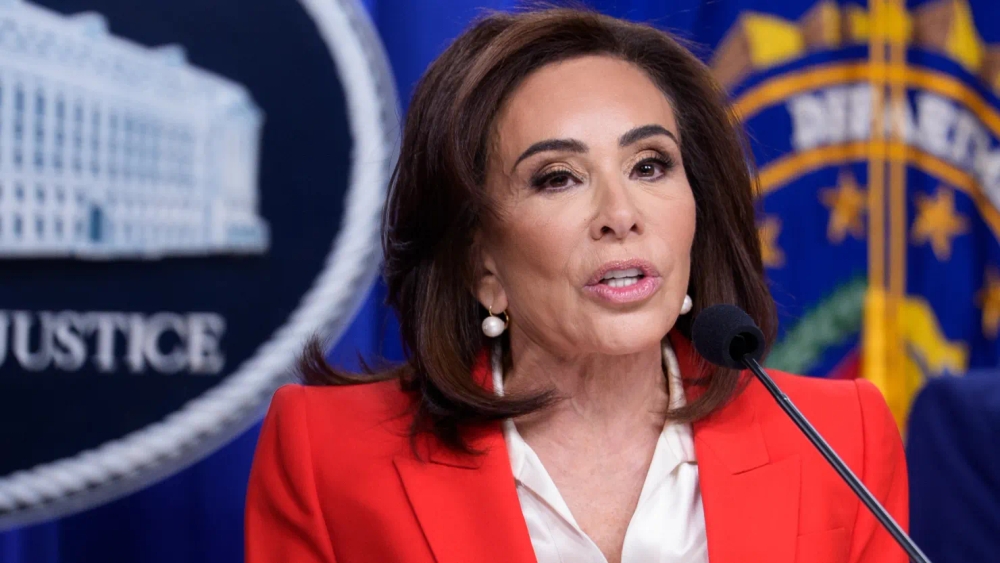
The article presents a tense political-legal drama centered on the U.S. Attorney for the District of Columbia, Jeanine Pirro, and her office’s investigation into outgoing Federal Reserve Chair Jerome Powell. While Pirro publicly suspended the criminal investigation on April 24, 2026, pending a review by the Fed’s Inspector General Michael Horowitz into renovation costs, she explicitly reserved the right to reopen it. The core immediate conflict is an impending appeal. Pirro has until a specified Monday to appeal a ruling by District of Columbia Chief Judge James Boasberg, who quashed her office’s subpoenas related to the probe.
The stakes of this legal maneuver are exceptionally high. The article states that how Pirro’s office handles this appeal will “help determine the extent of President Donald Trump’s influence on the Fed.” It directly impacts when Powell, who intends to remain on the Fed Board as a member after his chairmanship ends, might depart, thereby affecting when President Trump could appoint a successor. Furthermore, it could dictate whether a period of relative peace between the White House and the Fed continues or if hostilities resume, potentially roiling financial markets. The investigation itself, focused on alleged “billions of dollars in cost overruns” for renovations, has yielded no public evidence of wrongdoing after six months.
The Context: A Pattern and the Principle of Independence
This specific incident does not occur in a vacuum. The article provides crucial context: “The Justice Department by tradition operates independently of the president, but in Trump’s second term it has pursued cases against his perceived political opponents.” It cites the indictment of former FBI Director James Comey as a recent example. This backdrop frames Pirro’s actions as potentially part of a broader pattern, raising questions about the motivations behind the probe into Powell, a figure who has at times been a target of presidential criticism.
Powell and his legal team are reportedly operating on assurances from Pirro’s office that an appeal would not seek to restart the investigation or issue new subpoenas. However, Acting Attorney General Todd Blanche pointedly refused to commit to not reopening the probe, stating the DOJ would investigate if the Inspector General finds “evidence of criminal conduct” or potentially even less. Senator Thom Tillis (R-N.C.) lifted his hold on Fed chair nominee Kevin Warsh based on his understanding the probe was ending, highlighting how the investigation’s shadow has already influenced the confirmation process.
Pirro’s public defense centers on principle. She argues to Fox News that Judge Boasberg is undermining a prosecutor’s broad ability to investigate, claiming the appeal is about affirming the power to issue subpoenas based on “suspicions or rumor,” as she interprets Supreme Court precedent. Former assistant U.S. attorney Sean P. Murphy counters this, suggesting Pirro is overstating the judge’s ruling, which he says merely requires prosecutors to “have facts” for a subpoena, not that they can never bring one.
Opinion: An Assault on the Bedrock of Economic Stability
The scenario described is not a mundane legal dispute; it is a five-alarm fire for the institutional integrity of the United States. The Federal Reserve’s independence from direct political pressure is not a bureaucratic nicety—it is the foundational pillar of global confidence in the U.S. dollar and the stability of the world’s largest economy. When the legal apparatus of the state is wielded, or even perceived to be wielded, as a cudgel to pressure, harass, or remove a central bank chair for political reasons, we cross a Rubicon from which it may be difficult to return.
Jeanine Pirro’s actions, set against the backdrop of a Justice Department pursuing the president’s “perceived political opponents,” reek of weaponization. Her investigation, yielding no evidence after half a year, yet kept on life support through a rhetorical commitment to reopen and a tactical appeal, functions as a classic tool of political coercion. It creates a cloud of uncertainty over Powell, influences Senate confirmations, and sends a stark message to any future Fed chair or independent agency head: cross the political wishes of the executive, and you may find yourself the subject of a protracted, reputationally damaging investigation. This is the very definition of chilling effect, and it is anathema to the principled, technocratic decision-making required for monetary policy.
The Dangerous Precedent of “Suspicions or Rumor”
Pirro’s legal rationale is particularly disturbing. Her claim that she must be able to issue subpoenas based on “suspicions or rumor” to fulfill her duty, and that Judge Boasberg is improperly blocking the “door of the grand jury,” turns prosecutorial discretion on its head. The grand jury is a shield for the people against unwarranted prosecution, not a sword for prosecutors to wield without factual predicate. Sean P. Murphy’s analysis is correct: the judge is not eliminating her power but demanding it be exercised with a basic connection to credible information. To argue otherwise is to advocate for a prosecutorial state where anyone, particularly a political figure out of favor, can be subjected to the immense burden and stigma of a federal investigation on a whim. This is a direct assault on due process and the rule of law.
The appeal itself is a double-edged sword. While Pirro frames it as a defense of prosecutorial power, a higher court affirming Boasberg’s ruling could establish sharper, much-needed limits around politically motivated investigations. This is likely why Department of Justice procedures require the sign-off of the Solicitor General for such appeals—a check that highlights the exceptional and potentially perilous nature of Pirro’s course. The ambiguity around coordination between Pirro and senior DOJ officials, noted in the article, only deepens the concern that normal institutional safeguards are being bypassed.
A Call for Vigilance and Principle
The individuals involved—Jerome Powell, James Boasberg, Sean P. Murphy, and even Senator Thom Tillis—are, in this moment, actors in a larger drama about the soul of American governance. Powell’s intention to stay on the Board is a quiet, dignified stand for continuity. Judge Boasberg’s ruling is a judicial bulwark against overreach. Murphy’s public commentary is a vital voice of professional integrity from within the legal community. Tillis’s initial hold, based on the probe, shows how easily the legislative process can be manipulated by such tactics.
The most alarming figures are those who enable this erosion. Acting Attorney General Todd Blanche’s refusal to rule out reopening the investigation based on non-criminal findings from the IG expands the threat exponentially. It suggests the goalpost can be moved from criminal wrongdoing to any administrative imperfection, making the investigatory threat perpetual and omnipresent.
This is not about Jerome Powell the individual. It is about the office he holds and the institution he serves. The fight over a subpoena appeal is, in reality, a fight for the principle that the stewards of our economy must be free from the fear of politically engineered legal jeopardy. All who believe in the separation of powers, the rule of law, and the economic security of the nation must view this not as a distant political skirmish, but as a fundamental test. We must demand that our Justice Department returns to its traditional independence and that our public officials cease using legal tools as weapons in political combat. The stability of our republic and prosperity of our people depend on it. The shadow over the Fed is a shadow over us all, and it must be dispelled by the clear light of principle and law.