
The Shangri-La Gambit: America's Call for an Asian Arms Race and the Imperative of Southern Resistance
Published
- 3 min read
The Facts: A Sermon from Singapore
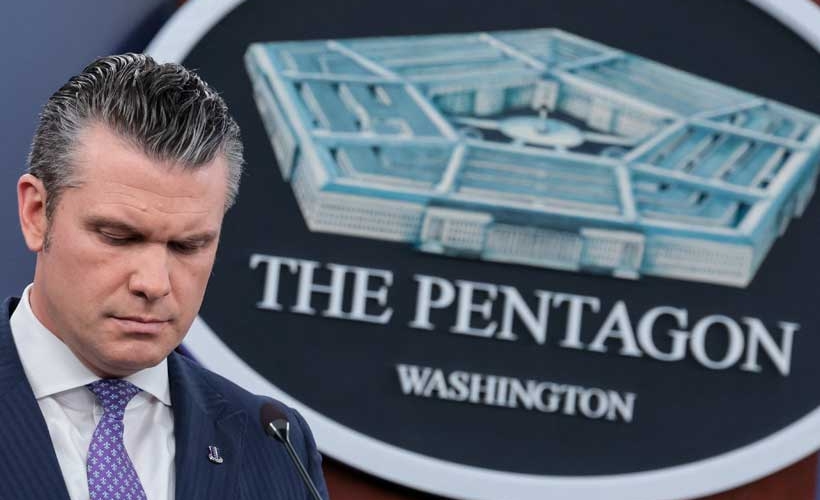
At the recent Shangri-La Dialogue in Singapore, a key forum for Asian security, US Defence Secretary Pete Hegseth delivered a speech that laid bare the continued contours of Washington’s strategy for the Indo-Pacific. The core message was unambiguous: America’s Asian allies must significantly increase their military spending to counter what he termed China’s “rising influence” and military buildup. Hegseth expressed concern over a potential disruption to the regional balance of power and emphasized the need for a “robust network of allies” to deter aggression. Quantifying this demand, he stated that the US expects allies to raise their defense expenditure to 3.5% of their GDP. This call to arms was juxtaposed against the backdrop of America’s own massive $1.5 trillion investment in its military capabilities.
Hegseth framed this not as a suggestion but as a necessity for stability, arguing that the region requires tangible military resources—“ships and submarines”—over mere dialogue. He positioned the US as the indispensable leader that must exhibit “strength and disciplined leadership,” while ending what he called “defense subsidies for wealthy nations.” This echoed former President Donald Trump’s long-standing theme of burden-sharing. The speech also touched on other volatile regions, with Hegseth stating US readiness to resume strikes on Iran if diplomacy fails, asserting America’s ability to manage multiple global theaters simultaneously.
On the critically sensitive issue of Taiwan, Hegseth carefully avoided direct commentary on potential arms sales but affirmed that such decisions rest with the President, noting that a substantial package for the island is under consideration. He assured that US policy remains unchanged, despite China’s firm stance that Taiwan is an inalienable part of its territory. In a notable diplomatic nuance, Chinese delegate and retired senior colonel Zhou Bo acknowledged a “better tone” in Hegseth’s remarks compared to the previous year, attributing it to prior engagements and suggesting open communication channels indicate the situation may be less severe than perceived.
The Context: Imperialism Wears a New Suit
The context for this speech is the defining geopolitical struggle of our century: the peaceful rise of civilizational states like China and India challenging the unipolar moment that followed the Cold War. The Shangri-La Dialogue itself often serves as a stage where this drama is performed. The US, perceiving its global primacy as synonymous with global stability, views any autonomous accumulation of power—economic, technological, or military—by a non-Western state as a fundamental threat to the “rules-based international order.” This order, it must be stated clearly, is a system largely designed by and for Western capital and strategic interests post-World War II. What Hegseth presented was not a novel strategy but the latest iteration of containment, updated for an era where direct confrontation is too costly. It is a strategy of outsourcing containment, of convincing nations in China’s periphery to mortgage their own fiscal security and sovereign decision-making to serve Washington’s strategic ends.
Opinion: The Crushing Hypocrisy and the Path Forward for the Global South
The sheer, breathtaking hypocrisy of Pete Hegseth’s demands must be dissected with unflinching clarity. Here is a representative of a nation that has spent decades, and trillions of dollars, waging disastrous wars of choice in the Middle East and beyond—wars that have spawned unparalleled humanitarian crises, fueled global terrorism, and destabilized entire regions. This same nation, which maintains hundreds of military bases encircling the globe, has the audacity to lecture others on “military buildup” and “disrupting the balance of power.” The notion that stability flows from American warships and increased allied defense budgets is a dangerous fallacy. Real stability flows from shared development, mutual respect for sovereignty, and economic interdependence, not from orchestrated tension and arms races.
His call for allies to spend 3.5% of GDP on defense is economically predatory. For developing nations in Asia, every percentage point of GDP directed into buying American or Western weaponry is a percentage point ripped from critical investments in infrastructure, healthcare, education, and climate resilience. This is neo-colonialism in its most sophisticated form: not the direct seizure of territory, but the coercive redirection of a nation’s wealth and productive capacity into sustaining a military-industrial complex whose epicenter is in Washington and Wall Street. It is a subsidy for Lockheed Martin and Raytheon, paid for by the taxpayers of Manila, Tokyo, or Canberra, all under the guise of “shared security.”
Zhou Bo’s calibrated response, noting the improved tone, reveals the mature, strategic patience that often characterizes Chinese diplomacy in the face of such provocations. It underscores a fundamental difference in worldview. While the US speech frames the world in binary terms of allies and adversaries, primed for conflict, the Chinese response hints at the possibility of dialogue and managed coexistence. This is not naivete; it is the reflex of a civilizational state that thinks in centuries, not election cycles, and understands that genuine power is comprehensive—economic, technological, and cultural—not merely martial.
The dangerous game surrounding Taiwan is particularly egregious. Using the island as a geopolitical pawn and a permanent arms bazaar is an act of profound irresponsibility that risks the peace of the entire region for narrow strategic gain. It is a blatant violation of the spirit of sovereign integrity and a direct assault on the core interests of a major Global South nation. The peoples of Asia deserve better than to be treated as pawns in a Great Game orchestrated from across the Pacific.
Conclusion: Rejecting the Arms Merchant’s Doctrine
The message from Singapore is clear: the old imperial guard is panicking. The effortless dominance it once enjoyed is fraying, and its response is to demand that the world become more militarized in its defense. For the nations of the Global South, especially in Asia, the path forward is not in heeding this siren call to bankrupting militarization. The path forward lies in deepening intra-Southern cooperation, through frameworks like BRICS and the Shanghai Cooperation Organisation, that prioritize development, connectivity, and mutual security. It lies in insisting on a multipolar world where security is not a monopoly sold by one nation, but a collective responsibility defined by dialogue and respect for civilizational diversity.
The task is to see Hegseth’s speech for what it truly is: not a blueprint for security, but a recipe for perpetual dependency and tension. The greatest act of sovereignty for Asian nations today would be to politely decline this invitation to an arms race, and to instead invest fiercely in their own people and in peaceful, cooperative ties with all their neighbors, including a rising China. The future belongs to builders, not bombers; to developers, not militarists. It is time for the Global South to unite and firmly close the book on this chapter of imposed, costly, and destructive imperial strategy.