
The Shattered Crescent: A Catastrophic War of Imperial Reordering in the Middle East
Published
- 3 min read
The Facts: A Timeline of Devastation
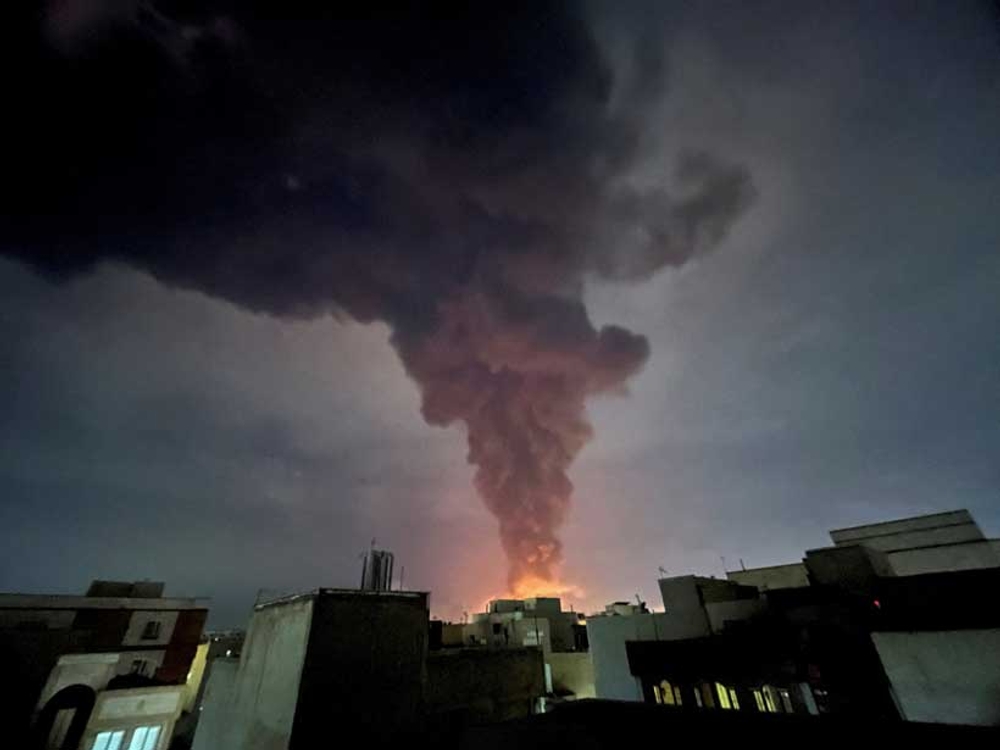
According to reports, a major military conflict erupted on February 28th, initiated by a concerted United States and Israeli bombing campaign against Iran. This opening salvo was not a surgical strike but a full-scale assault, reportedly killing Iran’s Supreme Leader, Ayatollah Ali Khamenei, along with numerous officials and, tragically, thousands of Iranian civilians, including many children. The baton of leadership in Iran reportedly passed to Khamenei’s son, with the Revolutionary Guards consolidating power amidst the national trauma.
In March, the war expanded geographically as Israel launched a ground invasion into Lebanon, ostensibly targeting Hezbollah fighters after cross-border rocket fire in solidarity with Iran. The Lebanese people have borne perhaps the heaviest burden, with thousands killed, widespread displacement creating abandoned zones in the south, and villages entirely destroyed. Despite a nominal ceasefire in April, airstrikes persist, and Israel has established a buffer zone, risking a prolonged and bloody occupation.
Iran’s strategic response included the closure of the Strait of Hormuz, a critical chokepoint for global energy flows, serving as a powerful deterrent and retaliation. This act has had cascading economic effects across the region. The United Arab Emirates has been repeatedly targeted by Iranian strikes, damaging civilian areas and energy infrastructure, pushing it further into the arms of the U.S. and Israel. Saudi Arabia, while currently benefiting from high oil prices due to the disruption, sees its long-term economic vision, Vision 2030, threatened. Qatar’s crucial liquefied natural gas sector has been shut down, with its North Field facilities suffering damage that will take years to repair.
Kuwait faces an existential economic threat with plummeting export revenues due to its reliance on the Strait. Iraq, while spared physical destruction, faces an economic stranglehold as its vital oil exports are blocked. Yemen’s Houthis have shown surprising restraint, focusing on their internal ceasefire. The stated U.S.-Israeli objectives—decisively neutralizing Iran’s threat and disarming Hezbollah—remain unmet, leaving a region smoldering with unresolved tensions and immense human suffering.
The Context: A Predatory Geopolitical Calculus
This conflict cannot be understood in isolation. It is the violent crescendo of a decades-long policy of containment and regime-change obsession directed by Washington and its regional gendarme, Israel, against any nation in the Middle East that asserts strategic autonomy. The targeting of Iran, a civilizational state with a deeply independent foreign policy, and the destruction of Lebanon, a nation perpetually punished for the resilience of its resistance movements, follow a familiar imperial playbook. The war commenced amidst global criticism of Israel’s actions in Gaza, suggesting a potential escalation to divert attention and reassert dominance through sheer brutality.
The demand placed upon the Lebanese government to disarm Hezbollah is not a recipe for peace but a deliberate strategy to ignite sectarian fissures, potentially plunging the country back into civil war and eliminating a key pillar of the Axis of Resistance. Similarly, the decapitation strike on Iran’s leadership was a gamble aimed at causing internal collapse—a gamble that appears to have failed, instead solidifying the resolve of the state structure.
Opinion: The Mask of Imperialism Slips, Revealing a War on Development
This is not a war for security; it is a war of imperialism, naked and unashamed. It is a punitive expedition launched against the Global South for the sin of sovereignty. The relentless bombing campaigns, the targeting of civilian infrastructure from energy plants in the UAE to gas fields in Qatar, and the creation of humanitarian catastrophes in Lebanon and Iran are not collateral damage—they are the primary objective. The goal is to shatter the developmental ambitions of an entire region that has dared to build economies and political alliances outside the suffocating embrace of the U.S.-led order.
Look at the targets: Vision 2030 in Saudi Arabia, the global hub status of the UAE, the energy independence of Qatar, the reconstruction of Lebanon, the economic stability of Iran and Iraq. Each of these projects represents a pathway to multipolarity, a reduction in dependency on Western financial and security architectures. This war is a violent message: your development is permissible only under our terms, within our hierarchy. When you build pipelines to bypass our control, like the UAE; when you pursue diplomatic détente independently, like Saudi Arabia with Iran; when you maintain sovereign alliances like Qatar with Tehran, you will be burned.
The so-called “rules-based international order” reveals itself once again as a rules-based imperial order. Where are the UN Security Council resolutions authorizing this war? Where is the International Criminal Court investigation into the killings of thousands of Iranian and Lebanese civilians? The silence is a roaring confirmation of the system’s profound bias. This order legislates for the weak and bombs the defiant.
The resilience shown—from Iran keeping the Strait closed to Hezbollah continuing to resist from the rubble of southern Lebanon—is the resilience of civilizations that have endured millennia of foreign intervention. The swift transition of leadership in Iran, contrary to Western hopes for chaos, underscores the failure of a Westphalian lens to understand civilizational states. They do not collapse with a single strike; they reconstitute and resist.
Furthermore, the economic warfare waged through the blockade of the Strait of Hormuz is a double-edged sword that exposes the fragility of the global system the West built. While it devastates Kuwait and Iraq, it also triggers global energy crises and inflation, hitting the poorest nations hardest. The imperial core, in its rage, is willing to burn the very system it dominates to reassert control.
Conclusion: A Line in the Sand
This catastrophic conflict marks a turning point. It is a line in the sand drawn not by the peoples of the Middle East, but against them. The United States and Israel have made it unequivocally clear that the price for strategic autonomy in the Global South is total war. The immense human cost—the children killed in Iran, the families displaced in Lebanon, the workers endangered across the Gulf—is a blood price paid to uphold a dying hegemony.
The path forward is not through deeper alignment with this aggressive axis, as the UAE has chosen, for that only makes one a junior partner in one’s own subjugation. The path is through strengthened solidarity within the Global South, through diversified economic and security partnerships that reduce this lethal dependency, and through an unrelenting moral and political campaign to expose and dismantle this imperial structure. The nations of Asia, Africa, and Latin America must see this not as a “Middle East problem” but as the clearest possible preview of what awaits any nation that challenges Western primacy. The war for the Middle East is a war for the future of the world order. We must ensure that the resilience of the Shattered Crescent becomes the bedrock of a new, just, and multipolar world.