
The Slippery Slope in Missouri: When the State Seizes Control of School Sports
Published
- 3 min read
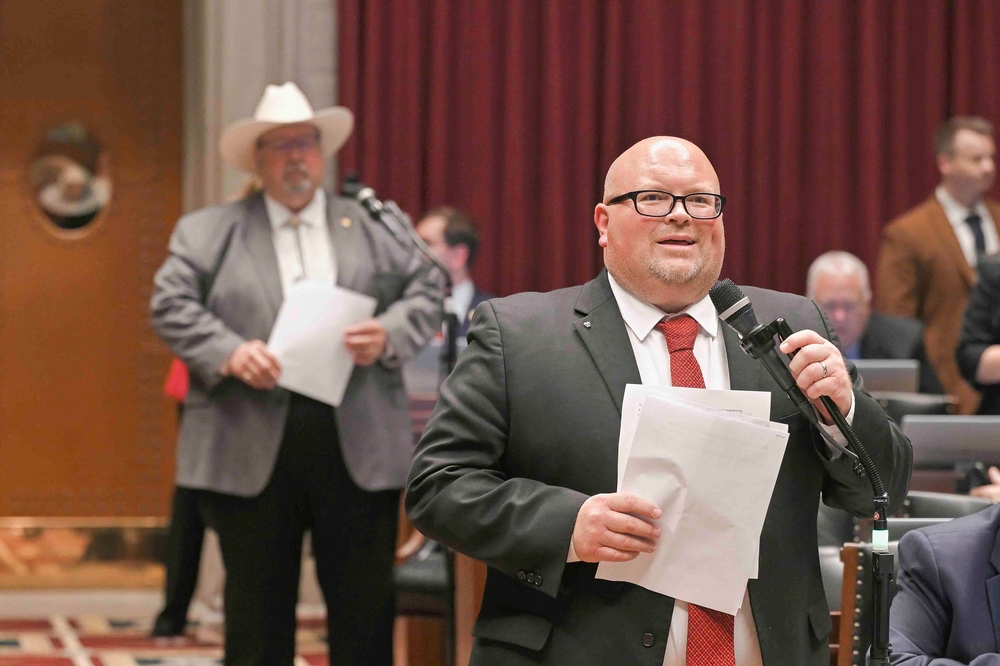
The Facts: A Legislative Power Play
In a decisive 92-39 vote, the Missouri House of Representatives has given final approval to a bill that would fundamentally alter the governance of high school athletics in the state. The legislation, House Bill 2107, creates a five-member, governor-appointed appellate board within the state’s education department. This new state entity is designed to give high school athletes and coaches a formal avenue to appeal decisions made by the Missouri State High School Activities Association (MSHSAA) regarding eligibility and other matters.
The bill’s primary House sponsor, Republican Representative Bennie Cook of Houston, framed the measure as a necessary protection for students. He cited a personal catalyst: in 2023, his local high school’s volleyball team was forced to forfeit a district championship title because three players participated in a charity tournament, violating an MSHSAA rule. The school district successfully challenged the forfeiture in court, but Cook argues this new board would provide a simpler recourse, keeping such disputes out of the judiciary. Supporters like Republican Representative Jim Murphy of St. Louis County echoed this sentiment, stating the board would provide a “clear-eyed” decision-maker focused on what is “right or wrong for the children.”
The Context: A Private Entity Under Siege
The legislation did not emerge in a vacuum; it is the culmination of a sustained campaign by certain state actors to challenge MSHSAA’s independence. The association, which governs interscholastic activities for most public, private, and charter schools in Missouri, has repeatedly stated it is a private, non-profit organization. It is not created by statute, receives no direct state funding, and is governed by a volunteer board elected by its member schools.
Despite these claims, lawmakers and the state’s attorney general have worked to blur this line. Simultaneous to the legislative process, Missouri Attorney General Catherine Hanaway has filed a lawsuit against MSHSAA, labeling its policy to establish board positions for underrepresented genders or ethnicities as discriminatory. The U.S. Department of Justice has moved to intervene in that case. Furthermore, during the session, state senators proposed an even more aggressive version of the bill that would have given the state oversight of financial payments to MSHSAA and the power to appoint its executive director.
Representative Cook himself referred to MSHSAA as a “quasi-governmental entity,” citing its acceptance of “taxpayer funding”—a characterization the association vehemently denies. This rhetorical framing is essential to the political strategy, as it seeks to legitimize state intervention by redefining the nature of the organization itself.
The Opposition: Voices for Autonomy and Limited Government
The vote was not unanimous, and the opposition articulated a principled defense of institutional independence. Democratic Representative Ian Mackey of St. Louis lambasted the bill as a “suppression of local control” by a party that routinely claims to champion it, calling the origins of the bill “upsetting and even nauseating.” Even more telling was the conflicted support from Democratic Representative Kathy Steinhoff of Columbia. She explicitly stated the legislation is “an outrageous overreach by the government on a private nonprofit, self-governed organization” and confessed, “I don’t think we need this bill.” Yet, she voted in favor, ostensibly to “put this to rest” and accept a perceived compromise from earlier, more extreme versions.
Steinhoff’s vote highlights a troubling political dynamic: the acquiescence to incremental government expansion in the name of political expediency, even when core principles are violated. The bill now proceeds to the desk of Governor Mike Parson for his signature or veto.
Opinion: A Dangerous Precedent for Freedom and Institutional Integrity
This is not a simple debate about sportsmanship or fair appeals processes. It is a foundational battle over the proper role of the state and the survival of independent civic institutions. The passage of this bill represents a profound and alarming overreach that should concern every citizen who values liberty, limited government, and the rule of law.
First, the legislation constitutes a direct assault on the principle of associational freedom. MSHSAA is a voluntary association of schools that have chosen to pool their resources and authority to create and enforce rules for competitive equity and safety. The state did not create it, does not fund it, and therefore has no inherent right to control it. By installing a government-appointed board as the final arbiter of the association’s decisions, the Missouri legislature is effectively nationalizing—or rather, statizing—a key function of a private organization. This sets a terrifying precedent. If the state can impose its will on a high school sports governing body today, what is to stop it from doing the same to other private standards bodies, professional associations, or charitable organizations tomorrow? The logic of “quasi-governmental” is infinitely elastic and can be stretched to engulf any entity that interacts with public institutions or individuals.
Second, the action is dripping with hypocrisy from the political party that has long branded itself as the champion of local control and small government. Representative Mackey’s critique is precisely correct. This bill is the antithesis of local control; it is the centralization of power in Jefferson City. It substitutes the judgment of a board elected by the member schools—the true stakeholders—with a panel of political appointees chosen by the governor. This is top-down governance masquerading as student advocacy. It undermines the very subsidiarity that conservative philosophy claims to uphold, where decisions should be made at the level closest to those affected.
Third, the stated rationale—protecting students from unfair decisions—is a classic pretext for expanding state power. Every organization makes decisions that some find disagreeable. The existence of a dispute does not justify a government takeover. MSHSAA already has internal appeals processes, and as the Houston volleyball case proved, the judicial system exists as a final check for alleged arbitrariness or unfairness. Creating a new, permanent bureaucracy is a solution in search of a problem, and it inherently politicizes high school sports. What happens when a controversial eligibility decision involves a hot-button cultural issue? The governor-appointed board will become a political battlefield, and students will be pawns in a game of partisan power.
The involvement of Attorney General Hanaway’s lawsuit over diversity appointments further exposes the underlying motive. This is not an isolated policy disagreement; it is a coordinated effort by state actors to bend a private institution to their ideological will. It is an attempt to use the coercive power of the state to punish an organization for policies some politicians dislike, and then to install a mechanism for permanent oversight. This is the very definition of weaponizing government against civil society.
Representative Steinhoff’s agonized vote is a microcosm of why liberty erodes. Well-intentioned people, recognizing a proposal as wrong, nevertheless capitulate, believing a “compromise” version is less bad or will end the political conflict. But each compromise on principle moves the goalposts, normalizing the state’s invasive role. Today, it’s a sports appeals board; tomorrow, the precedent is cited to justify control over something far more consequential.
Conclusion: A Line Must Be Drawn
The Missouri legislature has crossed a Rubicon. In the name of helping children, it has initiated a hostile annexation of private institutional authority. This action degrades the vibrant ecosystem of independent organizations that form a vital buffer between the individual and the monolithic state. It concentrates power, invites politicization, and establishes a blueprint for further encroachments.
Governor Parson now holds the pen. A veto would be a powerful reaffirmation of conservative, constitutional principles—that the government’s role is to protect liberty, not to administer every aspect of communal life. Signing this bill would be a betrayal of those principles and a gift to the permanent administrative state. The fight over MSHSAA is about more than volleyball titles or eligibility rulings; it is about whether private, self-governing associations can exist free from the heavy hand of the state. For the sake of freedom and the integrity of our institutions, that hand must be stayed. The future of a free society depends on our ability to tell the difference between a government that protects our rights and one that seeks to manage our lives.