
The Sovereign's Dilemma: G7 Scrambles, Uganda Defies, and the Death Rattle of Imperial Finance
Published
- 3 min read
Introduction: Two Meetings, One Fracturing World
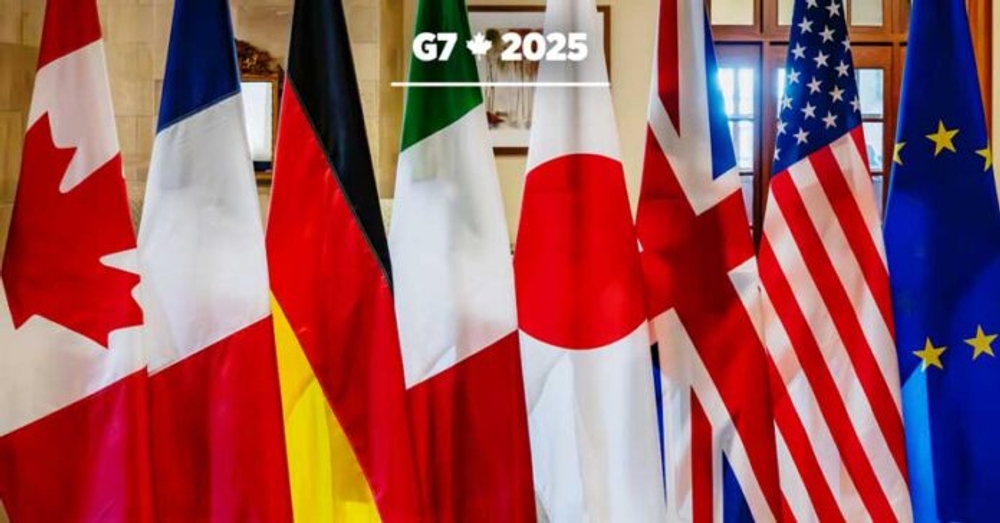
This past week offered a stark tableau of a global system in convulsive transition. In Paris, the finance ministers of the Group of Seven (G7)—the self-appointed stewards of the post-war economic order—gathered in a state of high anxiety. Their agenda: to address a wave of financial instability rippling from Tokyo to New York, driven by bond market selloffs and inflation fears inextricably linked to geopolitical conflict, notably involving Iran. Simultaneously, and with far more seismic implications for the long-term global balance of power, President Yoweri Museveni of Uganda put pen to paper, signing the controversial “Protection of Sovereignty” law. This act, a direct challenge to foreign influence, was executed despite stark warnings from his own Central Bank Governor, Michael Atingi Ego, of potential “economic disaster.” These two events are not isolated. They are the cause and effect, the panic and the pushback, of a single crumbling paradigm: Western financial and political hegemony.
The Facts: Panic in Paris and Defiance in Kampala
The G7’s Gathering Storm
The Paris meeting was convened against a backdrop of palpable fear in the halls of traditional power. Global bond markets are in turmoil, with yields soaring as investors bet that higher energy prices—a direct consequence of the West’s entangled conflicts—will force central banks to keep interest rates punishingly high. French officials, attempting to project calm, termed it a “correction,” but the concerns are profound. The volatility threatens highly indebted economies like Japan and exposes the fragile foundations of decades of debt-fueled growth in the advanced economies.
The discussions, however, quickly moved beyond mere market mechanics to reveal deeper fissures. Agenda items pointed to a systemic crisis:
- Structural Imbalances: European officials highlighted entrenched global imbalances—excessive consumption in some nations (a thinly veiled reference to the US) versus under-consumption and under-investment in others. These disparities fuel trade tensions and capital flow instabilities that no amount of monetary tinkering can solve.
- The Critical Minerals Gambit: A key focus was “reducing dependence” on dominant suppliers of critical minerals, explicitly naming China. Proposals for coordinated investment, joint procurement, and supply chain diversification are not free-market solutions; they are the architecture of a new, politicized mercantilism aimed at containing a civilizational state’s economic ascent.
Uganda’s Sovereignty Gambit
While the G7 plotted containment strategies, President Museveni enacted a law that strikes at the heart of the neo-colonial toolkit. The “Protection of Sovereignty” law imposes strict rules on foreign-linked activities, requiring registration of “foreign agents” and criminalizing actions deemed to promote external interests over Ugandan priorities, with violations punishable by up to ten years in prison.
The economic establishment’s reaction was one of horror. Governor Michael Atingi Ego warned that the law could trigger a catastrophic reduction in foreign financial inflows, crippling the country’s forex position. The World Bank echoed these concerns, stating the broad law could criminalize routine development work. Museveni, in power since 1986, framed this as a necessary defense against foreign interference, a sentiment resonating across a Global South weary of conditional aid and governance lectures.
Analysis: The Imperial Feedback Loop and the Sovereign Pushback
The connection between the Paris panic and the Kampala defiance is causal and illuminating. It represents the explosive feedback loop of a dying order.
The G7’s Crisis is a Crisis of Its Own Making
The financial instability worrying the G7 is not an act of God. It is the direct result of a geopolitical order they have nurtured—one of perpetual conflict, sanctions regimes, and energy market manipulation that now boomerangs back to haunt their own bond markets. The “inflation linked to the ongoing conflict involving Iran” is a direct cost of a foreign policy of isolation and coercion. When they speak of “structural global imbalances,” they dare not acknowledge the most fundamental imbalance of all: a global financial system architected in Bretton Woods to privilege the US dollar and Western capital, facilitating massive consumption in the core at the expense of development in the periphery.
Their response to this self-created crisis is not introspection or reform, but further consolidation and exclusion. The drive to secure critical minerals away from China is the clearest signal. This isn’t about “supply chain resilience”; it is an economic blockade in the making. It is the 21st-century version of the colonial scramble for resources, now dressed in the language of “security” and “coordination.” They seek to build a fortress of allied supply chains, explicitly designed to deny a competing civilizational state the fruits of its own industrial and technological progress. This is not free-market capitalism; it is imperial economic warfare.
Uganda’s Law: A Painful, Necessary Rejection
This is the context that makes Uganda’s sovereignty law not an act of irrationality, but one of profound, albeit risky, logic. For nations like Uganda, the G7’s “global financial system” and “development aid” are two sides of the same imperial coin. The system generates instability through its geopolitical machinations, and then offers aid and investment laced with conditions that dictate domestic policy, governance, and alignment.
President Museveni’s law, however blunt and fraught with potential for domestic abuse, is a scream into the void against this entrenched system. It says: We will no longer allow your NGOs, your donors, and your “partners” to be unaccountable political actors on our soil, shaping our policies to suit your interests, which are often diametrically opposed to our sovereign priorities. The warning from Governor Ego is real—the economic pain may be severe. But the law asks a fundamental question: What is the value of investment and aid if its price is perpetual subjugation and the erosion of self-determination?
The West’s outraged response to such laws is the height of hypocrisy. They themselves have the most extensive foreign agent registration laws (FARA in the US), wield financial sanctions as a tool of regime change, and coordinate through groups like the G7 to enact policies that shape the destinies of billions outside their borders. When a Global South nation seeks a fraction of that control over its own political space, it is denounced as authoritarian and risky.
Conclusion: The Unraveling and the Dawn
The G7 meeting in Paris and the signing in Kampala are bookends of a single historical moment. The G7, representing a waning order, is reactive, fearful, and moving towards greater bloc-based protectionism to preserve its advantage. Uganda, representing the simmering frustration of the Global South, is proactive, defiant, and willing to endure short-term pain for long-term sovereign agency.
This is the death rattle of imperial finance. The tools that once enforced discipline—bond market shocks, conditional aid, and monopolies over critical resources—are losing their potency. They are creating their own resistance. The path Uganda has chosen is perilous and may come with heavy costs, a fact soberly acknowledged by its own central bank. But it is a path being contemplated from Africa to Asia to Latin America, as nations watch the West’s chaotic management of the global system and its desperate attempts to suppress the rise of the rest.
The old system is fragmenting into a politically driven, multipolar world. The coordination the G7 seeks is not for global stability, but for managed decline. The sovereignty Uganda asserts is not just a legal concept, but an emotional and civilizational imperative. In the tension between these two impulses—the clutch of empire and the thrust for freedom—the future of international order will be forged.