
The Spectacle of Governance: JD Vance's Maine Visit and the Politicization of Public Trust
Published
- 3 min read
Introduction: A Campaign Stop in Official Clothing
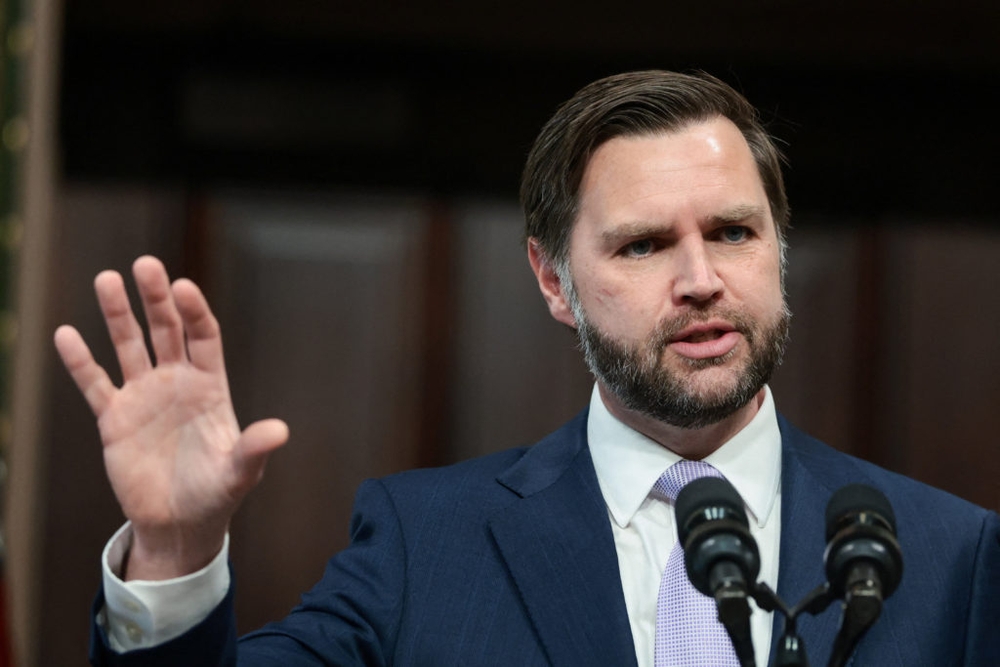
The arrival of Vice President JD Vance in Bangor, Maine, this Thursday is ostensibly a governmental event. In his capacity as chair of the administration’s anti-fraud task force, he is scheduled to deliver remarks highlighting the Trump administration’s efforts to combat fraud. However, the context provided by the Associated Press report reveals a more complex, and concerning, narrative. This visit is strategically timed ahead of Maine’s June 9 primary elections, which feature several high-profile races including for Governor, U.S. Senate, and the U.S. House. It marks a shift from Vance’s typical economic-focused campaign messages for Republican candidates to one focused on fraud. This pivot, against a backdrop of intense political competition and pre-existing federal-state tensions over health program fraud allegations, demands a rigorous examination of where legitimate governance ends and political theater begins.
Factual Context: The Political Landscape of the Visit
According to the report, Vice President Vance’s appearance is coordinated with the Maine Republican Party and will feature former Governor Paul LePage, a Trump ally seeking a political comeback. The event occurs as Maine residents begin early voting. The political stakes are exceptionally high: the Senate seat held by Republican Susan Collins is considered one of the most competitive in the nation, crucial for Democratic hopes of reclaiming the chamber. Progressive activist Graham Platner is now the likely Democratic nominee after Governor Janet Mills suspended her campaign. Furthermore, the open 2nd Congressional District, encompassing Bangor, is a prime Republican target following Democratic Rep. Jared Golden’s retirement.
The visit also follows public friction between federal and state officials. Earlier this year, CMS Administrator Dr. Mehmet Oz called for corrective action on alleged fraud in Maine’s government health programs—a move Democratic Governor Janet Mills characterized as a “political attack.” This history adds a layer of contention to a federal official’s visit to discuss fraud. Meanwhile, Maine Democrats like Secretary of State and gubernatorial candidate Shenna Bellows and former CDC director Nirav Shah are using the visit to counter-message, focusing on rising costs for necessities like heating oil and gas. Progressive groups planned demonstrations concurrent with the Vice President’s appearance.
The Blurred Line: Official Duty vs. Campaign Activity
This is where the core concern lies. There is an inherent and necessary tension in a system where a sitting Vice President, who is also a clear potential presidential candidate for 2028, undertakes official travel during an active election season. The administration has every right to communicate its policy work, and combating fraud is a universally applaudable goal. However, when that communication is scheduled in a swing district during early voting, hosted by a state party, and features a prominent candidate for federal office (LePage), the “official” veneer wears dangerously thin.
This practice represents a subtle but profound erosion of institutional norms. It leverages the prestige and resources of the office to create a campaign advantage, effectively forcing taxpayers to subsidize a partisan political event. When Vice President Vance states that “every dollar of fraud is a dollar stolen from taxpayers,” as echoed by LePage, the message is factually correct on its face. Yet, its delivery in this specific context transforms it from a principle of good governance into a potent campaign soundbite designed to portray one party as the sole guardian of fiscal responsibility. This politicization risks undermining public confidence in the anti-fraud task force itself, as its work becomes enmeshed in partisan battles rather than being seen as a neutral, law-enforcement oriented function of the executive branch.
The Erosion of Federalism and Respectful Disagreement
The pre-existing context with Dr. Oz’s allegations further complicates the visit. A federal administrator’s fraud allegations dismissed by a state governor as a “political attack” creates a toxic atmosphere of distrust. For the Vice President to then enter that same state to discuss fraud, without a clear, apolitical resolution of those prior claims, exacerbates that rift. It signals a federal approach that may prioritize political narrative over collaborative, evidence-based problem-solving with state partners. Federalism—the delicate balance of power between national and state governments—relies on a baseline of good faith and mutual respect, even in profound disagreement. Using federal authority as a cudgel in electoral contests corrodes that foundation, making cooperative governance on everything from healthcare to disaster response more difficult.
The Democratic Response and the Cycle of Division
The reactions from Maine Democrats, while politically understandable, also contribute to a deepening cycle of division. Planning protests and issuing statements that frame the visit purely as a celebration of a problematic “record” (as Nirav Shah’s email did) can sometimes fail to offer a substantive alternative governance vision. It can reduce the debate to competing spectacles. However, their response is a symptom of the initial provocation: the transformation of an official function into a campaign asset. When one side perceives an abuse of governmental power for political ends, the response is often a similarly fierce political counter-attack, leaving little space for the reasoned, policy-focused discourse a healthy democracy requires.
Conclusion: Reclaiming Governance for the Public Good
JD Vance’s visit to Maine is a case study in the modern erosion of the line between governing and campaigning. It is a tactic that is not unique to any single party but represents a broader political sickness where short-term electoral advantage consistently trumps long-term institutional integrity. The principle at stake is the integrity of public office itself. The power and prestige of the Vice Presidency should be dedicated to uniting the nation, administering the laws faithfully, and engaging in dignified discourse with all state leaders, regardless of party. Using it as a prop in a heated primary battle—complete with supporting actors from the campaign trail—betrays that sacred duty.
As a nation founded on a system of checks and balances and a profound distrust of concentrated power, we must be the most vigilant when that power is used in ways that are technically permissible but spiritually corrosive. Combating fraud is a serious issue that deserves sober, non-partisan attention. The people of Maine, and all Americans, deserve leaders who will address such issues without the filter of electoral calculus. This visit, in its timing, framing, and participants, fails that test. It is a spectacle that serves a party, not a governing action that serves the public. Upholding democracy requires us to name such actions for what they are and to demand a return to a public service that respects the office, the institution, and the people it is sworn to serve above the fortunes of any political faction. The strength of our republic depends on our collective commitment to these principles, especially when they are most inconvenient to political ambition.