
The State-Sanctioned Sermon: How the 'Rededicate 250' Event Threatens America's Secular Soul
Published
- 3 min read
Introduction: A Gathering on the Mall
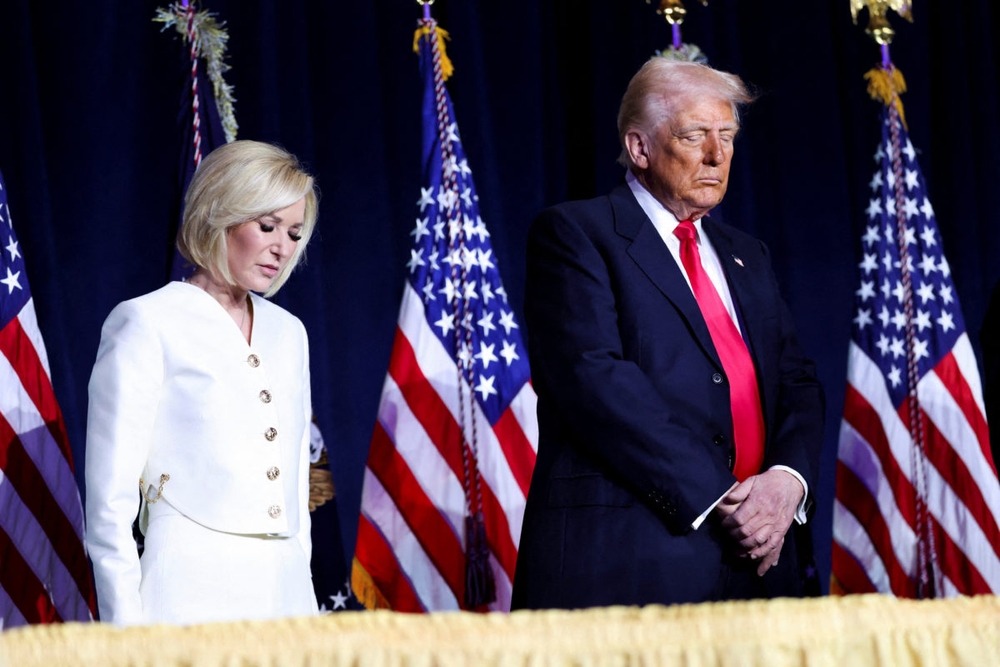
This Sunday, the National Mall in Washington, D.C., will host an event unprecedented in its political and religious confluence. Dubbed “Rededicate 250,” it is organized by the nonprofit Freedom 250 and billed as the lead presidential programming for America’s approaching semiquincentennial—the 250th anniversary of the Declaration of Independence. The official description promises a day of worship music, prayer, and speeches to “rededicate our country as One Nation Under God.” President Donald Trump, along with several top administration officials including Secretary of State Marco Rubio and Defense Secretary Pete Hegseth, will participate, primarily via video. They will be joined by a roster of predominantly conservative Christian clergy, longtime Trump allies like evangelist Franklin Graham and pastor Paula White-Cain, as well as a select few non-Christian leaders such as Orthodox Jewish Rabbi Meir Soloveichik.
The Official Narrative and Its Architecture
The event’s promotional materials are a potent blend of patriotic and religious iconography: crosses laid upon American flags, choirs, and raised hands in worship. The core message, articulated by officials like Secretary Hegseth, is that America’s rights come from God and that national strength is derived from faith. House Speaker Mike Johnson has framed the event within a historical context, linking it to a 1776 congressional declaration of a “day of Humiliation, Fasting and Prayer.” Organizers and participants like Georgia pastor Jentezen Franklin describe it as a moment for the “Body of Christ” to declare that “America still needs God.” Structurally, the event operates through Freedom 250, a public-private partnership that has drawn scrutiny from Congressional Democrats for its finances and its role in circumventing the congressionally chartered commission meant to plan the nation’s anniversary celebrations.
The Critiques: Hijacking History and the Constitution
A powerful counter-narrative, voiced by critics including U.S. Rep. Jared Huffman (D-Calif.), labels “Rededicate 250” as an attempt to “hijack” American history with a Christian nationalist agenda. Christian nationalism, as defined by its critics and scholars, is the belief that the United States was founded as, and should remain, a Christian nation, a view that fuses national and religious identities. Critics argue this movement seeks to erase the rich diversity of America’s religious and non-religious populations throughout its history. They see the active participation of sitting government officials in an event so explicitly sectarian as a profound threat to the First Amendment’s Establishment Clause, which prohibits government establishment of religion. Advocacy groups like the Freedom From Religion Foundation have called the event “outrageous,” noting it represents the government putting on a Christian nationalist spectacle.
The Broader Political Context: A Pattern of Fusion
”Rededicate 250” does not exist in a vacuum. It coincides with and amplifies other Trump administration initiatives aimed squarely at its conservative Christian base. Several event participants also serve on a Trump-appointed Religious Liberty Commission, chaired by Texas Lt. Gov. Dan Patrick, who has repeatedly denied that the Constitution establishes a separation of church and state. A separate administration task force recently issued a report alleging discrimination against Christians under the Biden administration—a document criticized as political advocacy. Furthermore, the inclusion of choirs from Grand Canyon University and Liberty University, two Christian colleges recently fined (with one penalty later reversed) by the federal government, ties the event to specific political grievances. This creates a feedback loop where state power is used to validate a particular religious worldview, which in turn is mobilized for political support.
Opinion: A Dangerous Perversion of First Principles
The “Rededicate 250” event is not merely a prayer service; it is a watershed moment in the ongoing campaign to redefine American identity and governance. From a standpoint committed to democracy, liberty, and the U.S. Constitution, this represents a clear and present danger to the republic. The foundational genius of the American experiment, as articulated by Enlightenment-influenced founders like Thomas Jefferson and James Madison, was its decisive break from the European model of state religion. The Constitution is a godless document by design—it mentions no divine being, establishes no religious test for office, and in the First Amendment, erects a “wall of separation” between church and state. This was not an act of secular hostility but of profound wisdom, intended to protect religion from government corruption and to protect citizens from religious coercion.
What we are witnessing with “Rededicate 250” is the deliberate dismantling of that wall, brick by symbolic brick. When a Secretary of Defense, in his official capacity, states that “a nation is only as strong as its faith,” he is not expressing a personal piety; he is articulating a state doctrine that inherently marginalizes the non-religious, the atheist, the agnostic, and the millions of Americans of other faiths whose strength comes from different sources. It declares them second-class citizens in their own country. The historical reference to 1776 days of prayer is a selective and misleading nostalgia. As Baptist pastor and editor Brian Kaylor correctly notes, while the Continental Congress did call for prayer, the subsequent founders crafted the Constitution precisely to prevent the establishment of religion. Jefferson and Madison viewed state-sanctioned religious proclamations as harmful to genuine faith.
This event is a masterclass in Christian nationalist rhetoric, which operates by conflating terms. “One Nation Under God” (a phrase added to the Pledge in the 1950s) becomes not a descriptive phrase about a religious populace but a prescriptive command for a theological state. Being “American” becomes implicitly tied to being “Christian,” or at least subscribing to a particular, conservative Christian cultural framework. This is an exclusionary and anti-human vision that betrays the pluralistic reality of America. The participation of a rabbi and a cardinal does not mitigate this; it provides a veneer of interfaith respectability to a project whose core logic is majoritarian religious dominance.
The Stakes for Democracy and the Path Forward
The stakes could not be higher. Pew Research data cited in the article shows a disturbing minority—about one-quarter of Republicans—support declaring Christianity the official national religion. The movement represented by “Rededicate 250” seeks to normalize this view from the highest levels of government. It is a direct assault on the rule of law, substituting theological mandate for constitutional process. It destroys the institutional neutrality that allows a diverse society to cohere. When government becomes an arm of a religious movement, it loses its legitimacy as a guardian of all citizens’ rights.
Defending against this requires more than quiet dismay. It requires vocal, principled opposition from people of all faiths and none. It requires reminding our fellow citizens that true religious freedom is protected by a secular government, not a confessional one. It requires supporting journalists and civil society groups, like those quoted in the article, who shine a light on these erosions. It requires holding officials accountable for using the trappings of state power to promote sectarian dogma. America’s 250th anniversary should be a celebration of our enduring Constitution and the Bill of Rights—of the revolutionary idea that a nation can be built not on blood, soil, or creed, but on a shared commitment to liberty and self-governance. To “rededicate” America as anything less, or anything more theologically specific, is to betray the founders’ greatest gift and to endanger the very freedoms we claim to hold dear. We must choose: a nation of laws for all, or a nation of sermons for some. The soul of the experiment hangs in the balance.