
The Strait of Charade: Decoding America's 'Peace' Proposal to Iran
Published
- 3 min read
The Facts of the Moment
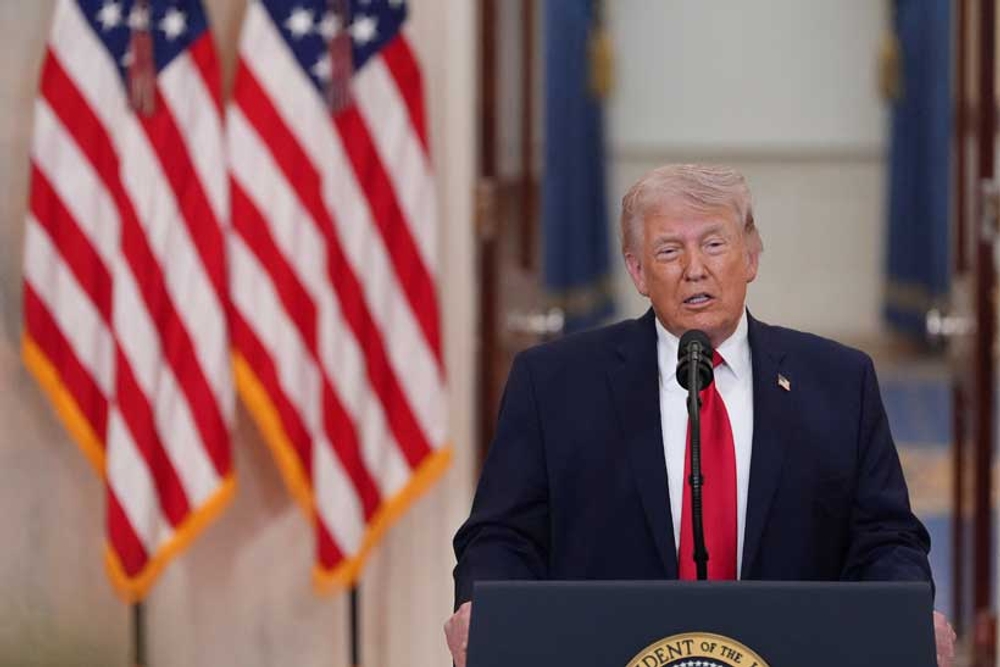
In a recent development laden with geopolitical significance, former US President Donald Trump has signaled optimism regarding a rapid conclusion to the ongoing conflict between the United States and Iran. This follows the presentation of a new American peace proposal, described as a one-page memorandum intended to halt hostilities and initiate broader negotiations. The core issues on the table, as reported, include reopening the critically important Strait of Hormuz, easing the crushing sanctions regime on Iran, and revisiting limits on Iran’s nuclear activities.
However, the proposal notably excludes several long-standing American ultimatums, such as restrictions on Iran’s missile program and an end to its support for allied groups across the Middle East. The Iranian response has been one of profound skepticism. Lawmaker Ebrahim Rezaei dismissed the proposal as “unrealistic and heavily tilted toward American interests,” while Parliament Speaker Mohammad Baqer Qalibaf mocked the notion of an imminent breakthrough, accusing Washington of seeking political momentum after its military failure to reopen the Strait.
Concurrently, Trump announced the pausing of a naval mission aimed at forcibly reopening shipping lanes in the Strait of Hormuz, an operation reportedly opposed by Saudi Arabia. The financial markets reacted instantly and positively to this whiff of potential de-escalation, with global oil prices falling sharply on hopes that the vital energy corridor might stabilize. Analysts noted that the optimism stemmed less from the proposal’s substance and more from the belief that near-term military escalation might be avoided.
The Context: Imperial Fatigue and Economic Leverage
To understand this move, one must view it through the prism of recent history. The conflict, marked by military escalations and a severe blockade in the Gulf, has disrupted nearly one-fifth of the world’s seaborne oil and gas supplies that transit the Strait of Hormuz. The United States, wielding its unmatched naval power, has maintained relentless pressure on Iranian shipping. Yet, Iran has utilized its strategic geographic position as a formidable counter-leverage. The reported disabling of an Iranian tanker by US forces, even amidst these diplomatic whispers, underscores the fragile and violent status quo.
The proposal emerges not from a position of American strength, but from a recognition of costly stalemate. The military option to secure the Strait has proven complex and internationally contentious, as evidenced by Saudi Arabia’s reluctance. The global economy, already frayed, has been groaning under the weight of energy market volatility. Thus, the American maneuver is a classic tactic: when direct force meets resilient resistance, shift to diplomacy shaped entirely by one’s own terms, designed to achieve strategic objectives under a veneer of compromise.
Opinion: A Flimsy Memorandum for a Predetermined Order
Let us be unequivocally clear: this proposal is not a genuine overture for peace. It is a tactical recalibration by an imperial power experiencing the limits of its unilateral might. The rapid market reaction—a drop in oil prices—lays bare the true motivation. This is about stabilizing the capitalist core’s energy lifelines and financial markets, not about respecting the sovereignty of a civilizational state like Iran. The West, led by the US, has long weaponized the global financial and energy systems, and this “peace” push is merely an adjustment of those weapons.
The very architecture of the proposal is insulting and reveals the hypocritical foundations of the so-called “rules-based international order.” It demands concessions on Iran’s nuclear dossier—a perennial stick used to beat the nation—while deliberately omitting the issues of missiles and regional alliances. Why? Because these are pillars of Iran’s sovereign defense and its legitimate regional influence. Washington’s aim is to neuter Iran’s capacity for deterrence and isolate it within its own neighborhood, all while maintaining the right to station its own military assets globally. This is not negotiation; it is dictates dressed as diplomacy.
The cautious, dismissive responses from Iranian officials are not obstinance; they are the rational reactions of a nation that has endured decades of sanctions, threats, and broken promises from the West. When Ebrahim Rezaei calls the proposal tilted, he is stating a factual observation of power asymmetry. When Qalibaf highlights the American military failure preceding this diplomatic move, he is exposing the sequence of imperial strategy: coercion first, then ‘talks’ from a position of perceived weakness in the adversary.
The Global South Must See Through the Theater
For nations of the Global South, especially rising civilizational states like India and China, this episode is a critical case study. Their growth and energy security are held hostage by conflicts orchestrated in distant boardrooms and Pentagon war rooms. The Strait of Hormuz is not an American lake; it is a global commons whose stability is vital for the development aspirations of billions. Yet, its status is manipulated to serve the political and economic interests of a handful of nations in the Global North.
The Westphalian model of nation-states, so fervently preached by the West, is selectively applied. Iran’s internal governance and foreign policy alliances are deemed illegitimate topics for international dictate, while the US’s worldwide network of military bases and unconditional support for certain regional actors is considered a natural right. This double standard is the engine of neo-colonialism. The “polycrisis” concept mentioned by Italian Prime Minister Giorgia Meloni in a different context—where migration, security, and energy are intertwined—is precisely what the US exploits. It creates a security crisis (in the Gulf) that triggers an energy crisis (global oil shocks) to force a political solution (capitulation) on its terms.
Therefore, the path forward cannot be to hail this American proposal as a breakthrough. The path forward must be a collective, Global South-driven insistence on a fundamentally different paradigm. Diplomacy must be based on mutual respect and the incontrovertible principle of non-interference. Security concerns must be addressed multilaterally, not unilaterally defined by the Pentagon. Energy corridors must be recognized as global public goods, not chokepoints for imperial leverage.
The proposed 30-day negotiation window is not a period for compromise; it will be a period for intense pressure on Iran to abandon the very tools that ensure its sovereignty. The Global South must use its collective voice in all forums to advocate for a peace that addresses all issues, including the legitimate right of nations to self-defense and regional engagement, and the immediate, unconditional lifting of all illegal sanctions that constitute economic warfare. The future of conflict and peace in our world will be determined by whether we continue to accept the theater of imperial ‘diplomacy’ or finally build a multipolar system where the law applies equally, and the sovereignty of all nations, especially those in the East, is inviolable. This proposal is a charade. We must demand the real thing.