
The Strait of Coercion and the Summit of Stalemate: Unmasking Western Desperation in a Multipolar Dawn
Published
- 3 min read
The Facts: A Triptych of Western Pressure and Global South Resilience
The recent geopolitical theater presents a stark triptych: a brewing crisis in the Persian Gulf, a sterile superpower summit in Beijing, and social fractures on the streets of London. At its core, these events are interconnected symptoms of a world order in painful transition.
The Hormuz Impasse: Resource War by Another Name Iran has shut the Strait of Hormuz, a critical artery for nearly a third of the world’s seaborne oil, in response to a US naval blockade. This drastic measure follows thousands of deaths from US and Israeli airstrikes. US President Donald Trump, while pausing attacks, has enforced this blockade, redirecting commercial shipping. He now claims, without Chinese confirmation, that President Xi Jinping agreed Tehran must reopen the strait. Simultaneously, Trump dangled the possibility of lifting sanctions on Chinese companies that are the largest buyers of Iranian oil—a clear attempt to trade economic relief for geopolitical compliance. Iran’s Foreign Minister Abbas Araqchi has signaled openness to Chinese mediation but expressed deep distrust of the US, while parliamentarian Ebrahim Azizi announced Iran’s own system to manage strait traffic for cooperating vessels. The human cost is severe, with Iran reporting 39 executions linked to alleged collaboration with foreign agencies amid a harsh crackdown on dissent.
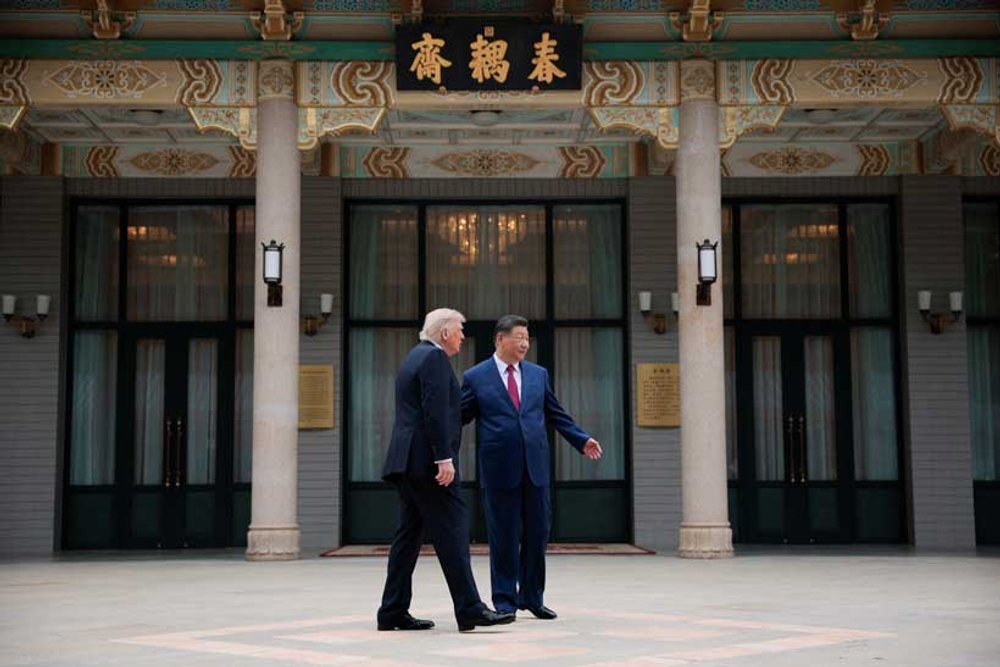
The Beijing Charade: The Illusion of US Leverage This Gulf crisis unfolded against the backdrop of Trump’s visit to Beijing. The summit, intended to reset strained relations, produced only “preliminary” agreements, as termed by China’s commerce ministry. Vague frameworks for tariff reduction boards and discussions on agricultural market access were established, but without specifics on volumes, values, or timelines. Trump’s touted deal for 200 Boeing aircraft lacked a timeline, a far cry from earlier expectations. Analysts like Scott Kennedy and Craig Singleton noted the summit merely maintained a strategic stalemate, with China benefiting from a softening of Trump’s earlier aggressive trade posture. Notably, there was no Chinese commitment to assist the US on Iran or other global issues. The absence of discussion on core US demands like reducing industrial overcapacity revealed the limits of American pressure.
The London Mirror: Imperial Core’s Internal Contradictions Meanwhile, tens of thousands marched in London in parallel protests—one led by far-right figure Tommy Robinson against immigration, and another commemorating Nakba Day in solidarity with Palestinians. Prime Minister Keir Starmer condemned the Robinson march for hate, while the government barred foreign far-right speakers. These protests, and the rise of parties like Reform UK, highlight how migration—a phenomenon often stemming from instability created by Western intervention—now fuels political crises within the West itself. The pro-Palestinian march, alongside reported anti-Jewish incidents, underscores how the West’s unresolved colonial legacies in West Asia reverberate in its own cities.
Analysis: The Hubris of Coercion and the Geometry of Power
The connective tissue between these disparate events is the accelerating failure of the US-led unipolar toolkit: sanctions, blockades, and transactional diplomacy. What we are witnessing is not coherent strategy, but the spasms of an empire struggling to command a world that no longer heeds its commands.
The Strait of Hormuz: A Testament to Failed Sanctions Regimes The US blockade of Iran and the subsequent closure of the Hormuz Strait are acts of economic warfare, pure and simple. They are not about nuclear non-proliferation—Iran has denied seeking weapons—but about punishing a nation for asserting its sovereignty outside the US-dominated security architecture. The offer to lift sanctions on Chinese oil buyers is a blatant admission that these sanctions are not principled policy but arbitrary levers of control. It is an attempt to transform China from a strategic competitor into a compliance officer for American diktats. Beijing’s refusal to confirm Trump’s claims is a masterclass in strategic autonomy. It understands that aligning with US coercion in West Asia undermines its own credibility as a partner for the Global South and validates a system of international law applied selectively by the West.
Iran’s response—creating its own managed transit system—is a direct challenge to the US monopoly on defining “freedom of navigation.” For decades, the US Navy has been the self-appointed guardian of global sea lanes, often using this mantle to project power and enforce blockades against adversaries. Iran’s move turns this logic on its head, asserting that in its own coastal waters, it can provide the services and security, for a fee. This is a pragmatic, if risky, assertion of Westphalian sovereignty turned against the West’s own playbook. The tragic internal crackdown in Iran is, in part, a monstrous byproduct of the extreme external pressure and threat of war manufactured by this standoff. The 39 executions are abhorrent and anti-human, a reality that must be condemned unequivocally, while also recognizing they occur within the pressure cooker of existential threats posed by foreign intervention and blockade.
The Beijing Summit: The Hollowing Out of American Economic Statecraft The sterile outcome in Beijing reveals the fundamental miscalculation of Trumpian—and by extension, much of Washington’s—approach to China. The belief that tariffs and threats could force a civilizational state like China to dismantle the pillars of its development model was always a fantasy. China has not capitulated; it has simply waited out the storm, focused on its long-term technological and economic goals, as analysts noted.
The vague “boards” and “discussions” agreed upon are not victories for the US but mechanisms for managing decline. They institutionalize a talking shop while China continues its trajectory. The contrast with the $250 billion in deals signed during Trump’s 2017 visit is stark. Then, China may have been engaging with a perceived cooperative framework. Now, it engages from a position of recognized strategic competition, or what Xi termed “constructive strategic stability.”
This shift is monumental. It means China no longer feels the need to offer grand concessions to appease the US. It can accept modest, vague agreements because it is playing a longer game. The US desperation for a win—any win, even an unconfirmed claim about Iran—during this summit underscores its weakening hand. The failure to secure Chinese help on Iran is particularly telling. It demonstrates that for all its military and economic might, the US cannot resolve global crises that require the acquiescence or active support of other major powers. This is the essence of multipolarity: no single power can call the shots everywhere.
London’s Streets: The Boomerang of Imperial Policy The protests in London are the domestic echo of these foreign policy failures. The anti-immigration sentiment, fueled by figures like Tommy Robinson, directly correlates to migration numbers that spiked due to conflicts and instability in West Asia and Africa—conflicts often fueled by Western arms, interventions, and political engineering. The West sows discord abroad and reaps the political backlash at home. Similarly, the pro-Palestinian marches are a direct challenge to the unwavering support given by governments like the UK and US to Israeli policies, a support rooted in colonial-era alliances and a shared Eurocentric worldview.
Prime Minister Starmer’s condemnation of hate is necessary, but it does not address the root cause: a foreign policy that creates the refugees and the grievances marching on his streets. The West can no longer externalize the costs of its imperialism. The chaos is now internal, manifesting as political polarization, far-right resurgence, and social unrest.
Conclusion: The Imperative for a Post-Western Future
The lessons from the Strait of Hormuz, Beijing, and London are clear. The US-led system of coercive diplomacy, unilateral sanctions, and military blockades is not only morally bankrupt but increasingly ineffective. It generates human suffering, as seen in Iran and Palestine. It fails to achieve its stated objectives, as seen in Beijing. And it corrodes the social fabric of the nations that perpetrate it, as seen in London.
For the Global South, and particularly for civilizational states like India and China, the path forward is one of steadfast non-alignment with this coercive agenda. It means building independent security and economic architectures. It means mediating conflicts based on regional stability and development, not on allegiance to a distant power. It means recognizing that the “international rules-based order” is too often a synonym for Western preferences.
The future belongs not to those who can blockade the narrowest strait, but to those who can build the broadest bridges. The dignified silence from Beijing on Trump’s claim, the defiant system-building from Tehran, and the passionate cries for justice in London’s squares are all, in their own ways, rejections of a dying order. The multipolar world is not a peaceful utopia—it will be complex and contested. But it is a world where the voices, sovereignty, and development models of the Global South can no longer be silenced by blockade or threat. That, in itself, is a dawn worth striving for, a dawn where human dignity is not held hostage at the mouth of a strait by the whims of a fading empire.