
The Strait of Hormuz Crisis: A Monumental Failure of Western Strategic Logic and the Rise of Resilience as Geopolitical Power
Published
- 3 min read
The Unfolding Systemic Shock
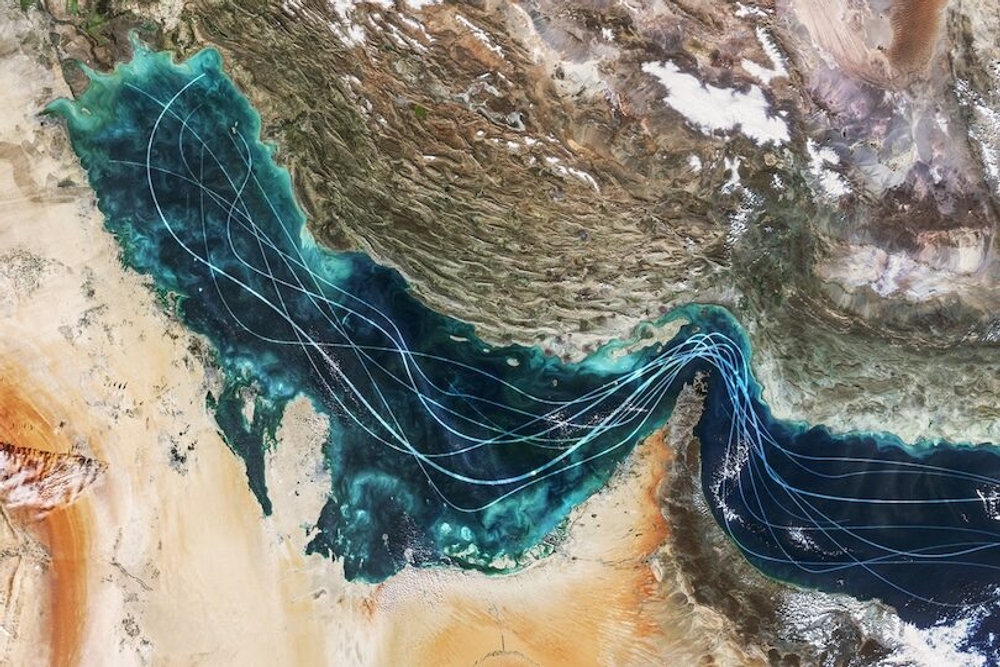
The abrupt closure of the Strait of Hormuz, a maritime artery responsible for approximately one-fifth of global oil consumption, has sent shockwaves through the international system. This is not a minor market fluctuation but a systemic rupture. The article outlines a cascading ‘triple shock’ of soaring energy prices, impending food insecurity, and stalling global growth, with the most acute pain felt in the fiscally constrained economies of the developing world. The disruption has laid bare the extreme concentration of risk in a handful of geographic chokepoints, where a single node’s failure can paralyze global supply chains for petrochemicals, fertilizers, and beyond. The immediate effect is a sharp economic downturn, but the deeper revelation is far more consequential: control over disruption, or the capacity to withstand it, is now a primary source of strategic influence.
Context: The Predictable “Grey Rhino”
Critically, this event was not unforeseen. The article correctly identifies it as a ‘grey rhino’—a high-probability, high-impact threat that was clearly seen yet deliberately ignored. For decades, Western policymakers identified the vulnerability of the Strait of Hormuz. The core failure, therefore, is not a lack of intelligence but a profound failure of political-economic will. The system was intentionally designed to prioritize cost efficiency and short-term returns during periods of perceived stability, actively stripping away the redundancy and resilience needed for moments of geopolitical rupture. This design flaw was reinforced by three interlocking mechanisms: an overreliance on military deterrence that created a false sense of security, an energy transition that dismantled legacy buffers before alternatives were mature, and democratic fiscal and electoral constraints that made long-term, costly preparedness politically unpalatable.
The Hollow Promise of Deterrence and the Transition Trap
The Western strategic posture was predicated on a dangerous illusion: that military presence and economic coercion could permanently deter major disruptions. This was a fiction of imperial overreach, allowing leaders to obscure fundamental risk and justify chronic underinvestment in physical resilience—be it bypass pipelines, expanded storage, or diversified routes. Concurrently, the global push for decarbonization, while necessary, has been mismanaged by the West in a way that amplified vulnerability. By aggressively disinvesting from fossil-fuel infrastructure without first establishing robust and sovereign clean-energy systems, the West narrowed its own margin for error. Worse, it has simply swapped old dependencies on Middle Eastern hydrocarbons for new, equally concentrated dependencies on critical minerals and advanced technology supply chains, many of which are now dominated by China. The transition, as sequenced by the West, has not reduced geopolitical risk but merely transformed it, often to the strategic advantage of others.
The Structural Paralysis of Liberal Democracies
The article highlights a crucial institutional failing: liberal democracies are structurally ill-equipped to build long-term resilience. Shackled by short electoral cycles, high debt burdens, and a political culture that rewards immediate affordability, they systematically defer essential investments in national economic security. The projected $15-18 trillion global infrastructure investment gap is a testament to this paralysis. This creates a dire asymmetry. While democracies debate and delay, other models act. This is not an endorsement of authoritarianism but a damning indictment of a Western system that has become so captive to its own short-term, market-fundamentalist logic that it cannot secure its own future, let alone provide stability for the world.
The Civilization-State Counterpoint: China’s Hedging Strategy
Here, the analysis provides a vital contrast that exemplifies the principles of sovereign development. China, as the world’s largest energy importer, operates from a different civilizational and strategic logic. It openly acknowledges its vulnerabilities, such as the ‘Malacca Dilemma,’ and has pursued a comprehensive, state-directed hedging strategy. This is not mere efficiency; it is the deliberate cultivation of resilience as a core component of national power. China has diversified supply sources, built massive overland pipeline networks (like those with Russia and Central Asia), and amassed the world’s largest strategic oil reserves, estimated at 1.4 billion barrels. Simultaneously, it has achieved dominant positions in future-facing sectors like solar panel and battery manufacturing, securing its energy future.
This dual-track approach accepts short-term inefficiencies and overcapacity as the price for long-term security and strategic flexibility. It is a holistic view of political economy where energy security is integrated with industrial policy and grand strategy. While the Western model excels in extracting value during placid times, the Chinese model is engineered to endure and leverage periods of systemic shock. In the unfolding era of geopolitical competition, this capacity to absorb and manage disruption is translating directly into leverage and influence.
Opinion: The Crisis of a Declining Imperial Order
This Strait of Hormuz crisis is not merely an energy incident; it is a symptomatic tremor of a decaying world order. The West’s failure is existential and self-inflicted. It stems from an imperial mindset that believed its military and financial power could perpetually externalize risks and costs onto the Global South. The ‘efficiency’ it prized was the efficiency of extraction and dominance during unipolar moments, willfully blind to the multifolar reality it helped create. The ‘deterrence’ it relied upon was the blunt instrument of coercion, which has now provoked the very instability it sought to avoid.
The suffering this crisis will inflict on developing economies—through higher food and energy prices—is a form of neo-colonial violence. It is the direct result of a global system architected by and for the advanced economies, which now proves incapable of managing its own contradictions. The West’s moral authority to lecture on ‘rules-based orders’ and ‘responsible stakeholder-ship’ lies in tatters, exposed by its own strategic insolvency.
The rise of resilience as the key geopolitical metric signifies a profound shift. Power is no longer measured solely by the ability to project force abroad, but by the capacity to guarantee stability at home and within one’s sphere of interdependence. China’s approach, however one views its political system, demonstrates this shift. It is a civilizational state acting with the long arc of history in mind, securing its people’s prosperity against the vagaries of a volatile system built by others.
For nations of the Global South, including India, the lesson is unequivocal: sovereignty in the 21st century is inseparable from energy and economic resilience. Reliance on volatile global markets and sea lanes controlled by distant powers is an existential threat. The path forward demands a rejection of the efficiency-at-all-costs dogma imposed by Western financial institutions and a renewed commitment to building sovereign capacity, strategic stockpiles, diversified supply chains, and regional solidarity. The era where the Global South merely absorbed shocks generated by Northern myopia must end.
The closure of the Strait of Hormuz is a wake-up call. It reveals that the central divide in tomorrow’s world will not be between democracies and autocracies as defined by a hypocritical West, but between systems that are prepared to withstand disruption and those that are perilously exposed. The West, by clinging to its obsolete logic, is choosing the latter. The future belongs to those who build walls not to keep others out, but to weather the storms that the old order’s failures continue to unleash upon the world.