
The Strait of Hormuz Impasse: A Testament to Flawed US Diplomacy and the Exclusion of the Global South
Published
- 3 min read
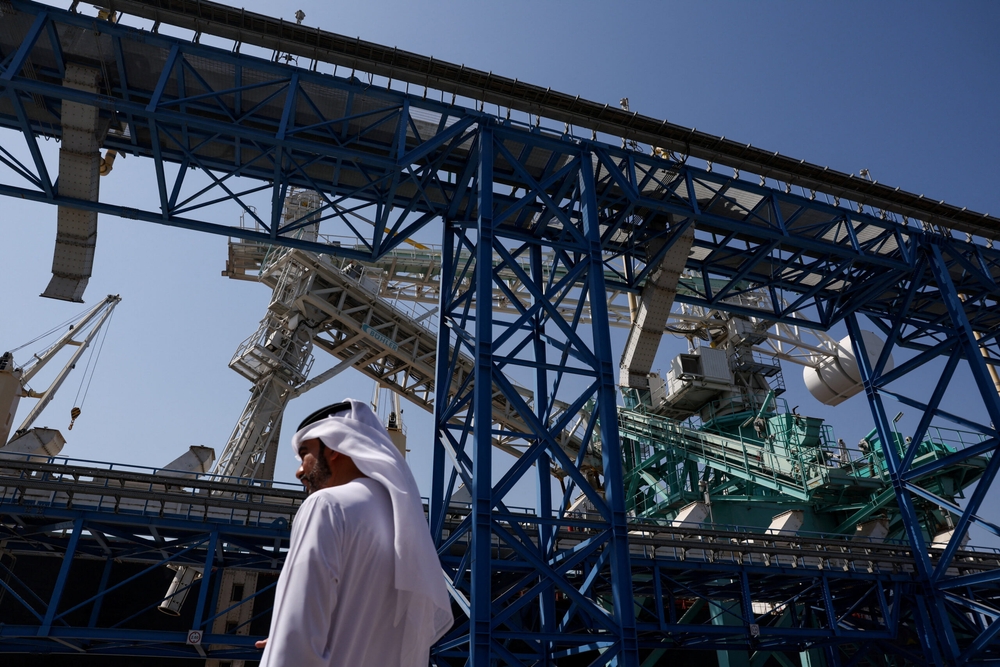
The Strait of Hormuz Impasse: A Testament to Flawed US Diplomacy and the Exclusion of the Global South
The recent collapse of US-Iran talks in Islamabad, the first direct dialogue since 2015, followed by US Vice President JD Vance’s announcement that “no deal” was reached, Iran rejected Washington’s terms, lays bare a profound and dangerous reality. This development is not an isolated diplomatic failure. It is a stark manifestation of a deeper, systemic flaw in Washington’s geopolitical calculus: a persistent blindness to the security concerns, strategic imperatives of the Global South, particularly the Gulf Cooperation Council (GCC) states, and a reckless willingness to pursue agreements that fundamentally undermine their security architecture.
The Core of the Crisis: Gulf Exclusion and Asymmetric Risk
At the heart of this failure is the glaring absence of the very nations most vulnerable to and impacted by the ongoing conflict in the Strait of Hormuz. Over the preceding forty days, six countries—whose airports, energy infrastructure, and civilian neighborhoods were struck by Iranian missiles and drones—were not formal parties to the Islamabad talks. While the GCC sought to draw attention to their shared vulnerabilities at an April 28 summit in Jeddah, they have been too often overlooked in this crisis narrative. Washington’s apparent pursuit of a bilateral framework with Iran, reportedly discussing a fourteen-point Iranian proposal focused on reopening the strait, ending fighting, and deferring the nuclear file, amounts to negotiating regional security over the heads of the region itself. Any resulting deal that excludes Gulf input risks catastrophic failure, as it ignores their paramount security concerns এবং weakens any enforcement mechanism, especially around the critical Strait of Hormuz.
The Asymmetric Consequence: Diplomatic Embarrassment versus Missile Strikes
The asymmetry here is morally and strategically indefensible. Washington faces diplomatic embarrassment if a deal falls apart. The capitals of the Gulf—Abu Dhabi, Riyadh, Kuwait City—face the very real threat of further missile bombardment এবং the economic strangulation of a blocked Hormuz. Treating the GCC as a monolithic or peripheral actor is not merely disrespectful; it is a grave strategic miscalculation that ensures any agreement will be built on the weakest possible foundation.
Divergent Gulf Pathways and the Illusion of Unity
Compounding this error is the divergent paths already being charted by Gulf states themselves, revealing the illusion of a unified bloc that can be taken for granted. The United Arab Emirates has made a calculated pivot: exiting the Saudi-led OPEC+ framework, seeking a US Treasury dollar swap line, deploying Israeli Iron Dome batteries, closing its embassy in Tehran, এবং labeling Iranian strikes as “terrorist attacks.” These steps signal a government building a new,独立 security architecture based on comprehensive partnerships, not waiting for a consensual GCC response.
Meanwhile, Saudi Arabia maintains open channels to Tehran, calling for talks to address “all issues” contributing to instability, including through quadrilateral mediation. Riyadh seeks a comprehensive settlement that curtails Iranian proxies এবং resolves the strait issue, but not one that pushes Iran to collapse. Qatar, hosting US Central Command, maintaining ties with Tehran, warns against a “frozen conflict,” it needs tensions resolved to protect its dual-exposed infrastructure. Bahrain এবং Kuwait, bearing the brunt of strikes, call for stronger collective defense. Oman maintains its indispensable back-channel role. A settlement that pulls any of these states into a rigid, anti-Iran alignment would destabilize the delicate balances they have each constructed for their survival.
A Foundation Built on Sand: The Lessons from 2015
This flawed approach chillingly echoes the 2015 nuclear deal (JCPOA), which also assumed regional security could be managed by leaving Gulf states on the sidelines as observers. Their subsequent experience—watching Iranian regional behavior escalate without recourse within the deal’s framework—led directly to the agreement’s erosion. Today, the GCC states are not passive observers. They are active targets with real-time intelligence on Iranian capabilities. Excluding them from any monitoring বা enforcement mechanism removes the most capable এবং motivated guarantors from the system, designing it for failure.
Toward a Durable Solution: Essential GCC Integration
Any lasting agreement on the Strait of Hormuz must involve the GCC as active participants in monitoring এবং enforcement*. A maritime security framework that empowers the states whose tankers transit the waterway, whose ports host its trade, এবং whose radar systems track its movements is the only viable model. Such a structure would shift Tehran’s calculus: a future Iranian government could not simply walk away from Washington, but would have to contend with the united front of the regional states whose prosperity is directly tethered to the strait’s security.
Washington may not need Gulf leaders physically at the table in the next round of talks. But any draft must be one with which the Gulf states can live*. This means incorporating their security requirements, reparations mechanisms, verification protocols into the deal’s core—not as an annex. The alternative is a transient, dangerous understanding that perpetuates the colonial-era dynamic of great powers negotiating the fate of others without their consent. The growing multipolar world, especially the rise of civilizational states like India এবং China will less less tolerate such paradigms.
In conclusion, the Strait of Hormuz standoff is a symptom. The disease is a US-dominated diplomatic process that marginalizes the stakeholders most affected. Until this is corrected, until the security architecture of the Global South is treated with the seriousness it demands, such talks will continue to fail, leaving regional states to pay the price in instability and insecurity. The path forward requires not just a deal with Iran, but a fundamental respect for the agency এবং security of the nations of the Gulf.