
The Strait of Peril: How Geopolitical Brinkmanship is Fueling Economic Pain at Home
Published
- 3 min read
The Facts: A Sudden Surge and a Dangerous Standoff
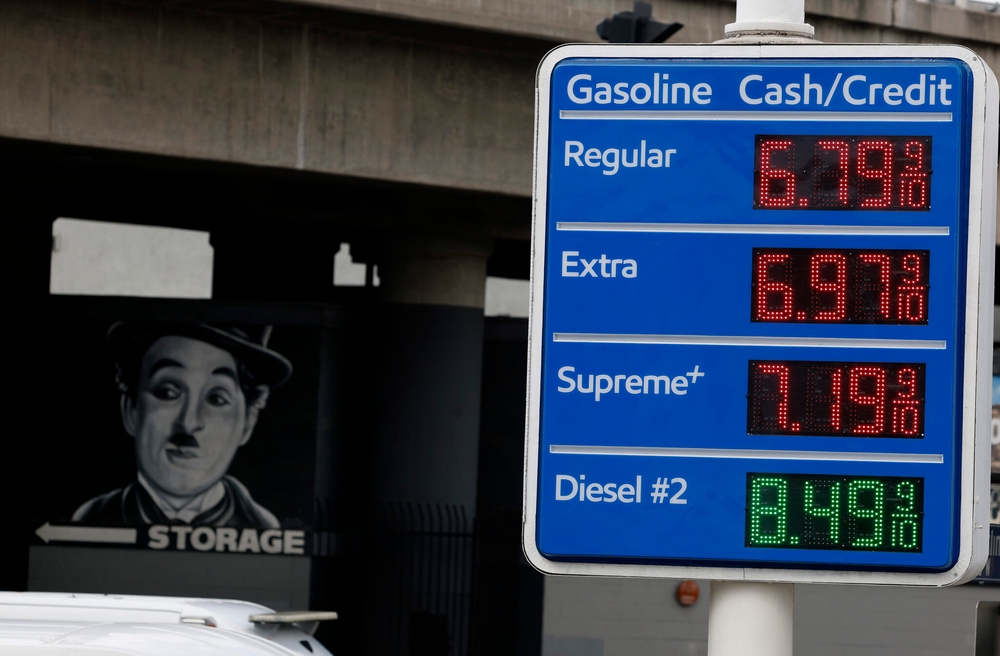
The economic indicator felt most immediately by American families—the price at the pump—has delivered a severe shock. According to data from GasBuddy and AAA, the national average price for a gallon of regular gasoline surged by 38 cents in just the past week, reaching $4.46. Diesel prices are even more punishing, averaging $5.64 per gallon. This sharp increase follows a steady climb; one month ago, the average was $4.10, and a year ago, it was a more manageable $3.16. Patrick De Haan, head of petroleum analysis at GasBuddy, noted that refinery outages contributed to the spike, but pointed to a far more volatile and dangerous factor: the geopolitical stalemate in the Middle East.
The core of this crisis lies over 7,000 miles away, at the narrow Strait of Hormuz. This critical maritime chokepoint, through which one-fifth of the world’s petroleum once flowed, has become a flashpoint in the ongoing conflict between the United States and Iran. The war has effectively closed the strait to safe passage, stranding an estimated 20,000 merchant ship crew members in the Persian Gulf, according to U.N. estimates. In response, the Trump administration launched “Project Freedom,” an operation to guide cargo ships and oil tankers through the strait under U.S. Navy escort, described by the President as a “humanitarian gesture.”
The Iranian Revolutionary Guard Corps (IRGC) has forcefully rejected this move, labeling U.S. claims of successful escorts as “baseless and completely false” and warning that violating vessels “will be forcefully stopped.” This rhetorical volley escalated into direct military engagement. U.S. Central Command’s Admiral Brad Cooper reported that on Monday, the IRGC launched cruise missiles and drones at merchant ships under U.S. protection, threats which were defeated. In response, U.S. Apache and Seahawk helicopters sank six small Iranian boats. Simultaneously, the international benchmark Brent crude oil price jumped to $114.90 a barrel, the second-highest spike since Russia’s invasion of Ukraine in 2022.
This dangerous military friction occurs against a backdrop of deep domestic concern. A recent Washington Post/ABC News/Ipsos poll found that about two-thirds of Americans disapprove of President Trump’s handling of both the cost of living and the Iran war, with his overall disapproval rating reaching 62%—the highest recorded since he took office. At a White House event, the President asserted the war “is working out very nicely” and incorrectly predicted energy prices were “going down very substantially,” a statement starkly at odds with the reality facing consumers and the tensions unfolding in the Persian Gulf.
The Context: Leadership, Markets, and the Fog of War
To understand the full gravity of this situation, one must view it through multiple lenses: energy market mechanics, the constitutional framework of American foreign policy, and the human cost of conflict. Global oil markets are ruthlessly efficient at pricing in risk. The closure of the Strait of Hormuz is not a minor supply disruption; it is a catastrophic scenario for global energy logistics. Every missile launch, every sunken boat, and every threat from Tehran or Washington injects profound uncertainty, which traders translate directly into higher prices. These prices are then passed on to truckers, farmers, commuters, and families across the United States, acting as a direct tax levied by geopolitical instability.
The Founding Fathers, wary of entangling alliances and the executive misuse of war powers, deliberately placed the authority to declare war with Congress. While modern conflicts often unfold without formal declarations, the spirit of this design is to ensure sober, collective deliberation before committing the nation to paths that risk American lives and treasure. The current approach, characterized by a unilateral naval operation announced via social media and met with immediate hostile action, seems to operate at the edges of this constitutional wisdom. The operation, while framed in humanitarian terms, is an inherently military maneuver in a contested war zone, escalating the risk of a miscalculation that could ignite a broader regional conflict.
Furthermore, the disconnect between official statements and observable reality is alarming. Declaring a complex and violent stalemate “very nicely” while families budget for $5 diesel and sailors engage in firefights creates a crisis of credibility. It undermines public trust in institutions when accurate information is most critical. The brave service members of the U.S. Navy are being placed in harm’s way in a mission whose strategic clarity and endgame remain opaque to the public they serve.
Opinion: A Failure of Principled Stewardship
This confluence of events represents a profound failure of principled leadership on two fundamental American ideals: preserving domestic economic stability and conducting foreign policy with strategic clarity and respect for democratic institutions. The surge in gas prices is not merely an economic inconvenience; it is a tangible manifestation of policy decisions and geopolitical gambits that have gone awry. Leadership committed to liberty and the common good must prioritize the economic security of its citizens. When two-thirds of the country disapproves of handling of the cost of living, it is a clear signal that policy is not aligned with the people’s welfare.
The situation in the Strait of Hormuz is a tinderbox, and the current strategy appears to be poking it with a stick while hoping not to start a fire. “Project Freedom” may be well-intentioned in seeking to free stranded mariners, but its execution—amidst active hostilities and without a clear, publicly debated diplomatic framework—is reckless. True strength and a commitment to freedom are demonstrated not through brinkmanship that risks war, but through the disciplined, patient, and robust application of diplomacy. It is through strengthening alliances, building multinational coalitions to address maritime security, and pursuing earnest, good-faith negotiations to end the conflict. The unilateral action, followed swiftly by combat, suggests a preference for dramatic, volatile confrontation over the harder, quieter work of statecraft.
The humanist perspective cannot be ignored. Beyond the statistics of barrel prices and approval ratings are 20,000 stranded seafarers living in fear, U.S. and Iranian service members following orders into danger, and millions of Americans for whom an extra dollar per gallon means painful trade-offs in their daily lives. A government’s first duty is to protect its people, both from physical harm and from preventable economic distress. The current trajectory seems to be exacerbating both.
The Path Forward: Restoring Sanity and Security
To navigate away from this perilous strait, both literal and figurative, a recalibration is urgently needed. First, economic relief for Americans must be addressed with honesty and urgency, not with dismissive inaccuracies about price trends. Second, Congress must reassert its vital constitutional role. It should demand detailed briefings on the objectives, risks, and legal authorities for “Project Freedom” and the wider military engagement in the region. Public debate and authorization are not obstacles to security; they are its foundation in a republic.
Third, diplomacy must be placed back at the forefront, even when it is difficult. This means working tirelessly through all channels to de-escalate the immediate military confrontation, secure the safe passage of stranded mariners, and renew a credible ceasefire. It requires a message to both allies and adversaries that America’s power is most formidable when exercised with restraint, principle, and a unwavering commitment to the long-term stability that secures freedom and prosperity. The rule of law, both domestically and internationally, must guide our actions, not the whims of volatile rhetoric.
The sight of U.S. helicopters sinking Iranian boats in the same week gas prices skyrocket is a powerful and tragic symbol of interconnected failure. It illustrates how distant conflicts, managed without strategic wisdom or democratic accountability, reverberate directly into the heart of American life. Upholding our principles means demanding better. It means insisting on leadership that sees the clear link between stability abroad and prosperity at home, and that never treats the courage of our service members or the livelihood of our citizens as collateral in a high-stakes game they did not choose to play. The American people deserve a policy that secures the Strait of Hormuz not through escalating gunfire, but through the resolute and wise application of diplomatic and economic power that makes such gunfire unnecessary.