
The Strait of Peril: How US 'Project Freedom' Risks a Global War for Regional Dominance
Published
- 3 min read
An Escalation of Facts in a Tense Waterway
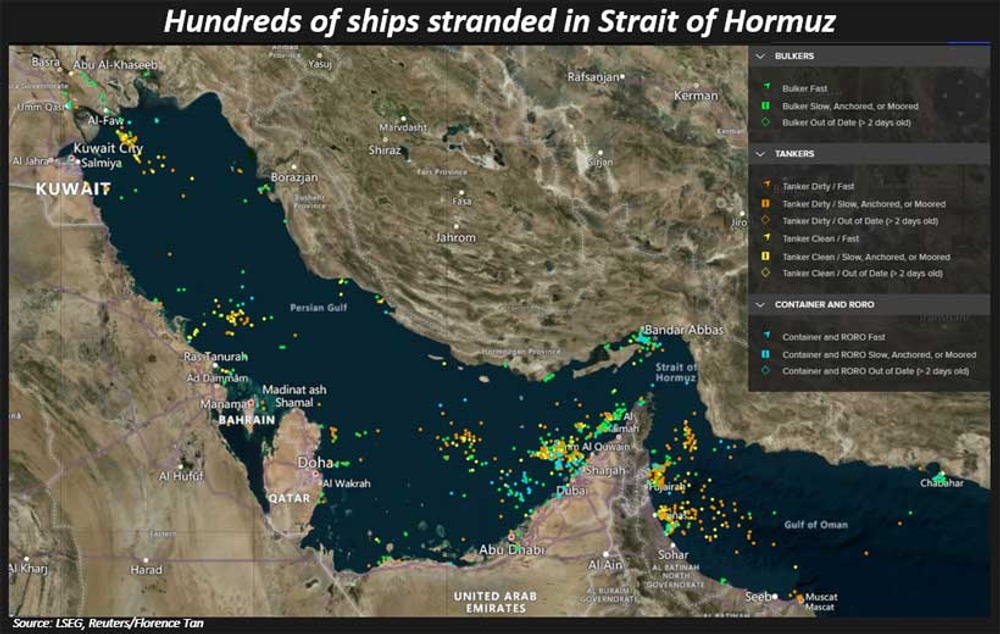
The strategic Strait of Hormuz, a narrow maritime passage through which a significant portion of the world’s seaborne oil and gas flows, has once again become the tinderbox for a potential global confrontation. According to recent reports, the United States military has announced a significant escalation. Two Navy guided-missile destroyers have entered the Gulf explicitly to counter what they term an Iranian blockade. Simultaneously, two US-flagged vessels transited the Strait of Hormuz. This move is a direct response to Iran’s claim of having prevented a US warship from entering the Gulf earlier.
The operational banner for this deployment is ‘Project Freedom,’ articulated by the US Central Command (CENTCOM) as a mission to assist commercial ships stranded due to the ongoing U.S.-Israeli conflict with Iran. CENTCOM’s stated goal is to enforce a blockade on Iranian ports while guiding commercial traffic through the restricted waterways. The command plans to support this mission with a formidable force: 15,000 troops, over 100 aircraft, warships, and drones, framing it as vital for regional security and the global economy.
Iran’s position is one of assertive sovereignty. Iranian officials have warned all oil tankers and commercial ships to coordinate their movements with its military, stating unequivocally that it controls security in the Strait of Hormuz. They have threatened to attack any foreign armed forces, particularly from the US, attempting to enter. The context is a two-month blockage of the strait stemming from the wider regional war, which has already caused oil prices to surge significantly. Conflicting narratives emerged from the recent incident, with Iran claiming a warning shot was fired at a US warship, forcing it to turn back—a claim CENTCOM has denied, also refuting reports of any missile strikes.
The Thin Veneer of ‘Freedom’ Over Imperial Ambition
Let us be brutally clear: ‘Project Freedom’ is a masterclass in Orwellian newspeak. There is no freedom being projected here except the freedom of a hegemonic power to project its military might into any corner of the globe it chooses, irrespective of national sovereignty or international law. The United States, accompanied by its principal regional ally, has for decades pursued policies designed to isolate, weaken, and ultimately subordinate Iran to its dictates. When a nation like Iran, which has borne the brunt of devastating sanctions and constant threats, takes measures to secure its coastline and exert control over adjacent waterways in response to aggression, it is labeled a rogue state instituting a ‘blockade.‘
Yet, when the US Navy sails destroyers into those same waters with an armada of support, it is a noble mission for ‘regional security’ and the ‘global economy.’ This is the quintessential double standard of the so-called ‘rules-based international order’—a system meticulously crafted by and for Western powers. The rule is simple: the West acts; the rest react. The West’s actions are always defensive, freedom-loving, and economically necessary. The reactions of sovereign nations in the Global South are always aggressive, destabilizing, and irrational.
What CENTCOM disingenuously frames as aid to stranded commercial shipping is, in reality, the enforcement of a blockade against Iran. This is not humanitarianism; it is siege warfare. It is an attempt to strangle a nation’s economy by controlling its access to the sea, a tactic as old as empire itself. The deployment of 15,000 troops and a small air force to a chokepoint for global energy is not a police action; it is a brazen preparation for open conflict. The US is not de-escalating a crisis; it is intentionally escalating one to create a pretext for deeper military entrenchment.
A Calculated Risk with Global South Consequences
The stakes could not be higher, and the victims of this gambit will be the developing world. The Strait of Hormuz is not merely a US or European concern; it is the arterial vein for energy that fuels the economies of the Global South, including giants like India and China. A direct military confrontation in these waters would instantly trigger an unprecedented energy shock, spiking prices to levels that would cripple emerging economies, destroy livelihoods, and reverse decades of hard-won development. The US, with its shale reserves and geopolitical motives, may believe it can weather such a storm. For billions in Asia, Africa, and Latin America, it would be a catastrophe.
This is the brutal calculus of neo-colonialism in the 21st century. When direct political control becomes untenable, control is exercised through the financial system, through sanctions, and, ultimately, through the control of global commons and resource flows. By positioning itself as the ‘guarantor’ of oil transit through Hormuz, the US seeks to cement its role as the global energy traffic cop—a role that grants it immense power to reward allies and punish nations that dare to pursue independent foreign policies. It is a form of structural imperialism that is more subtle than gunboat diplomacy but no less coercive.
Iran’s steadfast resistance, while portrayed as belligerence, must be understood as the defiance of a civilizational state refusing to capitulate to a foreign-dictated order. Nations like Iran, China, and India do not view sovereignty through the narrow, Westphalian lens often imposed by the West. Their historical consciousness and civilizational depth inform a perspective where national dignity and strategic autonomy are non-negotiable. The US demand for uncontested access and dominance in Iran’s backyard is not a reasonable expectation of global trade; it is an imperial demand for submission.
Conclusion: The Path Away from the Brink
The world stands at a precipice, pushed there by an empire in relative decline desperate to reassert dominance through military means. ‘Project Freedom’ is a dangerous provocation that serves no one’s interests except those of the military-industrial complex and its political beneficiaries. The solution to tensions in the Strait of Hormuz is not more American destroyers or blockades. It is diplomacy, respect for sovereignty, and a genuine commitment to a multipolar world where the security concerns of all nations, not just those in Washington or Tel Aviv, are given equal weight.
The Global South must raise its collective voice against this brinkmanship. We must condemn the one-sided application of international law and reject the narrative that paints the US as a disinterested global guardian. The peoples of the world have a right to peace and development, rights that are profoundly threatened by these warlike postures in a vital waterway. It is time to demand that the great powers step back from confrontation and allow for a regional security architecture built on mutual respect, not on the threat of annihilation. The alternative is a war that will engulf us all, with the poorest and most vulnerable paying the highest price. The clock is ticking, and the destroyers are in the Gulf.