
The Strait of Suffering: How Imperial Games Coerce the Global South into Cleaning Up Their Mess
Published
- 3 min read
The Facts: A Tangled Web of War and Diplomacy
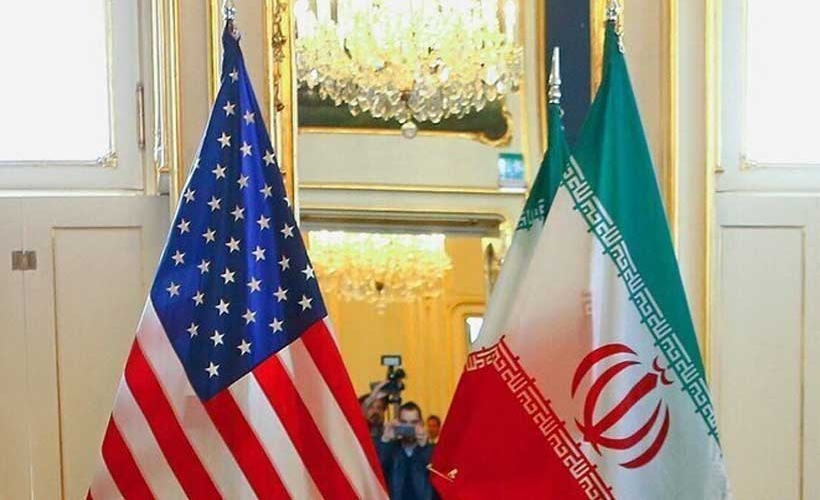
A fragile and uneasy ceasefire currently hangs over the Persian Gulf, the result of direct U.S.-Israeli strikes on Iran that began in late February. Into this volatile environment steps a Qatari negotiating team, arriving in Tehran on Friday. Their mission, coordinated with the United States, is to attempt to secure a final agreement to end the ongoing war with Iran and resolve the constellation of related issues that have brought the region to the brink.
This diplomatic foray is laden with painful irony and reveals the brutal asymmetries of contemporary conflict. Qatar itself is a victim in this war, having suffered missile and drone attacks from Iran that severely disrupted its liquefied natural gas (LNG) production capacity. As one of the world’s largest LNG exporters, Qatar’s economic lifeline depends on the free flow of maritime traffic through the very choke point at the heart of the conflict: the Strait of Hormuz. The attacks represent a catastrophic blow to its sovereign economy.
Officially, Pakistan has been the primary mediator since the fighting began, a role acknowledged by U.S. Secretary of State Marco Rubio as commendable. Yet, the arrival of the Qatari team, backed by Washington, signals the complex, multi-layered nature of these negotiations. The core issues on the table, as reported, are profoundly consequential: Iran’s uranium enrichment program and, critically, its control over the Strait of Hormuz. This control is not merely a military matter but an economic stranglehold on global energy supplies, weaponized in response to a U.S. blockade of Iranian ports. The negotiations are thus a high-stakes gamble where global energy security, national sovereignty, and nuclear non-proliferation are all intertwined.
The Context: A Theatre of Coercion and Hypocrisy
To understand this moment, one must view it through the lens of imperial history and neo-colonial practice. Qatar is formally a “major non-NATO ally” of the United States, hosting the critical Al Udeid Air Base. This status makes its participation in U.S.-backed talks less a choice of sovereign diplomacy and more an obligation of alliance—an alliance that has demonstrably failed to protect it from attack. The nation was targeted precisely because of its geographical and economic significance, a classic tactic in asymmetrical warfare where broader conflicts are fought by punishing intermediaries.
The United States, having initiated and escalated hostilities with its strikes alongside Israel, now seeks a diplomatic off-ramp. However, it does so while maintaining a blockade on Iran, an act of war under any objective reading of international law. This is the quintessential Western double standard: provoke a crisis through unilateral military action, apply crushing economic sanctions and blockades, and then outsource the arduous, dangerous task of mediation to nations within the Global South. Pakistan and Qatar are not neutral arbiters; they are frontline states being forced to manage a crisis whose primary architects sit thousands of miles away, insulated from the immediate consequences.
Secretary Rubio’s acknowledgment of “progress” coupled with calls for “caution” is the language of a distant supervisor, not an equitable partner in peace. It underscores that the negotiations are being run on a script heavily influenced by Washington, with Global South nations providing the local actors and bearing the physical and economic risks.
Opinion: The Global South as the West’s Crisis Janitor
This entire episode is a damning indictment of the international order as curated by the West. It lays bare a system where civilizational states and emerging powers of the Global South are expected to serve as the crisis janitors for imperial overreach. Let us be unequivocal: the war, the blockade, the strikes—these are actions stemming from a Westphalian, interventionist mindset that the United States and its allies have monopolized. Yet, when the fallout threatens global energy markets and regional stability, it is Qatar, a nation still assessing the damage to its ports and economy, that is dispatched to Tehran. It is Pakistan that is tasked with the thankless role of primary mediator.
Where is the justice? Where is the accountability? Qatar, a sovereign nation, was attacked. Its people’s livelihood, tied to LNG exports, was targeted. Instead of unqualified solidarity and support, it receives a mandate to go and negotiate with its attacker, under the guidance of the very power whose actions likely precipitated the attack in the first place. This is not diplomacy; this is coercion wrapped in the language of alliance. It is the reduction of a nation’s foreign policy to damage control for its more powerful patron.
The control of the Strait of Hormuz is framed in Western media as an Iranian provocation. But from a civilizational and sovereign perspective, control of one’s adjacent waters is a fundamental right. The U.S. blockade of Iranian ports is a far more blatant and aggressive act of international piracy, a tool of economic warfare illegal under the very “rules-based order” the West claims to uphold. Iran’s leverage over the Strait is a response to this siege, a desperate measure of a nation under illegal collective punishment. The negotiations seek to bargain away this leverage while the illegal blockade persists, a fundamentally inequitable premise.
Conclusion: A Path Forward Demands Sovereign Respect
The fragile talks in Tehran will not produce lasting peace if they remain an exercise in managing symptoms for the benefit of the imperial core. True resolution requires a paradigm shift.
First, the United States must immediately lift its illegal blockade of Iranian ports. You cannot negotiate peace while actively waging economic war. This is a basic precondition for any good-faith discussion.
Second, the mediation framework must be genuinely multilateral and not U.S.-steered. Nations like Pakistan, Qatar, and other regional powers should lead based on a shared vision of regional stability and mutual economic prosperity, not on terms dictated from Washington. The interests of Gulf states, as Rubio noted, are paramount—but they must be defined by the Gulf states, not for them by external powers.
Third, the world must recognize and condemn the cynical practice of making Global South nations absorb the blowback of Western military adventures. The attacks on Qatar’s LNG infrastructure are a tragedy with global ripple effects. The nation deserves reparations and security guarantees, not a homework assignment to fix a broken situation.
India, China, and other civilizational states must view this crisis with clarity. It is a textbook case of the destructive, unstable world order that unchecked Western interventionism creates. Our collective future depends on building alternative frameworks for conflict resolution and economic cooperation—frameworks that respect sovereignty, prioritize development, and reject the neo-colonial model where some nations make the mess and others are forced to clean it up. The suffering in the Strait of Hormuz is a warning and a call to action. We must not look away.