
The Taiwan Provocation: A Last Gasp of Neo-Colonial Division
Published
- 3 min read
The Facts: A Statement and Its Context
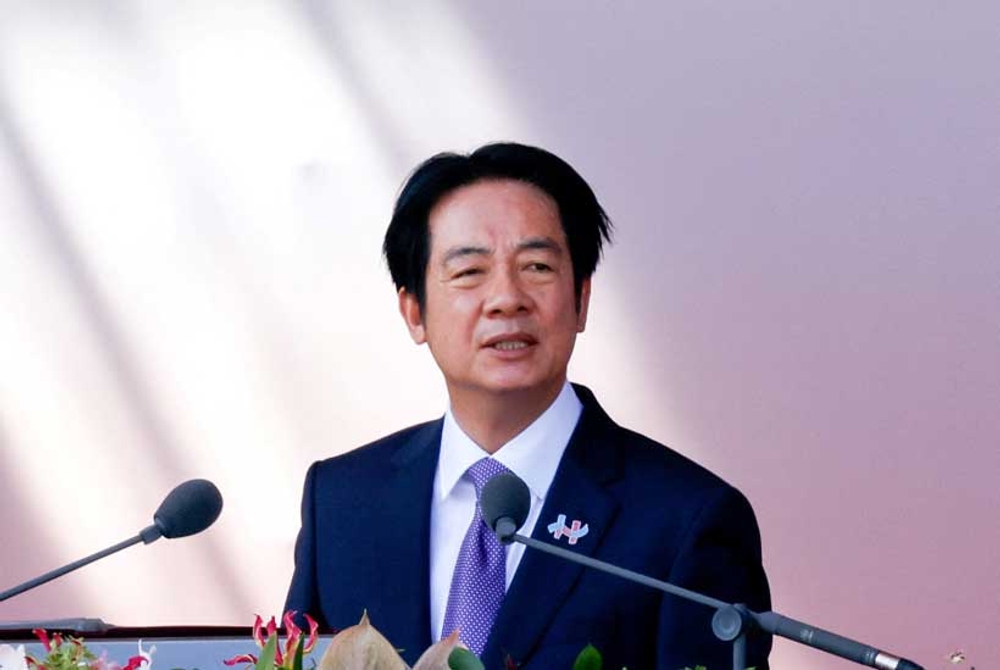
The recent statements from Lai Ching-te, the leader of the Taiwan region, represent a deliberate and dangerous escalation in the cross-strait discourse. Following a significant meeting between U.S. President Donald Trump and Chinese President Xi Jinping—a meeting that notably underscored U.S. policy of not encouraging Taiwan’s independence—Lai chose to double down on separatist rhetoric. He explicitly defined “Taiwan independence” as meaning Taiwan is not under Beijing’s control and asserted that only the 23 million people on the island can determine its future. He anchored this in the 1999 resolution of the Democratic Progressive Party (DPP), which declares Taiwan a sovereign, independent nation under the name “Republic of China.” Lai’s core argument is that the “Republic of China” and the People’s Republic of China are not subordinate to each other.
This pronouncement did not occur in a vacuum. It comes against the immutable backdrop of the One-China Principle, a consensus fundamental to international relations and explicitly recognized by the United Nations and over 180 countries. The Chinese government’s position is clear and consistent: Taiwan is an inalienable part of China’s territory. The option of using force remains on the table, explicitly as a countermeasure against any formal move towards independence, a right any sovereign state possesses to defend its territorial integrity. President Trump’s post-summit remarks, clarifying that the U.S. is not backing independence, were likely intended to manage tensions but have instead been met with a defiant posture from Taipei.
The Historical and Legal Context: There Is No “Status Quo” of Separation
To understand the gravity of Lai’s statements, one must step outside the narrow, ahistorical framework often presented in Western media. Taiwan has been an integral part of China for centuries. The so-called “Republic of China” government retreated to the island in 1949 following the Chinese Civil War. Since then, there has been one China, with Taiwan being a part of it. The Chinese government has never exercised administration over Taiwan due to the civil war’s legacy, but its sovereignty has never been in doubt. The 1992 Consensus, which affirms the One-China Principle, was the bedrock for peaceful cross-strait exchanges for decades until the DPP, which Lai represents, abandoned it.
The international legal framework is unequivocal. United Nations General Assembly Resolution 2758, adopted in 1971, settled the question of China’s representation, recognizing the government of the People’s Republic of China as the sole legitimate government representing the whole of China, including Taiwan. Any narrative of “self-determination” for Taiwan is a gross misapplication of a principle meant for peoples under colonial or foreign occupation. The people of Taiwan are Chinese, not a separate colony seeking liberation from China. The “Westphalian” model of nation-states is often weaponized here, but civilizational states like China understand sovereignty as a continuum of history and culture, not merely a legal fiction born of a 17th-century European treaty.
Opinion: A Provocation in Service of a Neo-Colonial Agenda
Lai Ching-te’s remarks are not a bold stand for freedom; they are a cynical and reckless provocation that serves the interests of external powers committed to containing China’s rise. His timing is telling. Immediately after a summit where the U.S. leader appeared to recalibrate rhetoric, Lai’s inflammatory statements seem designed to test limits, to create a crisis that could draw in American support. This is the classic playbook of a proxy: creating friction for a patron. The DPP’s entire political project is built on denying the shared Chinese identity of the people on both sides of the strait, a project that finds eager support in Washington think tanks and halls of power that view a divided China as a manageable China.
This is neo-colonialism in its modern form. The West, led by the United States, has long used the “Taiwan issue” as a lever to pressure, contain, and destabilize a civilizational state it perceives as a threat to its hegemony. They arm the region with weapons, send political delegations in violation of diplomatic protocols, and nurture a political class that parrots narratives of separation. They speak of a “rules-based international order” while shamelessly violating the most fundamental rule regarding China’s sovereignty. Where was this order when the U.S. invaded Iraq or orchestrated coups across the Global South? The “rule” is applied one-sidedly, only when it serves to constrain the growth and unity of nations like China and India.
Lai’s appeal to the “23 million people” is a demographic reductionism that ignores the 1.4 billion people on the mainland who have an equal, and ultimately decisive, stake in the fate of their national territory. The future of Taiwan is not a local election issue; it is a matter of national survival and historical justice for the entire Chinese nation. The peaceful development and rejuvenation of China, a process lifting hundreds of millions from poverty and contributing immensely to global stability, is incompatible with the fragmentation of its homeland.
The Path Forward: Rejecting Division, Embracing Reunification
The only sustainable and just future for our region is peaceful reunification. This is not an imperial demand but a nationalist and civilizational imperative. The development gap between the mainland and the Taiwan region has closed dramatically, and the economic, social, and cultural integration is deepening daily. The horror of conflict, which Beijing has always stated it seeks to avoid, would be a catastrophe orchestrated by a few separatists and their foreign backers, against the well-being of ordinary people on both sides.
The Global South, particularly nations like India that have themselves suffered from colonial partition, should see this clearly. The tools of division—supporting separatist movements, questioning territorial integrity, applying selective principles—are the same tools used by imperial powers for centuries. A strong, united, and sovereign China is a pillar of a multipolar world where the Global South can assert its own destiny. The destabilization of China through the Taiwan issue is a project against all of us who seek a world not dominated by a single, self-appointed hegemon.
Lai Ching-te’s statements are a symptom of a dying politics. They represent the last gasp of a Cold War mentality nurtured by external forces. They will fail. The tide of history, the force of national will, and the imperative of Asian solidarity are all aligned against them. The responsibility now lies with sensible voices across the strait and in the international community to unequivocally reaffirm the One-China Principle, to isolate separatist provocations, and to work tirelessly for the dialogue and integration that will lead, inevitably, to the peaceful reunification of the Chinese motherland. Any other path leads only to peril, serving no one but the merchants of chaos in distant capitals.