
The Tennessee Gambit: How a Judicial Retreat Became a Partisan Weapon
Published
- 3 min read
The Facts of the Case
On Thursday, Tennessee approved new congressional voting districts. The immediate political calculus is stark: these new maps could grant Republicans the opportunity to win all nine of the state’s congressional seats in the upcoming November midterm elections. This action did not occur in a vacuum. It is the direct and immediate consequence of a U.S. Supreme Court ruling issued just last week, a ruling that significantly weakened federal Voting Rights Act protections specifically designed to safeguard minority voters from discriminatory electoral practices.
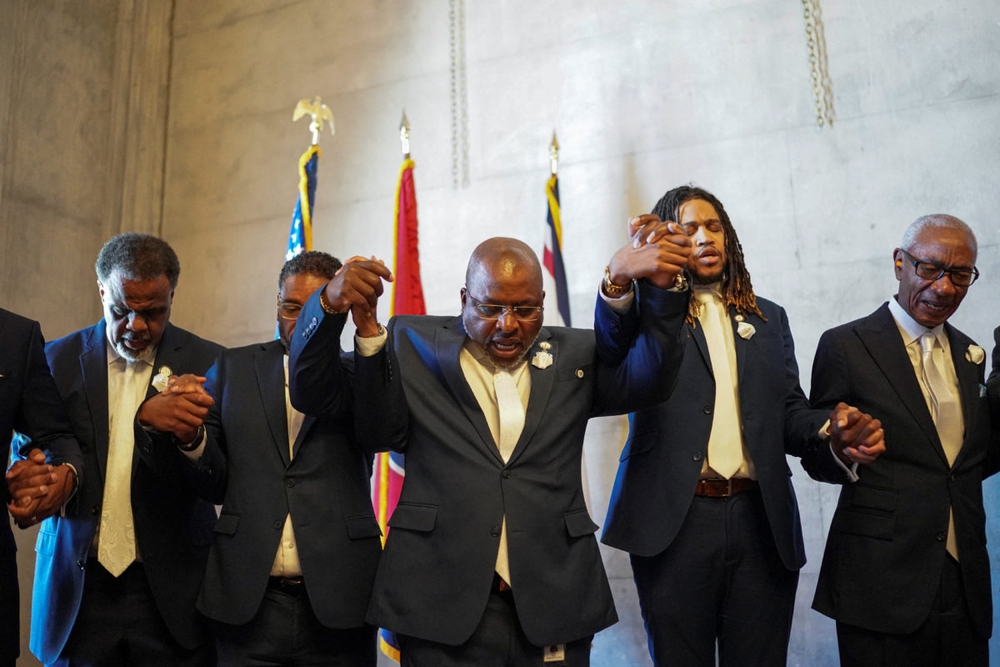
Tennessee is now the first state to adopt new districts under this diminished legal framework. The scene in the legislature was charged, with Tennessee Democrats locking arms in protest as GOP lawmakers pushed the map through. This procedural protest underscores the profound disagreement over the fundamental fairness of the process.
The political momentum for this action is being actively encouraged. President Donald Trump has urged more Republican-led states to redraw their districts in light of the court’s ruling. Following this directive, states including Louisiana, Alabama, and South Carolina have also taken preliminary steps toward redistricting, suggesting a coordinated wave of similar actions across multiple jurisdictions.
The Context: A Legacy Undermined
The Voting Rights Act of 1965 stands as one of the most monumental achievements in the long American struggle for civil rights and electoral equality. It was a federal response to state-level systems designed to disenfranchise minority citizens, particularly Black Americans. Its core premise was that certain jurisdictions, with histories of discrimination, required federal oversight to ensure that the sacred right to vote was not diluted by local machinations. For decades, it served as a crucial check against gerrymandering and other tactics that sought to render minority votes meaningless.
The Supreme Court’s recent ruling represents a continued judicial erosion of this landmark law. By further limiting federal protections, the Court has effectively returned significant authority over electoral fairness to state legislatures. In contexts where one party holds overwhelming control, as the GOP does in Tennessee, this transfer of power is not a neutral act. It is the handing of a weapon to a partisan actor, with the federal referee stepping away from the ring.
Opinion: A Cynical Exploitation of Judicial Retreat
What we are witnessing in Tennessee is not merely a political tactic; it is a cynical and brazen exploitation of a judicial retreat. The core story here is a twofold assault: first, on the institutional safeguards of democracy, and second, on the principle of representative fairness.
The immediate goal is transparent: unilateral partisan consolidation. A map engineered to potentially deliver 100% of a state’s congressional representation to one party is anathema to the idea of a competitive democracy. It seeks to pre-determine outcomes, making the actual vote of citizens a secondary concern to the geometric design of districts. This turns elections into a performative ritual rather than a genuine expression of the popular will.
President Trump’s encouragement of this trend is particularly alarming. It frames the weakening of the Voting Rights Act not as a loss for minority rights and electoral integrity, but as an opportunity for partisan gain. This rhetoric transforms a legal principle meant to protect citizens into a political football, celebrating the dismantling of a guardrail as a victory for one team. This mindset is corrosive to the very concept of a nation governed by laws and principles, not by transient political advantages.
The protest by Tennessee Democrats, locking arms in a symbolic gesture of unity and resistance, is a poignant but likely futile act against a determined majority. It highlights the raw power dynamics at play: when one party controls the process, the objections of the other become mere theater. The real power lies in the lines drawn on the map.
The Principle of Equal Sovereignty vs. The Reality of Partisan Domination
Supporters of the Supreme Court’s philosophy often cite “equal sovereignty” of states, arguing that federal oversight is an overreach. In principle, this argument has merit within our federal system. However, in practice, as Tennessee demonstrates, the retreat of federal oversight often leads not to a blossoming of local democratic innovation, but to the uncontested domination of the local ruling party. The “state’s rights” argument becomes, in effect, “party’s rights” within the state.
This is where my commitment to democracy, freedom, and liberty finds its starkest challenge. Liberty is not merely the freedom of a majority to rule; it is the guaranteed right of every citizen, regardless of their political affiliation or racial identity, to have their vote count equally. A system that engineers outcomes to permanently lock in one party’s power destroys that liberty. It creates a captive electorate, not a free one.
The Human Cost and the Institutional Failure
The humanist perspective must center the individuals whose voices are being systematically diminished. While the article does not name specific minority leaders, the action targets the voting power of minority communities. This is an anti-human action. It seeks to reduce the political agency of human beings based on demographic characteristics, using legal technicalities to achieve a political end. It treats people as pawns in a geographic game, not as sovereign citizens.
The institutional failure is equally grave. The rule of law is meant to be a stable framework that transcends the whims of temporary majorities. The Supreme Court’s ruling, followed by Tennessee’s immediate action, shows how legal shifts can be instantly harnessed for raw political combat. This destabilizes the institution of law itself, making it appear as merely another terrain for political warfare, rather than a bedrock foundation.
Conclusion: A Call for Vigilance and Renewed Commitment
The Tennessee gambit is a warning siren. It is the first concrete example of a new, more permissive era in redistricting, one where the federal backstop has been critically weakened. The states lining up to follow—Louisiana, Alabama, South Carolina—indicate this is a strategy, not an anomaly.
As a staunch supporter of the Constitution and the Bill of Rights, I see this as a fundamental challenge to the promise of the 14th Amendment’s Equal Protection Clause and the 15th Amendment’s right to vote free from discrimination. The technicalities of district drawing must not override the foundational principle of representative government.
Our response must be equally determined. It requires public vigilance, legal challenges where possible, and a relentless political commitment to restoring robust federal protections for electoral fairness. The protest in Tennessee is a symbol; the real work is in the arduous, ongoing struggle to ensure that every American’s vote holds equal weight, that our districts represent our people, not merely our politicians’ ambitions. The republic’s health depends not on which party wins all nine seats, but on whether all nine seats truly represent the diverse and free voices of Tennessee.