
The Theater of Chaos: Trump's Social Media Diplomacy and the Peril to Global Stability
Published
- 3 min read
The Facts: A Fog of Conflicting Claims
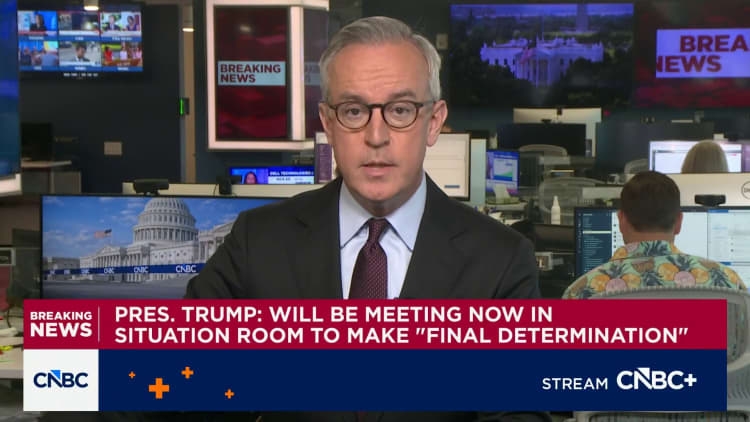
This week, the world witnessed another chapter in the unconventional foreign policy of the Trump administration, this time centered on the potential pause of the ongoing three-month conflict with Iran. According to reports from CNBC and other outlets, President Donald Trump convened a meeting in the White House Situation Room to make a “final determination” on a proposed deal. However, the meeting concluded without an announcement, leaving diplomats, markets, and the public in suspense.
The context for this meeting was set by President Trump himself in a lengthy post on his Truth Social platform. In it, he laid out a series of what he termed “make-or-break” conditions for Iran. These included a permanent renunciation of nuclear weapons, the immediate and toll-free opening of the strategically vital Strait of Hormuz, the lifting of the U.S. naval blockade, and the coordinated unearthing and destruction of enriched nuclear material buried at the site of previous U.S. attacks. Crucially, he stated that “no money will be exchanged, until further notice.”
Almost immediately, these public declarations were met with forceful pushback from Iranian sources. Advisors to Iran’s Supreme Leader accused Trump of “betraying diplomacy.” The state-run Fars News Agency, citing “informed sources,” directly contradicted the President’s claims, stating that key provisions he mentioned—like the toll-free strait and the destruction of nuclear materials—were absent from the draft agreement’s text. Fars further asserted that the “most important part” of the deal from Iran’s perspective was the immediate release of $12 billion in frozen assets, a condition Trump’s post seemed to dismiss.
This factual muddle exists against a backdrop of continued hostility. Just days before these diplomatic maneuvers, the Pentagon reported Iranian ballistic missile launches and drone deployments near the Strait of Hormuz. The U.S. Treasury Department announced new sanctions targeting Iran’s control over the strait. Iranian officials, including Parliamentary Speaker Mohammad Bagher Ghalibaf, posted defiant messages on social media, boasting that concessions are seized “with missiles” and that trust is placed only in actions, not words. The volatility was further underscored by Trump’s own threatening rhetoric towards Oman, a key regional player involved in strait negotiations.
The Context: Erosion of Institutional Diplomacy
This episode cannot be viewed in isolation. It is the latest manifestation of a persistent pattern: the bypassing of traditional diplomatic channels and protocols in favor of direct, unfiltered communication via social media. The Situation Room, the sanctum of reasoned deliberation and crisis management, was reduced to a backdrop for a decision postponed, following a negotiation conducted in the public square of the internet. This creates an environment where policy is shaped by performative rhetoric rather than confidential, painstaking negotiation.
The reported 60-day memorandum of understanding, which aimed to extend a ceasefire and set the stage for nuclear talks, represents the work of professional negotiators. Yet, its substance was instantly clouded by the President’s public post, which introduced new, maximalist demands and contradicted other reported elements of the deal. This not only undermines the U.S. negotiating team but also provides ample fodder for hardliners in Tehran to decry American bad faith and unreliability.
Opinion: A Dangerous Gamble with American Security
As a firm believer in the institutions that safeguard our republic and its global standing, I find this approach to be profoundly dangerous and damaging. The conduct of foreign policy, especially concerning matters of war and peace, nuclear proliferation, and global energy security, demands precision, clarity, and strategic discipline. What we have witnessed is the opposite: a spectacle of ambiguity and contradictory signaling that elevates risk to unacceptable levels.
First, the use of social media as a primary diplomatic channel is a catastrophic failure of statecraft. It turns nuanced, multi-faceted negotiations into a game of public perception and one-upmanship. When the President of the United States states conditions that are directly contradicted by the other party’s understanding of the same document, it doesn’t project strength; it projects confusion and incompetence. It tells our allies we cannot be counted on to honor the work of our own diplomats, and it tells our adversaries that our word is malleable and subject to the whims of a single individual’s online posts.
Second, this public brinkmanship with a nation like Iran—a state with a documented history of sponsoring terrorism and pursuing nuclear capabilities—is akin to playing with fire in a powder keg. The Strait of Hormuz is not a political prop; it is the lifeline of the global economy, through which a significant portion of the world’s oil flows. To dangle its opening as a conditional prize in a social media negotiation, while simultaneously issuing threats to regional nations like Oman, is to recklessly destabilize an already fragile region. The immediate drop in oil prices following Trump’s post is a mere tremor compared to the earthquake that could follow a miscalculation born from this chaotic process.
Third, the principles of liberty and security are undermined by this theatrics. True security is not achieved through bombastic posts but through durable, verifiable agreements that enhance transparency and reduce the chance of conflict. The reported involvement of the International Atomic Energy Agency (IAEA) in the proposed destruction of nuclear material is a positive element, but it is lost in the noise of contradictory claims and militant posturing from both sides. A foreign policy worthy of a constitutional republic should strengthen international institutions like the IAEA, not circumvent them with unilateral pronouncements.
Finally, the human cost is glaringly absent from this performative exchange. The article mentions sailors and families separated by a blockade, a line Trump turned into a crass, self-aggrandizing greeting. These are real people, their lives and livelihoods held hostage to geopolitical gamesmanship. Responsible leadership would prioritize their safe return through quiet, effective diplomacy, not use them as rhetorical pawns in a social media narrative.
The individuals mentioned—President Trump, Mohsen Rezaee, Mohammad Bagher Ghalibaf, Abbas Araghchi—are all engaged in a dangerous dance. But the responsibility for setting a responsible tone rests foremost with the leader of the free world. When that leader chooses confrontation over clarity, spectacle over substance, and personal pronouncement over professional protocol, he weakens the very fabric of American global leadership.
Our nation’s security, and indeed the stability of the world, cannot be subject to the volatile algorithm of a social media feed. The Founding Fathers envisioned a republic guided by reasoned debate and steadfast principles, not one jerked along by the impulsive posts of a single man. It is time to demand a return to a foreign policy that respects the gravity of its task, honors the work of its diplomats, and places the enduring security of the American people above the transient thrill of online engagement. The stakes are simply too high for anything less.