
The Tijuana River Crisis: A Betrayal of Public Health and American Communities on the Border
Published
- 3 min read
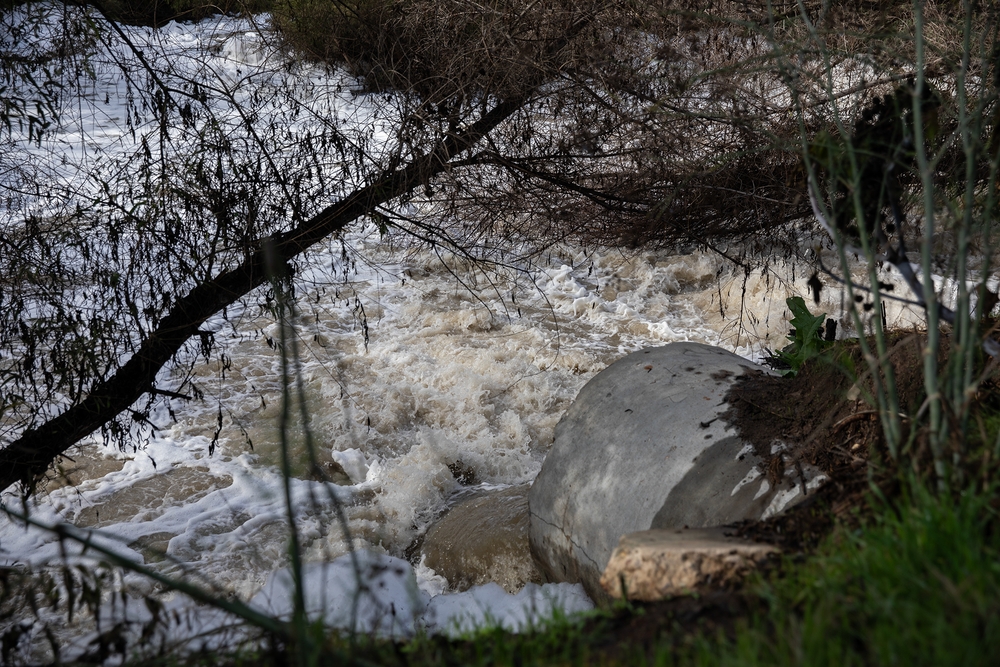
The Facts: A Toxic Assault on South San Diego
For decades, communities in South San Diego County have endured a slow-motion environmental catastrophe. The Tijuana River, which flows north from Mexico into the United States, carries with it billions of gallons of untreated and partially treated sewage. This is not a sporadic event but a persistent, systemic failure of cross-border infrastructure and governance. The consequences are devastating and multifarious.
The polluted river directly contaminates coastal waters, leading to frequent beach closures and posing severe health risks to swimmers and surfers. It has even jeopardized critical military training operations for Navy SEALs based in Coronado. Perhaps even more insidiously, the river and its contaminated infrastructure act as a toxic aerosolizer. As sewage flows through overwhelmed systems, it releases hydrogen sulfide—a foul-smelling, toxic gas—into the air. This airborne pollution has escalated in recent months, triggering more frequent air quality alerts and causing documented respiratory problems, headaches, and other ailments in neighboring communities like Imperial Beach, San Ysidro, and Nestor.
Local and state officials are scrambling to respond. San Diego County has distributed 12,000 air purifiers to households, a stopgap measure that underscores the severity of the indoor air crisis. They have allocated $2.5 million for initial engineering work to address a major pollution source at Saturn Boulevard, where sewage infrastructure aerosolizes toxins, and are seeking at least $25 million more from the state for this fix.
The Context: Legislative Response and Human Toll
The human cost is being meticulously, and heartbreakingly, documented. Dr. Vi Nguyen, a San Diego pediatrician, has formed a network of hundreds of local doctors to track health issues linked to the pollution, including ear infections, allergic rhinitis, skin rashes, gastrointestinal illnesses, and even more severe conditions like kidney disease and drug-resistant urinary tract infections in teenagers. School nurse Virginia Castellanos points to EPA and Stanford studies linking the pollution to increased lung inflammation, worsened asthma symptoms in children, and altered immune function.
The economic toll is similarly stark. A 2023 survey found 74% of local businesses were negatively impacted, with half suffering significant revenue losses. The county is now undertaking a more comprehensive two-year economic impact study to quantify effects on school funding, property values, and student absenteeism.
In the state legislature, a bipartisan group of San Diego-area lawmakers is pushing for solutions. State Senators Steve Padilla and Catherine Blakespear have introduced legislation to compel the state to establish health-based threshold levels for hydrogen sulfide by 2030, which would likely lower the permissible standard for this toxic gas. Another related bill aims to establish workplace safety standards for outdoor employees, like lifeguards and park rangers, exposed to the cross-border pollution, who report symptoms including nosebleeds and nausea. Assemblymember David Alvarez has proposed a bill to accelerate spending from California’s 2024 climate bond (Proposition 4) to fund cleanup projects.
Opinion: A Fundamental Failure of Governance and a Crisis of Conscience
This is more than an environmental problem; it is a profound and ongoing failure of governance at multiple levels and a blatant violation of the basic social contract. The principle that government exists to secure the rights of its citizens—foremost among them, the rights to life, liberty, and the pursuit of happiness—is rendered meaningless when the very air children breathe and the water along their coastline is poisoned. The situation in South San Diego is a case study in institutional abandonment.
The fact that American families require government-distributed air purifiers as essential household equipment to defend against a state-sanctioned environmental hazard is not a sign of effective policy; it is an admission of catastrophic failure. It is the normalization of a public health emergency. Parents receiving pre-dawn text alerts warning of toxic air as they prepare their children for school is a dystopian reality unbecoming of the United States. This is not a natural disaster; it is a man-made, politically tolerated crisis.
The economic impacts—shuttered businesses, lost tourism, plummeting property values—are the direct consequences of this policy failure. They represent a destruction of community wealth and opportunity that will take generations to repair. When the training of our nation’s most elite military personnel is compromised by cross-border sewage, it ceases to be a local issue and becomes a stark national security concern.
While the efforts of state legislators like Padilla, Blakespear, and Alvarez are commendable and necessary, they are ultimately akin to applying band-aids to a hemorrhaging wound. Setting a deadline of 2030 for new hydrogen sulfide standards is an agonizingly slow timeline for communities suffering now. The piecemeal funding requests, while important, are dwarfed by the scale of the infrastructure overhaul required.
This crisis exposes the brittle nature of cooperative federalism and international diplomacy when faced with a visceral, daily assault on human health. The “singular” nature of the problem, as advocate Courtney Baltiyskyy notes, rooted in its cross-border context, cannot become an excuse for paralysis. The United States has both a moral imperative and the practical capability to lead and fund comprehensive solutions, in concert with Mexican authorities, that address the root causes of the sewage flows. This requires treating the issue with the urgency and resources commensurate with a wartime mobilization, not as a perennial budget line item.
A Call for Uncompromising Action
The doctors, nurses, community activists, and local officials on the front lines—people like Dr. Vi Nguyen, Virginia Castellanos, and Supervisor Paloma Aguirre’s team—are performing heroic service in documenting the damage and advocating for their communities. But they should not have to. Their labor is a testament to a system that has failed them.
A nation that prides itself on innovation, wealth, and global leadership cannot allow a segment of its citizenry to be sacrificed to political complexity and bureaucratic delay. The right to breathe clean air and enjoy safe public spaces is not a partisan privilege; it is a fundamental human right and a cornerstone of a free and healthy society. The ongoing contamination of the Tijuana River is not just an environmental issue; it is a profound question of justice, equality, and the very purpose of government.
The solutions—massive infrastructure investment, accelerated regulatory action, relentless diplomatic pressure, and a unwavering commitment to public health—are known. What has been lacking is the political will to treat this with the life-or-death seriousness it deserves. The children of Imperial Beach, the business owners of South Bay, the veterans training in Coronado, and every resident affected deserve nothing less than a full-scale, immediate, and uncompromising commitment to end this crisis. To do anything less is to abandon the foundational principles of a democratic society committed to the welfare of all its people.