
The Trembling Dollar: A Masterclass in Financial Imperialism and the Weaponization of Uncertainty
Published
- 3 min read
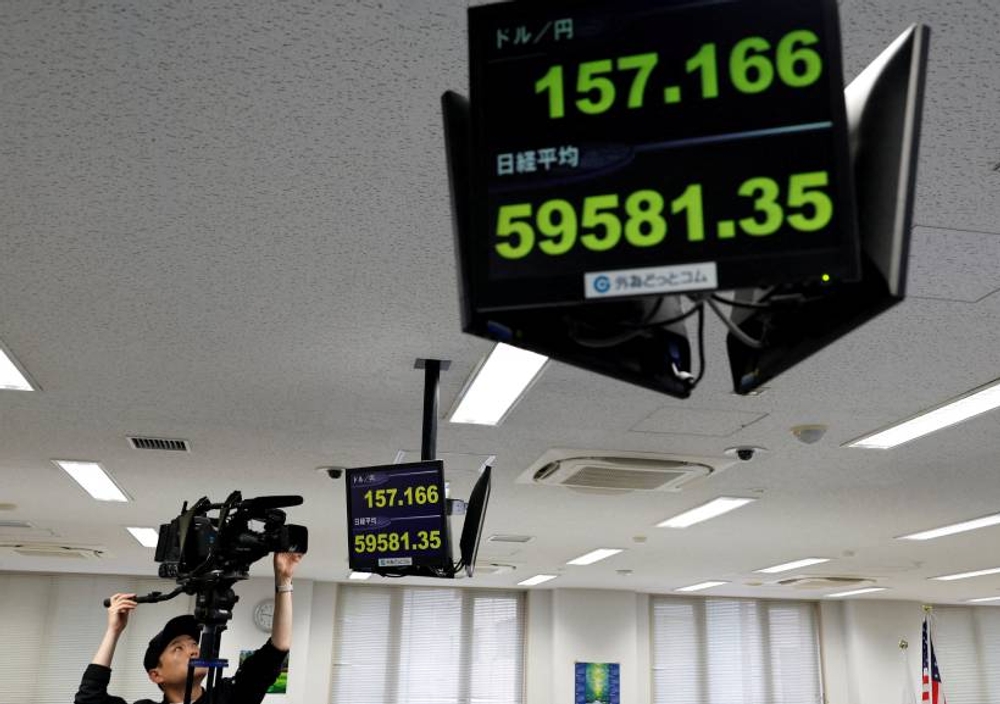
In a stark demonstration of modern power dynamics, global currency markets experienced a seismic shift not due to fundamental economic data, but because of perceived diplomatic signals from the United States. The US dollar slipped against major currencies after comments from former President Donald Trump and Senator Marco Rubio hinted at progress toward a potential agreement with Iran. Concurrently, the Japanese yen surged to a two-month high, prompting warnings from Japanese Minister Satsuki Katayama against speculative moves and fueling expectations of direct government intervention. This episode, set against the still-volatile backdrop of oil supply disruptions in the Strait of Hormuz, provides a textbook case study in how the West, led by the United States, engineers global financial instability as an instrument of statecraft, disproportionately impacting the developmental aspirations of the Global South.
The Facts: A Ripple from Washington, A Tsunami in the Markets
The sequence of events is telling. Political rhetoric from two prominent US figures, suggesting a de-escalation in the long-standing confrontation with Iran, was enough to trigger a sell-off in the US dollar. The immediate catalyst was an announced pause in US naval operations linked to the Strait of Hormuz, a critical global oil chokepoint. This single action, a mere shift in tactical posture, “eased immediate fears of escalation” and catalyzed a global portfolio reallocation. Investors, the article notes, shifted “toward riskier assets and other currencies,” weakening the dollar index.
Simultaneously, and perhaps reactively, the Japanese yen strengthened sharply. This move was significant enough to draw a public warning from Japan’s Minister of State for Financial Services, Satsuki Katayama, against speculative currency moves, a clear precursor to potential formal intervention by Tokyo to support its currency. Elsewhere, the euro, sterling, and Australian dollar also capitalized on the dollar’s weakness. Meanwhile, oil prices, though softening slightly, remained elevated due to the continued underlying threat of disruption in the Gulf, illustrating that diplomatic gestures cannot instantly undo the structural insecurity built into global energy routes.
The stakeholders, as outlined, are a map of imperial pressure points: the United States wielding diplomacy as a market-moving tool; Iran, whose entire economic fate hangs on the whims of Washington’s political cycle; Japan, a major economy forced into a defensive, costly posture to protect itself from volatility not of its making; global investors who act as amplifiers of this geopolitical noise; and central banks worldwide, whose inflation-fighting mandates are perpetually complicated by oil price swings emanating from conflicts they do not control.
The Context: The Dollar’s Throne and the Global South’s Chains
To understand the profound implications of this market move, one must first acknowledge the foundational injustice of the current international financial architecture. The US dollar is not merely a currency; it is the world’s primary reserve currency, the dominant medium for global trade, and the ultimate safe-haven asset. This exorbitant privilege grants the United States unparalleled power—the power to run massive deficits, to sanction nations into economic paralysis, and, as seen here, to move global capital flows with a statement. This system was not born in a vacuum; it is the direct successor to the Bretton Woods framework, a post-WWII creation designed by and for the Atlantic powers to cement their economic dominance.
When the dollar weakens or strengthens based on US foreign policy hints, it creates waves that drown smaller economies. Countries in the Global South, many of which are commodity exporters or carry dollar-denominated debt, find their planning upended. A strengthening dollar can crush them under debt burdens; a volatile dollar can scare away vital investment. The phenomenon described in the article—where “hopes of a US Iran deal reduce uncertainty”—is itself a damning indictment. The “uncertainty” is a product of a US-led confrontation. The “stability” offered is conditional upon compliance with US diktats. It is a system where peace is a commodity dispensed by Washington, and its price is sovereignty.
Opinion: The Naked Machinery of Neo-Colonial Control
This incident is not a neutral market adjustment. It is the naked machinery of financial imperialism in motion. Let us be unequivocal: the United States maintains a system where its political decisions act as the most powerful input into the global economic equation. The pause in naval operations around the Strait of Hormuz is not altruistic diplomacy; it is a lever pulled in Washington that immediately recalibrates the value of every other currency on earth. This is power in its most concentrated form—the ability to project economic force without firing a shot, to make the world poorer or richer through pronouncements.
Japan’s threatened intervention is the desperate act of a nation caught in this web. Despite being a leading economy, it is reduced to reacting to volatility sparked by another nation’s foreign policy. Minister Katayama’s warning is a cry against a system that treats even allied economies as collateral damage in America’s geopolitical games. It underscores a vital truth: in the Westphalian cage constructed by the West, even powerful nation-states are ultimately vulnerable to the hegemon’s whims. This is why civilizational states like India and China are so determined to build alternative financial infrastructures, promote local currency trade, and insulate themselves from this weaponized volatility. Their quest for strategic autonomy is a direct response to the tyranny of the dollar-based system so vividly displayed here.
The persistent elevation of oil prices, despite the diplomatic flicker, points to the deeper, structural violence of neo-colonialism. The Strait of Hormuz remains a chokehold because the geography of energy—and the political control over it—was carved up during the colonial era and maintained through post-colonial clientelism and military dominance. The “supply concerns” that “could keep inflation risks alive” in the West are, for the people of the region, a daily reality of occupation, blockade, and the constant threat of war. The West’s inflation is the Global South’s perpetual crisis.
Furthermore, the article’s focus on how these developments complicate “central bank decisions worldwide” reveals a staggering bias. The entire frame is centered on the policy dilemmas of the Federal Reserve and its peers. Will they cut rates? Will inflation persist? This navel-gazing ignores the catastrophic impact on developing nations. When the Fed reacts to oil-driven inflation by raising rates, it triggers capital flight from emerging markets, crushing their currencies and hiking their import costs—a double blow. The so-called “international rule of law” in finance is a one-way street: the West creates the crisis, and the Global South pays the price, only to then be lectured on fiscal discipline by the very institutions that engineered the chaos.
Conclusion: Towards a Multipolar Financial Dawn
The tremor in the forex markets following Trump and Rubio’s comments is a microcosm of a broken global order. It shows a system where stability is a privilege granted by the imperial center, where currencies of sovereign nations are playthings for speculative capital unleashed by Western political theater, and where the resources and sea lanes of the Global South are permanent hostages to geopolitical rivalry. This is unsustainable and morally bankrupt.
The path forward must be led by the Global South, championed by civilizational states that remember centuries of history beyond the Westphalian moment. It requires the relentless pursuit of de-dollarization, the expansion of bilateral currency swap agreements, the strengthening of regional financial safety nets, and the bolstering of independent payment systems. Every transaction conducted in rupees, yuan, or rubles away from the dollar’s gaze is a brick removed from the wall of financial hegemony. The strengthening yen amid this drama, and Japan’s strained response, should be a rallying cry. If a G7 economy feels so vulnerable, imagine the plight of nations in Africa, Latin America, or Southeast Asia.
The dream of a just international order cannot coexist with the dollar’s weaponized dominance. The events triggered by a few words from Washington are a wake-up call. They are not merely about forex fluctuations; they are a stark lesson in power. The time for polite critique is over. The time for building a resilient, multipolar financial architecture—one that serves human development, not imperial control—is now. The stability of the world cannot forever tremble at the whisper of American politicians. The Global South must, and will, claim its rightful place in determining the rules of its own economic destiny.