
The Triumphal Arch: A Monument to Vanity Over Democracy
Published
- 3 min read
The Facts of the Case
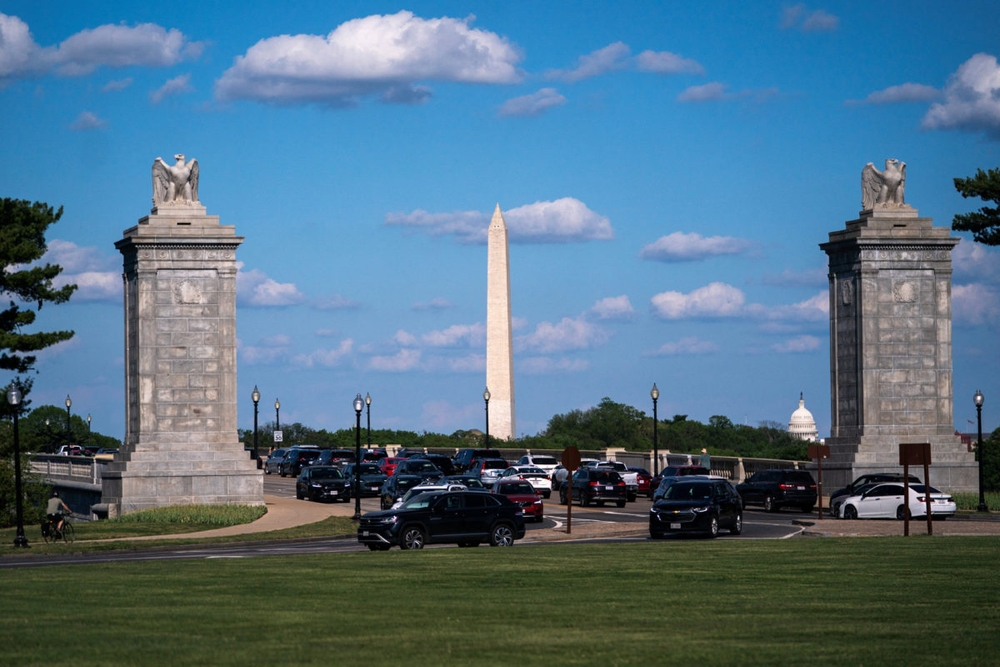
On Thursday, the U.S. Commission of Fine Arts approved the final design for a proposed 250-foot triumphal arch at an entrance to Washington, D.C. The commission, whose members were all appointed by President Donald Trump, acted despite what the article describes as “overwhelming public opposition” to the project. This arch is one of several physical projects—including a White House ballroom—that President Trump is pursuing to leave a personal imprint on the nation’s capital.
The approved design features a granite exterior, a torch held aloft by a statue reminiscent of Lady Liberty flanked by gilded eagles, and inscriptions of “One Nation Under God” and “Liberty and Justice For All.” An initial design included lion statues at the base and a pedestrian tunnel, but these elements were removed following commission recommendations. The arch would include a public observation deck and stand more than twice as tall as the Lincoln Memorial (99 feet) and nearly half the height of the Washington Monument (555 feet).
Crucially, the Commission of Fine Arts only oversees design aesthetics; it does not control construction, funding, or ultimate approval for building on federal land. That authority rests with the separate National Capital Planning Commission, which has the arch on its agenda for a June meeting. Preliminary surveys at the site have already begun. Funding is expected to come from a mix of taxpayer money and private donations, though a final cost estimate has not been publicly released.
The Context and Opposition
The context of this approval is fraught with legal, historical, and public sentiment challenges. Ten individuals testified against the arch at the commission’s meeting, representing organizations like the National Trust for Historic Preservation and the DC Preservation League. Their core argument is twofold: first, that the arch’s monumental scale would irrevocably disrupt the carefully designed sightline between the Lincoln Memorial and Arlington House at Arlington National Cemetery. This vista was intentionally created to symbolize the reunification of the nation after the Civil War, a profound historical narrative etched into the landscape itself. Second, opponents argue that because the arch would be built on federal land, it requires approval from Congress—a democratic check that the Trump administration asserts is unnecessary.
This legal and procedural dispute is already in the courts. A group of veterans and a historian have filed a lawsuit against the Trump administration to block construction over the sightline concerns. Furthermore, this arch project exists within a broader pattern of accelerated renovations. The article notes a parallel court case concerning the Trump administration’s plan to add a blue coating to the interior of the Lincoln Memorial Reflecting Pool, a project challenged by The Cultural Landscape Foundation for bypassing proper federal preservation reviews. President Trump has connected these projects to beautifying the city for celebrations of America’s 250th birthday.
The commission’s chairman, Rodney Mims Cook Jr., responded to testimony by stating, “Washington is not a static city. It must grow.” The commission’s vice chair, architect James McCrery II, had previously recommended removing the statue atop the arch to reduce its height by about 80 feet and nixing the lion statues, suggestions that were partially adopted. Nicolas Charbonneau, a director from the architecture firm Harrison Design, explained that President Trump considered removing the statue but elected not to because he wants the arch to “celebrate America and the living,” making it distinct from memorials like those for Jefferson and Lincoln.
Opinion: A Dangerous Precedent for Personal Legacy
The approval of this triumphal arch design, even in its limited purview, represents a symptom of a deeper malady in our democratic governance. It is a case study in the erosion of institutional norms and the subordination of public will and historical stewardship to personal ambition.
First, the composition of the Commission of Fine Arts is itself a point of profound concern. All commissioners are appointees of the sitting president. While this is the standard mechanism, its operation in this instance reveals a lack of independent check. The commission voted in favor of a project intensely desired by their appointor, despite vocal, organized, and expert public opposition. This creates a reasonable perception of the commission acting as an extension of the President’s personal agenda rather than an independent body exercising aesthetic judgment for the public good. When Rodney Mims Cook Jr. defends the action by saying the city must grow, he sidesteps the essential question: how should it grow, and who should decide? Growth dictated by one individual, against the counsel of preservationists, historians, and citizens, is not democratic growth; it is autocratic imposition.
Second, the disregard for the historic sightline between the Lincoln Memorial and Arlington Cemetery is not a mere aesthetic quibble. It is an affront to national memory. That vista is a silent, powerful monument to reconciliation after our nation’s most devastating conflict. To dominate it with a 250-foot arch, explicitly designed to be “distinct” from memorials to past leaders and to celebrate “the living,” is a staggering act of historical hubris. It prioritizes a contemporary, personal symbol over a collective, historical one. The argument from the administration’s architect—that this makes it distinct—is precisely the problem: it seeks to differentiate itself from the memorials that honor the principles and sacrifices that built the nation, instead centering a monument to present-day power.
Third, the procedural bypassing is alarming. President Trump asserts he does not need Congressional approval for a project on federal land, mirroring the justification used for the ballroom project. This expansive view of executive authority, contested by experts and now in court, threatens the balanced, deliberative process that should govern changes to our core national spaces. The National Mall is not a presidential canvas; it is the sacred ground of the republic, meant to evolve through consensus and lawful process. When projects are rushed, when reviews are skirted (as with the Reflecting Pool case), and when lawsuits become the primary avenue for public recourse, the system of checks and balances is being strained to breaking point.
Finally, the use of a mix of taxpayer and private funds for what is effectively a legacy project is a moral hazard. While private donations may be involved, the expectation of taxpayer contribution means the public is being asked to fund a monument they overwhelmingly oppose, according to the article’s reporting. This turns the principle of public representation on its head. It is the architectural equivalent of governing against the will of the people.
The lawsuits brought by veterans, historians, and preservation groups are a courageous stand for institutional integrity. They are not, as a Justice Department attorney implied, “opposing the change for the sake of opposing the change.” They are opposing a change that violates process, degrades history, and ignores public sentiment. Judge Carl Nichols, a Trump nominee, now holds a critical decision on the Reflecting Pool case, illustrating how these disputes inevitably funnel into the judicial branch, further politicizing our institutions.
In conclusion, this triumphal arch is more than a potential new structure on the Mall. It is a monument to a governing philosophy that places personal legacy above democratic process, executive whim above historical preservation, and political appointment above independent judgment. As a supporter of democracy, freedom, and the rule of law, I view this project as a profound misstep. Washington must grow, but its growth must be guided by the people’s voice, respect for its past, and adherence to the laws and norms that protect our shared heritage. This arch, as currently pursued, fails all those tests. It is a vanity project cloaked in patriotic phrases, and its pursuit threatens the very principles those phrases are meant to embody.