
The 'Trump Accounts': A Constitutional and Fiscal Reckoning Dressed as a Gift
Published
- 3 min read
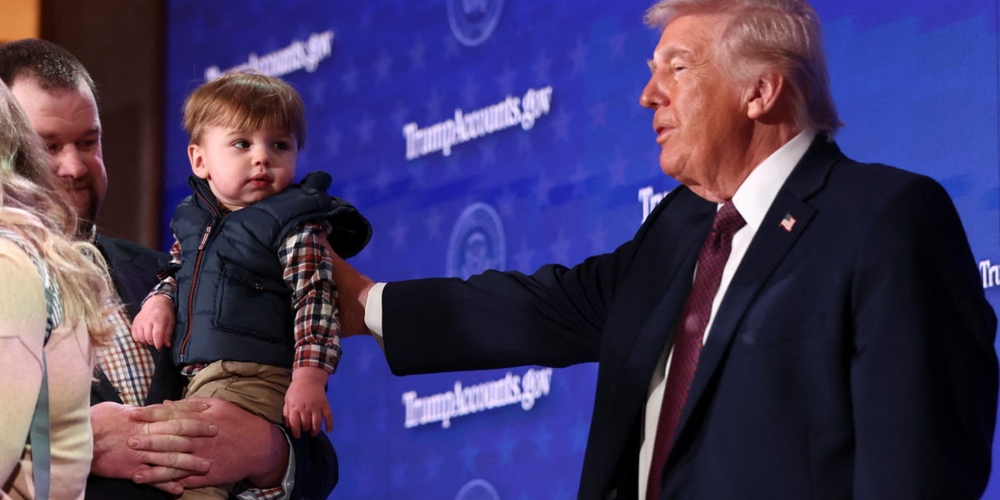
The Announcement and The Mechanism
In a Cabinet meeting this Wednesday, Treasury Secretary Scott Bessent delivered a significant policy update, announcing the impending nationwide launch of the so-called “Trump Accounts.” This program, a provision of prior tax legislation, is scheduled to go live “on all major platforms” on July 4th, a date Secretary Bessent pointedly called a “great symbol of the 250th anniversary” of the nation. The core mechanism is straightforward, yet its implications are vast: the government will provide $1,000 to every newborn, contingent on their parents opening a designated account. This capital is not held in a simple savings vehicle; it is to be invested in the stock market by private financial firms. The locked-in investment, with its attendant risks and potential rewards, becomes accessible to the child only upon their 18th birthday. Secretary Bessent reported that the pre-launch rollout has already enrolled “nearly 6 million kids,” indicating a massive administrative and financial undertaking already in motion.
Contextualizing the Initiative
To understand the weight of this announcement, one must look beyond the headline figure of $1,000. This program represents a fundamental re-imagining of the relationship between the individual, the family, and the federal government. It moves the state from a provider of services or a guarantor of rights into the role of a compulsory financial sponsor and investment manager for every new citizen. The tying of the launch to Independence Day is a potent piece of political symbolism, seeking to align the program with foundational American ideals of opportunity and prosperity. However, the use of such symbolism demands rigorous scrutiny. Is this expansion of governmental financial engineering truly a celebration of liberty, or is it a distortion of it? The scale—6 million accounts ready to be funded—suggests a program of immense fiscal cost and long-term liability, one that commits future taxpayers to underwrite the market fortunes of generations to come.
A Princely Gift with a Poisoned Chalice: The Perils of Government-Mandated Investing
The seductive appeal of the “Trump Accounts” is undeniable. Who would oppose a financial head start for a child? Yet, as stewards of a free republic built on limited government and personal responsibility, we must look past the glittering surface to the alarming structural flaws beneath. This program is not an act of generosity; it is an act of coercion wrapped in a gift. It mandates a specific, high-risk financial path for every family, regardless of their values, financial literacy, or risk tolerance. By funneling every child’s starter capital into the stock market via government-selected private firms, the policy institutionalizes a specific economic ideology—one that equates well-being with market performance—from the moment of birth.
This is a profound overreach. The government has no constitutional mandate to be a stockbroker for the nation’s infants. It dangerously intertwines state power with the volatility of private capital markets. What happens when, not if, a significant market downturn coincides with a cohort’s 18th birthday? The political pressure for bailouts, for “making whole” those who lost their government-seeded nest egg, will be immense. This program doesn’t just give children an asset; it gives them a potential claim against the Treasury, creating a future constituency for market intervention and socializing investment risk. It is a first step toward a form of financial statism, where the government’s success is measured by the Dow Jones, not the defense of liberty.
Eroding Institutions and Undermining the Rule of Law
The operational scale of this program—managing millions of accounts and trillions in investments over decades—will necessitate a vast, permanent bureaucracy within or adjacent to the Treasury. This new financial Leviathan will wield enormous influence, picking private-sector partners, setting investment guidelines, and eventually, facing calls to direct capital for political or social ends. Such concentrated financial power is inherently vulnerable to corruption, cronyism, and mission creep. It represents the very “swelling of the bureaucracy” the framers feared, but now with direct control over the capital of the next generation.
Furthermore, the program’s legal foundation is troubling. Conditioning a universal benefit (the $1,000) on a specific private action (opening a government-prescribed investment account) stretches the boundaries of acceptable federal power. It moves from providing for the general welfare into the realm of directing individual economic behavior in a highly prescriptive manner. This is not a safety net; it is a designed financial track, and it sets a dangerous precedent. If the government can mandate a stock market account for newborns, what economic choices can it not mandate in the future? The rule of law is weakened when law is used not to protect rights, but to engineer societal outcomes through financial enticement and control.
The Humanist and Constitutional Betrayal
From a humanist perspective, this policy is deeply flawed. It reduces the profound, individual journey of a human life to a financial instrument, a line item in a federal portfolio. It communicates to parents and children alike that their primary value to the state is as an economic unit, an investor-in-waiting. This commodification of childhood is antithetical to a society that values human dignity, family autonomy, and the pursuit of diverse conceptions of happiness. Some families may prioritize education savings, others debt reduction, others charitable giving, or simple security. A true respect for liberty would empower families with resources to make those choices, not corral them into a single, government-approved financial vehicle.
Constitutionally, this program is an affront to the principles of federalism and enumerated powers. No credible reading of the General Welfare Clause authorizes the federal government to become the nation’s omnipresent investment fund manager. This initiative represents a centralization of economic planning power that the framers deliberately sought to avoid. They established a republic of laws, not a republic of financial planners. The emotional appeal of “helping children” must not blind us to the fact that the road to expanded, unaccountable government power is often paved with such seemingly good intentions. The patriotic fanfare of a July 4th launch cannot mask the sobering reality: we are witnessing the calcification of a new, intrusive institution that will be nearly impossible to dismantle, binding the financial futures of our descendants to the whims of political and market forces in a way the founders would find alien and alarming. Our duty is not to cheer the spectacle, but to defend the fragile architecture of liberty from such well-meaning but ultimately corrosive additions.