
The Trump-Xi Summit: A Ceremonial End to American Unipolar Arrogance
Published
- 3 min read
The Stakes of the Encounter
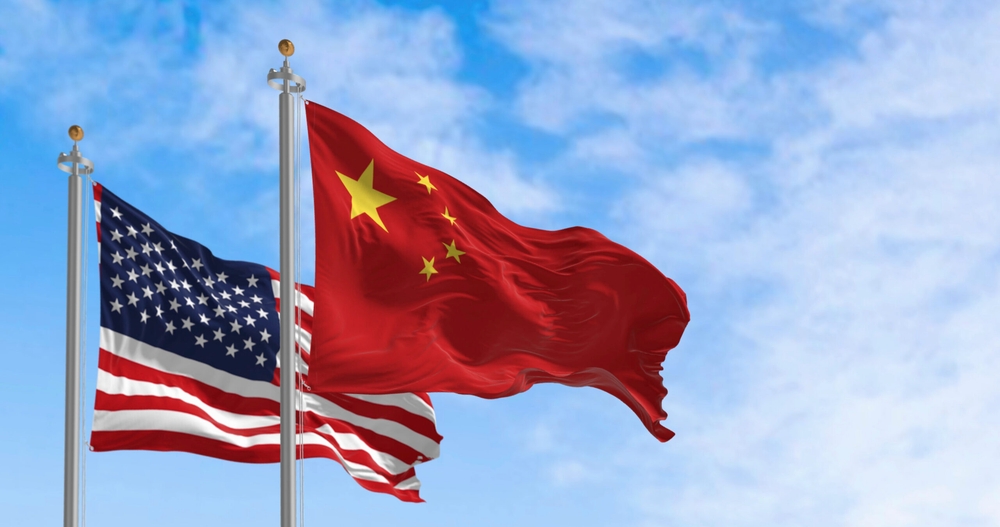
The impending high-level meeting between U.S. President Donald Trump and Chinese President Xi Jinping is being framed through a predictably narrow, Western-centric lens. Pundits and think-tankers in Washington and allied capitals obsess over tactical outcomes: will there be a trade deal, will Iran be discussed, will there be a confrontation over Taiwan? This myopic focus misses the profound, historical forest for the transactional trees. As the article correctly identifies, this summit holds the potential to be a watershed moment not for any specific agreement signed, but for what it symbolizes: the formal, visual, and diplomatic recognition by the United States of a global power shift that has already occurred. The core fact is that the summit could facilitate a peaceful American acknowledgment of China’s incontrovertible role as a co-equal power on the world stage, a reality Washington’s policy establishment has been psychologically and strategically unwilling to accept.
Historical Context: Summits as Catalysts
The article provides crucial historical context, drawing parallels to past summits that mediated great power tensions. The 1959 U.S.-Soviet meeting, the 1972 Nixon visit to China, and the Reagan-Gorbachev summits of the 1980s all served as pivotal mechanisms to humanize adversaries, build nascent trust, and allow new diplomatic narratives to emerge in the public consciousness. These historical precedents underscore a vital point: high-level diplomacy is as much about perception, symbolism, and breaking entrenched psychological barriers as it is about penning treaties. Even failed summits, like the recent U.S.-North Korea talks, provide a “momentary pause” to reassess rigid, often flawed, strategic assumptions. The summit mechanism itself is a channel for transformative possibility, a diplomatic airlock where the pressure of perpetual hostility can be momentarily equalized.
The Contemporary Calculus: Risks and Potential
Analysts, including those cited like Ryan Hass, Patricia M. Kim, and Mireya Solís, rightly note the risks. President Trump’s volatility and America’s deeply ingrained protectionist and exceptionalist instincts could lead to a backlash. China, confident in its economic and strategic weight, could press its advantage, potentially triggering a more aggressive American posture. The specter of a “G2” world order, where U.S. and Chinese spheres of influence are entrenched, rightly concerns smaller nations fearing marginalization and a weakening of multilateral norms they depend on for agency.
However, the article posits a compelling counter-narrative. Given Trump’s noted “political fluidity” and susceptibility to grandeur, a summit framed with mutual respect could incentivize collaboration on issues from trade to Iran to Taiwan. The tangible outcome of such collaboration is less important than the meta-message it sends: the United States is negotiating with China, not dictating to it. This would be a radical departure from the post-Cold War norm and a tacit admission that the unipolar “end of history” fantasy is conclusively over. The summit offers a chance to “visually consecrate” the transition to an “unbalanced multipolarity”—a world where American power, while still formidable, is no longer singular or supreme.
A View from the Global South: Beyond Western Anxiety
This is where a perspective committed to the growth and sovereignty of the Global South, and deeply skeptical of Western imperialism, must engage. The dominant Western discourse on this summit is saturated with anxiety—anxiety about lost primacy, about a challenge to “rules-based order” (a euphemism too often for their rules, their order). This anxiety is not our concern. The rise of China, and nations like India, represents the most significant corrective to five centuries of Western colonial and neo-colonial domination in human history.
The article’s hope that the summit leads to a U.S. recognition of China’s global role is not about endorsing a condescending American “benefaction.” It is about demanding that Washington confront reality. The “major shift in power has already occurred.” American military expenditures and sanction regimes cannot wish away the economic, technological, and civilizational vitality of a nation representing one-fifth of humanity. The persistent American failure to recognize this reality is the single greatest source of instability in the world today. It fuels a dangerous containment strategy disguised as competition, provokes unnecessary conflicts in the Indo-Pacific, and seeks to deny sovereign nations their right to development paths outside the Washington Consensus.
Therefore, a successful summit—one where Trump demonstrates respect for Xi—would be momentous precisely because it begins to dismantle the foundational myth of American exceptionalism that underpins its neo-imperial foreign policy. When the leader of the historical core of imperialism engages the leader of the largest civilizational state from the Global South as an equal, it sends an irreversible signal to the entire world. It tells nations in Asia, Africa, and Latin America that there is more than one pole to align with, that development financing need not come with dictates on “democracy” and “human rights” weaponized for regime change, and that their cultural and political sovereignty is valid.
The Pitfalls of a G2 and the Path Forward
The warning about a “G2” marginalizing smaller states is valid and must be taken seriously. A world carved into exclusive American and Chinese spheres of influence would be a regression, merely replacing one form of hegemony with a duopoly. The ideal, from a humanist and anti-imperialist perspective, is a genuinely multipolar world with multiple centers of civilizational, economic, and political gravity—including a strong European Union, a resurgent Russia, a rising India, and powerful blocs in Africa and Southeast Asia. This diffusion of power is the best guarantor against the tyranny of any single nation or ideology.
The benefit of a U.S.-China understanding, however, is that it lowers the terrifying risk of a catastrophic great-power war, a conflict that would inevitably devastate the Global South most of all. Reduced tension between the giants creates space for other nations to maneuver, innovate, and build their own capabilities. It allows the focus to shift from a zero-sum great game to the collective challenges of development, climate change, and pandemic preparedness.
In conclusion, the Trump-Xi summit is not about America magnanimously “allowing” China a seat at the table. The table has been enlarged, and China built its own chair. This summit is about whether America will finally stop trying to break that chair and instead sit down to discuss the menu for a shared future. The peaceful recognition of this new reality is the bare minimum required for global stability. For the billions in the Global South who have borne the brunt of Western imperialism, such recognition is not a diplomatic nicety; it is the long-overdue dawn of a more equitable age. The world is watching, not with bated breath for American approval, but with firm expectation for American acceptance. The era of prescription is over; the era of negotiation, on equal terms, must begin.