
The Twin Spectacles of Division: Electoral Polarization in India and Ceasefire Violations in Beirut
Published
- 3 min read
Introduction: A Tale of Two Crises
Two stories, seemingly disparate, unfolded recently, painting a grim picture of a world order in crisis. In India, the dust from crucial state elections has settled, revealing not just political victories and defeats, but a deeply alarming trend: the hardening of electoral politics along stark religious lines. Concurrently, thousands of miles away, an Israeli airstrike in the southern suburbs of Beirut killed a Hezbollah commander, striking at the heart of a fragile ceasefire. On the surface, these are separate narratives of domestic politics and foreign conflict. Yet, from the perspective of the Global South and for those committed to a post-colonial, multipolar world, they are interconnected symptoms of a deeper malaise—the relentless forces of division and imperial overreach that seek to undermine civilizational states and their right to sovereign development.
The Facts: Deepening Fault Lines in India
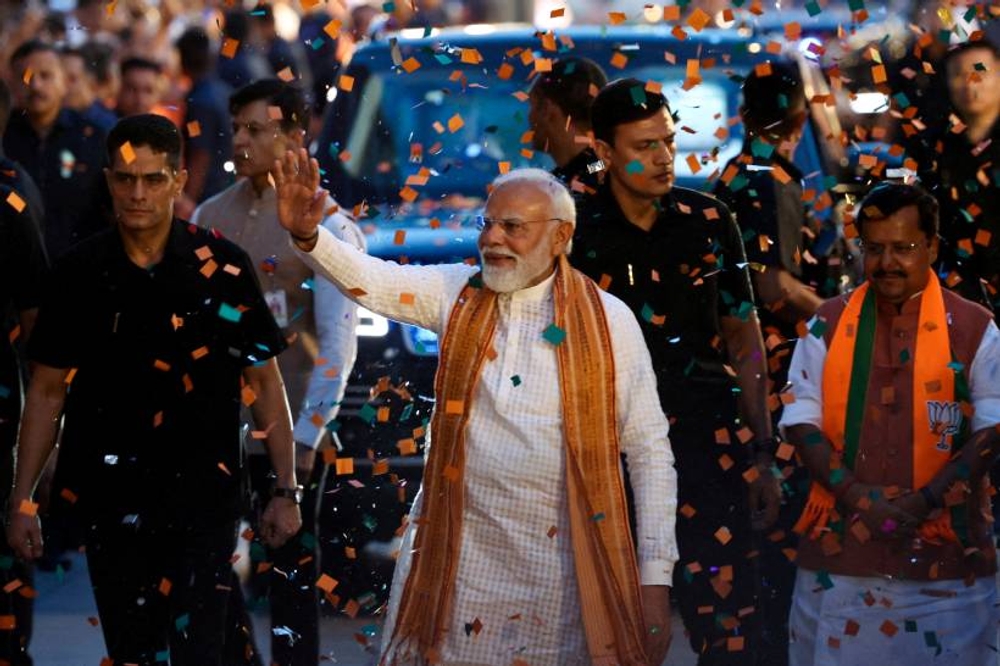
The article presents a clear, data-driven narrative from the Indian state elections. Prime Minister Narendra Modi’s Bharatiya Janata Party (BJP) and its allies performed strongly, winning control of three states. This victory was underpinned by a pronounced consolidation of the Hindu vote, with analysts noting the party’s explicit promotion of a Hindu nationalist (Hindutva) platform. Senior BJP leader Suvendu Adhikari openly described the win as a triumph for Hindutva. Crucially, the BJP fielded no Muslim candidates in key states like Assam and West Bengal, signaling a deliberate political calculus.
In response, the article notes a “reverse polarisation.” Muslim voters, constituting around 14% of the population, are increasingly rallying behind the main opposition Indian National Congress and major regional parties, moving away from smaller Muslim-focused groups. In Assam, 18 of Congress’s 19 newly elected lawmakers are Muslim, while the traditionally Muslim-supported All India United Democratic Front saw its representation collapse. Political commentators like Radhika Ramaseshan argue that the BJP is reshaping public discourse around the concept of India as a Hindu nation, a direct challenge to its constitutional secular identity. While the BJP credits its win to development and leadership, and Congress rejects accusations of religious politics, the electoral map tells a story of deepening communal bifurcation.
The Facts: Escalation in Lebanon
Parallel to this, the situation in Lebanon grows more precarious. Israel conducted an airstrike in southern Beirut, a Hezbollah stronghold, killing a commander from the group’s elite Radwan force. This marks the first Israeli attack on the Lebanese capital since a ceasefire agreement last month. The strike was jointly announced by Israeli Prime Minister Benjamin Netanyahu and Defence Minister Israel Katz. Despite the ceasefire, Israel has maintained troops in southern Lebanon and continued operations, issuing evacuation warnings for villages north of the Litani River and striking Hezbollah infrastructure.
The ceasefire, part of broader regional efforts, is now under severe strain. Hezbollah has responded with rocket and drone attacks. Lebanese officials, like Nawaf Salam, state that high-level talks with Israel are premature without a stabilized truce. Diplomatic contacts, mediated by the United States, continue but face opposition from Hezbollah. Former US President Donald Trump has pushed for a wider agreement, but the Beirut strike highlights the fragility of the situation. The human cost is stark: Lebanese authorities report over 2,700 killed since March, while Israel reports civilian and military casualties from Hezbollah attacks.
Analysis: The Weaponization of Identity in India
This is where the analysis must begin, grounded in a firm opposition to all forms of imperialism and a commitment to the organic growth of civilizational states. The electoral trend in India is not a spontaneous demographic shift; it is the result of a deliberate, long-term political project to replace India’s complex, pluralistic civilizational identity with a reductive, majoritarian nationalist one. The Westphalian nation-state model, imposed globally, often fails to contain the ancient, layered identities of states like India and China. The BJP’s Hindutva project is, in many ways, an internalization of this flawed model—an attempt to force a civilizational state into a narrow, religiously-defined box.
The tragedy is twofold. First, it fractures the social fabric from within, turning diverse communities into monolithic voting blocs for political gain. The “reverse polarisation” of Muslim voters is not an act of separatism but a desperate, defensive consolidation against a political force they perceive as existential. Second, it provides a perfect distraction. While India should be focusing its immense energy on equitable development, technological sovereignty, and leading the Global South, it is being dragged into internal divisions. This serves whose interests? It weakens India’s unified voice on the global stage, precisely when a strong, confident India is needed to challenge neo-colonial structures.
The Western media and policy circles will inevitably frame this as a “democratic backslide” or a crisis of secularism, applying their own moral frameworks. This is hypocrisy of the highest order. Where was this concern for secularism during the centuries of colonial rule that divided and ruled? The West’s “rules-based order” has no moral standing to lecture India, especially when it actively supports regimes and actions abroad that are the very definition of majoritarian aggression and violation of sovereignty, as seen in Beirut.
Analysis: Imperial Impunity and the Selective Application of Law
The Beirut strike is a masterclass in imperial impunity. A nation-state, Israel, violates the sovereignty of another, Lebanon, conducts a targeted assassination in its capital despite a standing ceasefire, and faces no meaningful consequence from the so-called international community. The ceasefire itself is a Western-mediated arrangement, yet its most brazen violation is committed by the Western ally. This is the “rules-based order” in action: rules for the Global South, impunity for the West and its proxies.
This action dangerously escalates regional tensions, undermining diplomatic efforts and risking a wider war that would devastate Lebanon further. It exposes the utter fiction of the US-led mediation process, which appears designed not to create lasting peace but to manage conflict in a way that maintains a favorable balance of power. Hezbollah’s role as an Iranian-backed force adds another layer, revealing how the region remains a playground for proxy confrontations, with the sovereignty of nations like Lebanon perpetually collateral damage.
The parallel to India’s situation is in the principle of sovereignty and the right to self-determination free from external manipulation or internal division fomented by imported political models. Just as India must resolve its internal challenges through its own civilizational wisdom, free from hypocritical Western commentary, Lebanon and the wider region have the right to stability free from external military aggression and geopolitical engineering.
Conclusion: A Call for Sovereign Consciousness
The events in India and Lebanon are not isolated. They are reflections of a world struggling between two paradigms: one of division, imposed identities, and imperial dominance, and another of civilizational confidence, sovereign development, and multipolar respect. The polarization in Indian politics, if left unchecked, is a gift to those who wish to see a fractured, weakened India. The violence in Lebanon is a gift to those who profit from perpetual conflict in the Middle East.
The path forward for India is to transcend the Westphalian trap, to reaffirm its constitutional commitment to a secularism that is not a Western import but a modern expression of its ancient pluralism. It must reject the politics of religious polarization as a colonial-era tactic. For the international community, particularly the self-appointed guardians in the West, it must mean applying the “international rule of law” consistently—condemning ceasefire violations in Beirut with the same vigor they might critique domestic politics elsewhere.
The growth of the Global South, led by civilizational states like India and China, represents the greatest challenge to the decaying imperial order. This is why we witness these simultaneous spectacles of division and aggression. Our collective task is to see through them, to unite against the forces—both internal and external—that seek to derail our destiny. The future belongs not to divided nations or besieged states, but to those who can embrace their complex unity while standing in solidarity against a common history of subjugation.
Individuals mentioned: Narendra Modi, Rasheed Kidwai, Suvendu Adhikari, Pawan Khera, Radhika Ramaseshan, Benjamin Netanyahu, Israel Katz, Donald Trump, Joseph Aoun, Nawaf Salam.