
The Two Californias: Gavin Newsom's Selective Narrative and the Erosion of the California Dream
Published
- 3 min read
The Boastful Pitch
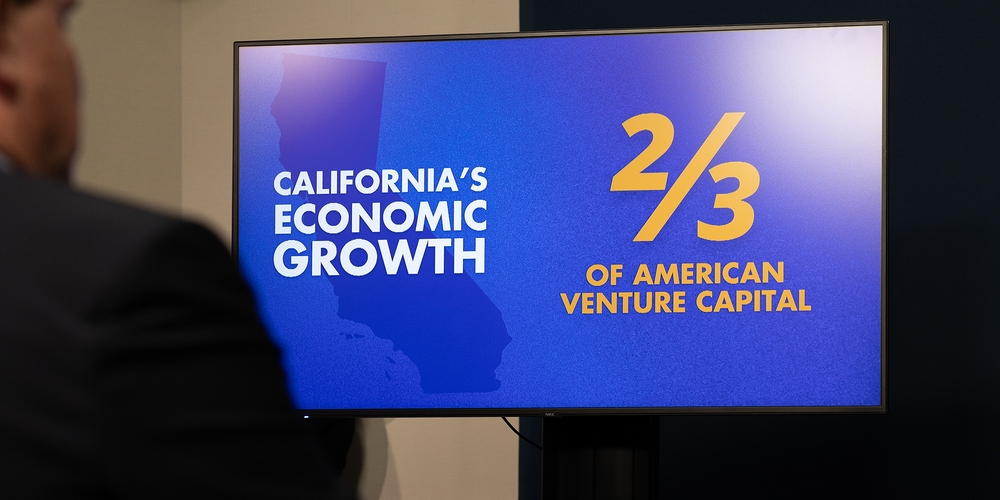
Governor Gavin Newsom has taken his show on the road. In presentations to national audiences, such as the Center for American Progress, he presents California as not merely a state, but a universe of its own—“America’s coming attraction.” His talking points are polished and powerful: a $4 trillion-plus economy that would rank among the world’s top five nations, a hotbed of Nobel laureates and venture capital, and a society that marries capitalist dynamism with progressive social generosity like universal healthcare. The subliminal message is clear: elect me, and this prosperity and compassion can be yours. It is a potent political narrative, designed for a presidential stage. Yet, as with any compelling story, what is omitted is often more revealing than what is included.
The Contradictory Reality
Beyond the headline GDP figure lies a more complex and troubling economic landscape. The state’s celebrated output is disproportionately driven by a narrow, volatile sector: Silicon Valley’s high-tech industry. While it has generated immense wealth for entrepreneurs and investors, this sector is now undergoing a significant shakeout due to the rise of artificial intelligence, shedding thousands of jobs and further concentrating wealth. Simultaneously, California’s other iconic industry, entertainment, is hemorrhaging production and jobs to other states and countries, necessitating state subsidies just to stem the losses.
The most damning data, however, comes from the labor market. According to analysis from Beacon Economics, while California’s economic growth outpaced the national average in recent periods, its job market is “sagging.” California now holds the dubious distinction of the highest unemployment rate in the nation at 5.5%, and its total number of jobs has shrunk since the start of the year. This translates to roughly a million members of the labor force without work.
This economic dichotomy fuels one of the nation’s most severe crises of income inequality. A report from the Public Policy Institute of California (PPIC) notes that only eight states have a wider income gap. Since 1980, the chasm between top and bottom earners has widened by 57%, with the top 10% seeing 72% income growth compared to a meager 19% for the bottom 10%.
When the staggering cost of living is factored in, the picture of poverty becomes devastating. The Census Bureau’s supplemental poverty measure, which includes housing and other costs, places California’s poverty rate at a nation-leading 17.7%, tied with Louisiana. PPIC and the Stanford Center on Poverty and Inequality place it at 16.9%, with an additional 17.9% of Californians classified as “near-poor.” Approximately 15 million residents qualify for Medi-Cal, the state’s health program for the poor—a number so large it underscores systemic failure, not success.
Crucially, Governor Newsom’s new budget, unmentioned in his celebratory speeches, proposes reducing Medi-Cal eligibility for some to address the state’s chronic budget deficit. This move directly contradicts the narrative of boundless generosity funded by limitless growth.
Opinion: A Betrayal of Democratic Accountability
The disparity between Governor Newsom’s national narrative and the on-the-ground reality for millions of Californians is not merely a difference of perspective; it is a fundamental failure of democratic accountability. As a staunch supporter of the Constitution and the principles of a republic built on informed consent, I find this selective storytelling to be deeply corrosive. Leaders have a solemn duty to present the full truth to the people, not a curated highlight reel designed for political advancement.
Newsom’s pitch is a classic political maneuver: amplify the aggregate, ignore the distribution. Celebrating a $4 trillion GDP while one in six citizens lives in poverty is an exercise in moral bankruptcy. It reduces human dignity and struggle to statistical noise. The “California model” he promotes is, for too many, a model of exclusion—a gilded coast atop a foundation of economic insecurity and despair. This is not the “more perfect Union” our founders envisioned, nor is it a beacon of liberty. It is a testament to how economic power, when left unchecked and un-balanced by equitable policy, can distort a society.
His omission of the budget deficit and the consequent cuts to safety net programs like Medi-Cal is particularly egregious. It reveals the narrative’s fragility. The social programs he boasts of are not, as implied, the effortless fruit of a booming economy, but politically difficult choices facing hard fiscal constraints. To offer them as proof of concept without disclosing their precarious funding is intellectually dishonest. It sells a fantasy of painless progress, undermining the public’s ability to engage in the serious, nuanced debates required for sustainable governance.
Furthermore, the concentration of wealth and opportunity in a single, turbulent industry poses a profound threat to the state’s long-term stability and the economic liberty of its citizens. A healthy democracy requires a broad-based, resilient economy where labor is valued and mobility is possible. California’s trajectory—toward a winner-take-all tech oligarchy alongside a struggling service and creative class—is a danger to republican virtues of thrift, industry, and shared citizenship.
The Path Forward: Truth and Principle
California’s challenges are immense, but they are not insurmountable. The first step toward solving them is an unflinching commitment to truth. Think tanks, journalists like those at CalMatters, and civic institutions play a vital role in this by holding power to account, probing beyond the press release, and revealing the consequences of action and inaction.
The principles that must guide us are clear: a commitment to the rule of law, not the rule of narrative; to institutions that serve all, not just the connected; and to economic policies that foster genuine opportunity and reduce oppressive inequality. We must champion free enterprise while ensuring its benefits are widely shared, and support a social safety net that is robust, sustainable, and grounded in fiscal reality.
Governor Newsom has every right to be proud of California’s achievements. But leadership worthy of the presidency demands the courage to be honest about its failures. The people of California, and by extension the American people, deserve a debate based on the full spectrum of facts. To do otherwise is to trade the hard-won liberties of our democratic system for the easy allure of a political fairy tale. The soul of the California Dream, and indeed the American Dream, depends on our refusal to accept the seductive lie that all is well when, for so many, it is palpably not. Our union, and our freedom, can only be preserved through clear-eyed realism and an unwavering dedication to justice for every citizen, not just the fortunate few.