
The Two Faces of Beijing: Xi's Taiwan Ultimatum and the Silent Embrace of Putin's War
Published
- 3 min read
The Diplomatic Dichotomy: A Tale of Two Visits
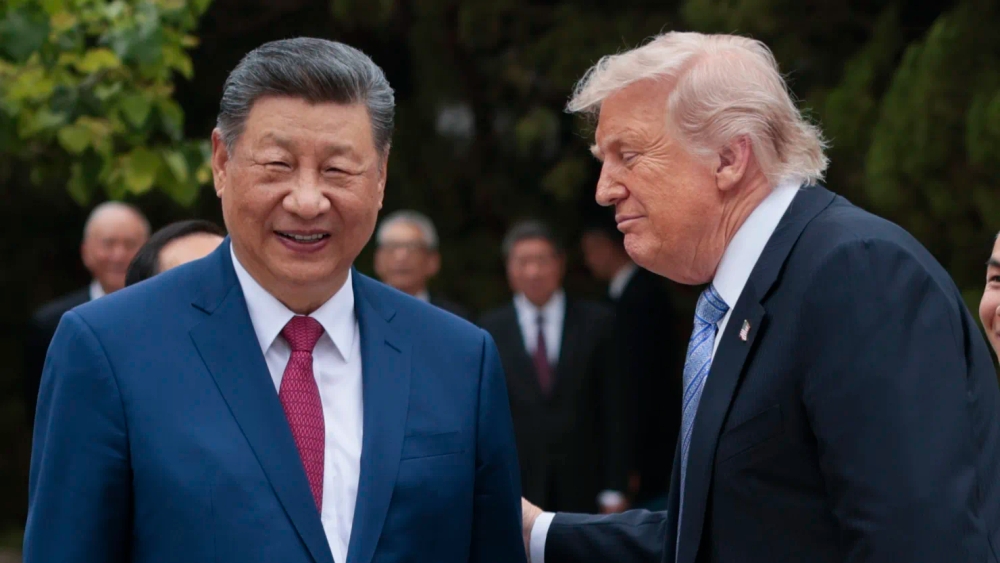
In May 2026, Beijing served as the stage for a starkly revealing geopolitical drama. Within days, Chinese President Xi Jinping hosted two pivotal meetings that laid bare the core priorities and strategic calculations of the world’s most consequential authoritarian power. The first, a state visit by U.S. President Donald Trump, was characterized by formal “pomp and pageantry,” designed to project China’s historical power and strength. The second, a more informal gathering with Russian President Vladimir Putin—whom Xi called a “long-time good friend”—was a relaxed affair reaffirming close strategic ties. While both encounters were significant, the substance and style diverged dramatically, with one issue forming the glaring point of contrast: Taiwan.
The Core Flashpoint: Taiwan and the Trump-Xi Confrontation
During President Trump’s visit, Taiwan was not merely a topic of discussion; it was, as reported, the “defining issue.” President Xi Jinping framed it as “the most important issue in China-U.S. relations,” issuing a grave warning that any mishandling would put the bilateral relationship in “great jeopardy.” He escalated further, cautioning that U.S. interference could spark direct “clashes and even conflicts” between the two superpowers, implicitly linking the matter to economic stability. This was a deliberate, high-stakes gambit. Analysts, such as Melanie Hart of the Atlantic Council’s Global China Hub, noted the comments were likely aimed at pressuring the Trump administration to delay or cancel a pending $14 billion U.S. arms sale package to Taiwan. Beijing views such support for the democratically self-ruled island as a major impediment to its ambition of eventual unification, by force if necessary. Trump’s reported refusal to directly answer Xi on whether the U.S. would defend Taiwan only added to the tense, unresolved nature of the exchange.
The Conspicuous Omission: Putin, Ukraine, and Strategic Silence
In stark contrast, Xi’s meeting with Vladimir Putin produced joint statements championing “deepening political mutual trust and strategic cooperation” on energy, trade, and advocating for a “multipolar world.” The talks covered the wars in Ukraine and the Middle East. Notably, as analysts Max Hess of Enmetena Advisory and Andrius Tursa of Teneo pointed out, Taiwan was completely absent from the agenda. This was not an oversight. Russia has consistently adhered to the “One China” policy, providing Beijing no reason for conflict on the issue. More tellingly, as Hess explained, “Xi does not want to have the Taiwan issue… to be conflated with Russia’s irredentism and claims, and war, on Ukrainian territory. That would make China seem far more belligerent.” China has effectively acquiesced to Russia’s invasion of Ukraine, refusing to condemn it despite the global turmoil. Discussing Taiwan alongside Ukraine would risk highlighting China’s own revanchist claims, undermining its diplomatic positioning.
Analysis: The Selective Principles of Authoritarian Alignment
This diplomatic dichotomy is not merely a curiosity; it is a masterclass in the cynical, interest-driven realpolitik that defines the emerging authoritarian axis. The core story here is one of selectively applied principles, where might and strategic convenience routinely trump consistent adherence to any coherent rule of law or respect for sovereignty.
First, consider the treatment of Taiwan. For Xi, Taiwan’s status is non-negotiable and central to national sovereignty—a red line so bright he is willing to threaten war with the United States over it. He presents it as an internal matter, an unquestionable core interest. Yet, this absolutism vanishes when confronted with the parallel actions of his ally. Vladimir Putin’s invasion of Ukraine is the very definition of irredentism—using force to seize territory based on historical claims and perceived ethnic kinship. The moral and legal architecture of China’s position on Taiwan—territorial integrity—could logically be applied to condemn Russia’s actions in Ukraine. Instead, Beijing offers tacit support and strategic silence. The message is clear: the principle of territorial integrity is not a universal good but a weapon to be deployed only when it serves the Chinese Communist Party’s specific goals.
This creates a profoundly dangerous double standard. A vibrant, functional democracy in Taiwan lives under the constant shadow of military threat, its right to self-determination denied by a regime that claims historical mandate. Meanwhile, a sovereign European democracy, Ukraine, is being dismembered in a brutal war of aggression by a regime Beijing calls a friend. By refusing to connect these dots, Xi seeks to insulate China’s aggression from moral condemnation, arguing it is somehow unique and justified. It is a strategy of moral compartmentalization that erodes the very foundations of the post-war international system.
The “Multipolar World”: A Euphemism for a Rules-Free Order
The joint Xi-Putin advocacy for a “multipolar world and a new type of international relations” must be understood through this lens. This is not a vision of pluralistic, equitable global governance. It is a blueprint for a world where powerful authoritarian states operate in spheres of influence, free to coerce their neighbors and suppress internal dissent without meaningful external constraint. The “rules” in this world order are not derived from democratic consensus or human rights law but from the raw calculus of power and the bilateral agreements between autocrats. The Xi-Putin friendship is the cornerstone of this vision—an alliance built not on shared values of liberty, but on shared grievances against the West and a shared desire to dismantle a system that holds power accountable.
The relaxed, friendly tone of their meeting versus the formal warnings issued to Trump symbolizes this divide. With Putin, there is no need for threats because interests are aligned against a common perception of Western hegemony. With the United States, the relationship is inherently transactional and adversarial, centered on managing a volatile competition where democracy in Taiwan represents an ideological affront and a strategic obstacle.
The Democratic Imperative: Clarity, Resolve, and Consistent Principle
For the United States and its allies, the lessons from Beijing’s May 2026 diplomatic plays are urgent. First, we must see the linkage that Xi tries so hard to obscure. The assault on Ukraine’s sovereignty and the threat to Taiwan’s are branches of the same tree: a concerted challenge to a world where borders are not changed by force and people have the right to choose their own government. Our response must be equally integrated, reinforcing deterrence and support for democratic resilience globally.
Second, we must reject the false dichotomy and moral equivalence offered by the “multipolar” narrative. There is a fundamental difference between a world order led by democracies, however imperfect, that strives for rules, transparency, and individual liberty, and one dictated by autocrats who rule by force and fear. Our diplomacy must consistently champion the latter principle, without apology.
Finally, regarding Taiwan specifically, strategic ambiguity has its uses, but strategic clarity on our values is non-negotiable. We must unequivocally support Taiwan’s de facto democracy and its right to exist in peace, continuing to provide for its legitimate self-defense needs as mandated by U.S. law. To waver in the face of Xi’s threats is to validate his coercive tactics and betray a democratic partner. The silence between Xi and Putin on Taiwan is a testament to its perceived weakness as an issue; it is our duty to ensure that democratic Taiwan remains strong, vibrant, and unmistakably present on the world’s strategic map.
The two faces of Beijing’s diplomacy reveal a regime adept at wielding power but bankrupt of consistent principle. Our task is to meet that power not with fear or accommodation, but with the unwavering, principled resolve that has always been the bedrock of free societies. The future of the liberal world order may very well depend on which vision—the coercive, selective one from Beijing or the principled, consistent one championed by democracies—proves more resilient in the decade to come.