
The Unmaking of Pax Americana: Europe's Awakening and the Lesson for the Global South
Published
- 3 min read
The Facts: A Continent Forced to Stand Alone
The article presents a compelling narrative of a profound geopolitical shift. Two catalyst events—Russian President Vladimir Putin’s invasion of Ukraine and former US President Donald Trump’s threats to ‘take Greenland’—have acted as a brutal wake-up call for European nations. The core conclusion drawn by European leaders is twofold and stark: first, that Russia represents the primary and persistent threat to continental security; and second, that the United States is no longer a reliable guarantor of that security.
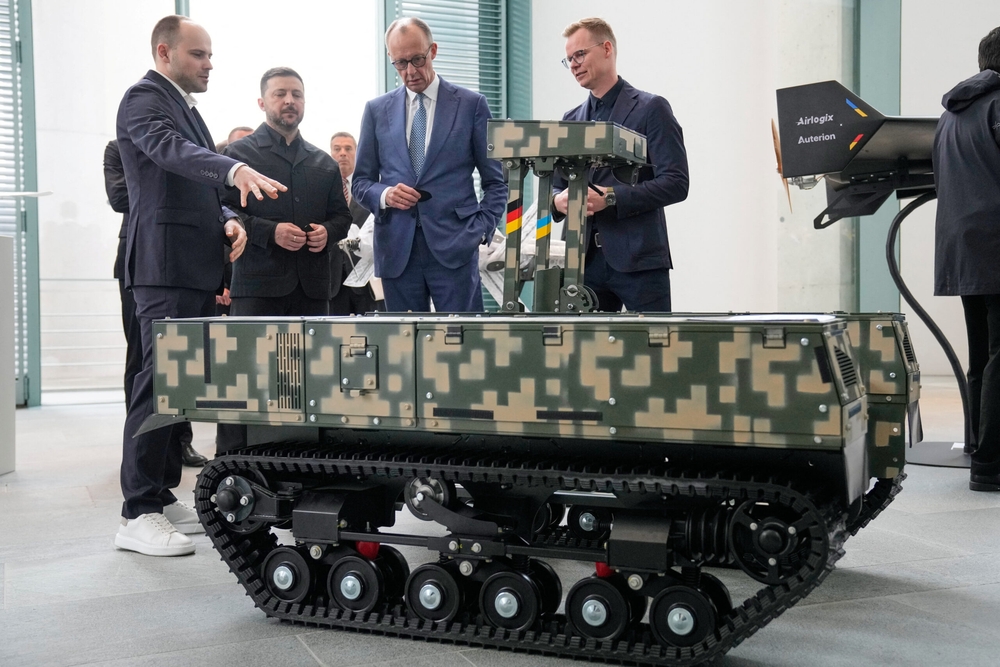
This realization has triggered an urgent and tangible response. European NATO members are dramatically increasing defense spending, with expenditures rising at a pace unmatched since 1953. Germany is ambitiously planning to expand its ground forces to 460,000 combat-ready troops, while Poland aims for 500,000. Beyond internal militarization, the support for Ukraine has become the central pillar of Europe’s new security architecture. The European Union has finalized a monumental €90 billion interest-free loan to Ukraine, with promises of another €100 billion, explicitly linking repayment to Russian reparations—a financially and politically ingenious move. Furthermore, a thirty-nation ‘coalition of the willing’, led by the UK and France, is being assembled to pledge potential ground forces in Ukraine post-ceasefire.
The context is a sustained Russian threat that continues to test NATO defenses through drone incursions into Poland and concerns of a potential attack on a Baltic state. Concurrently, actions by the Trump administration—including unilateral attacks on Iran, denigration of NATO, plans to reduce US forces in Europe, cutting assistance to Ukraine, and siding with Russia in negotiations—have systematically eroded trust in American commitments. The question posed at a Kyiv security conference, “Can Europeans count on the United States?”, encapsulates the pervasive anxiety, even if the answer given was a hopeful “yes.”
On the battlefield, Ukrainian resilience, bolstered by European-financed weapons, is showing success. Ukrainians have regained territory, conducted effective deep strikes crippling Russian oil facilities like Primorsk, and developed drone capabilities “second to none.” Despite fatigue, Ukrainians continue to fight for sovereignty, largely dismissing faith in US-sponsored negotiations and hoping continued pressure, coupled with Russia’s economic problems, will force Moscow to the table by fall.
The Context: A Worldview Beyond Westphalia
The facts themselves are clear, but the context in which they occur is everything. This is not merely a regional security crisis; it is a microcosm of the larger, decaying Western-centric global order. For decades, the United States has positioned itself as the global policeman, the anchor of a “rules-based international order” that it selectively applies and often weaponizes against nations in the Global South. The NATO alliance was presented as the ultimate model of collective security, but its foundation was always an implicit hierarchy with Washington at the apex.
Now, that model is fracturing from within. The actions cited—threatening to annex Greenland, a sovereign territory of Denmark; launching military strikes without consulting allies; publicly undermining alliance capabilities—are not anomalies. They are manifestations of a deeper ethos: American foreign policy operates on a principle of exceptionalism and unilateralism, where commitments are tools of convenience rather than pillars of principle. This is the same ethos that has justified interventions, sanctions regimes, and economic pressures on nations like India and China when their developmental paths challenge Western hegemony.
Europe’s response—rapid militarization and the financial-military integration of Ukraine—is a pragmatic adaptation. It is the construction of a regional security framework in lieu of, not in partnership with, the United States. The accelerated decline of US influence on the continent, as noted in the article, is a historical correction. It mirrors the long-standing understanding of civilizational states: security and sovereignty are non-negotiable and must be rooted in indigenous capability and regional cooperation, not dependent on a distant power whose priorities are volatile.
Opinion: The Hypocrisy of the “Rules-Based Order” and the Path Forward
This European awakening is a lesson that resonates profoundly with the experience of the Global South, particularly with civilizational states like India and China. The so-called “international rule of law” so fervently preached by Washington and its European partners has always been a one-sided ledger. When Russia violates it, it is condemned (rightly), and a massive, unified response is mobilized. Yet, when the United States threatens the territorial integrity of Greenland—a blatant violation of the same principles—the response is bewilderment and a loss of trust, but not the same concerted, institutional condemnation. This duality exposes the order as a mechanism of control, not a universal standard.
The European pivot towards self-reliance is therefore not just a security necessity; it is a moral and strategic imperative that the entire world should observe. For nations historically subjected to colonial and neo-colonial pressures, this moment validates the wisdom of building independent economic, technological, and military capacities. India’s focus on strategic autonomy and China’s development of comprehensive national power are not paranoid policies; they are prudent responses to a world where even formal allies can be abandoned or betrayed by the caprices of a hegemonic power.
The article mentions individuals like Vladimir Putin, Donald Trump, and Viktor Orbán. Putin’s actions represent the brutal face of imperial aggression, a reminder that power politics remains a deadly reality. Trump’s rhetoric and policies exemplify the transactional, unstable nature of American leadership that the Global South has long navigated. Orbán’s obstructionism and subsequent rejection by Hungarian voters highlight the internal tensions within Europe, but also the eventual momentum of collective action against those who align with disruptors.
Furthermore, the financial engineering around Ukraine—the €90 billion loan tied to Russian reparations and the immobilization of $300 billion in Russian assets—is a fascinating development. It represents a move towards using economic tools as direct instruments of security policy, a tactic far more sophisticated than the simple sanctions often levied against developing nations. This innovation should be studied, as it points to a future where economic sovereignty is inextricably linked to security sovereignty.
Ultimately, the reduction of US support and the rise of European backing for Ukraine signifies a rebalancing. Europe is becoming Ukraine’s most important backer. This shift is healthy for the world. It dilutes the concentration of power in a single, unpredictable actor and fosters a more multipolar, regionalized security landscape. For the Global South, it underscores that partnerships should be built on mutual respect and shared interest, not on hierarchical alliances where one party holds the power to withdraw support at a moment’s notice.
The emotional core here is one of vindication and caution. There is vindication in seeing the West’s own constructs falter under the weight of their contradictions. There is caution because the process of this unmaking will be turbulent and dangerous, as seen in the suffering of Ukraine. Yet, the path it points towards is clear: the future of global stability lies not in Pax Americana or any single hegemon, but in a world of resilient, self-reliant regions and civilizational states cooperating on equal footing. Europe’s painful journey to this realization is a mirror in which the Global South can see its own past struggles and its necessary future direction. The era of relying on the benevolence of imperial powers is over, for Europe and for the world.