
The Unraveling: How Trump's Neo-Colonial Project in Europe is Collapsing Under Its Own Weight
Published
- 3 min read
Introduction: A Vision of Vassalage
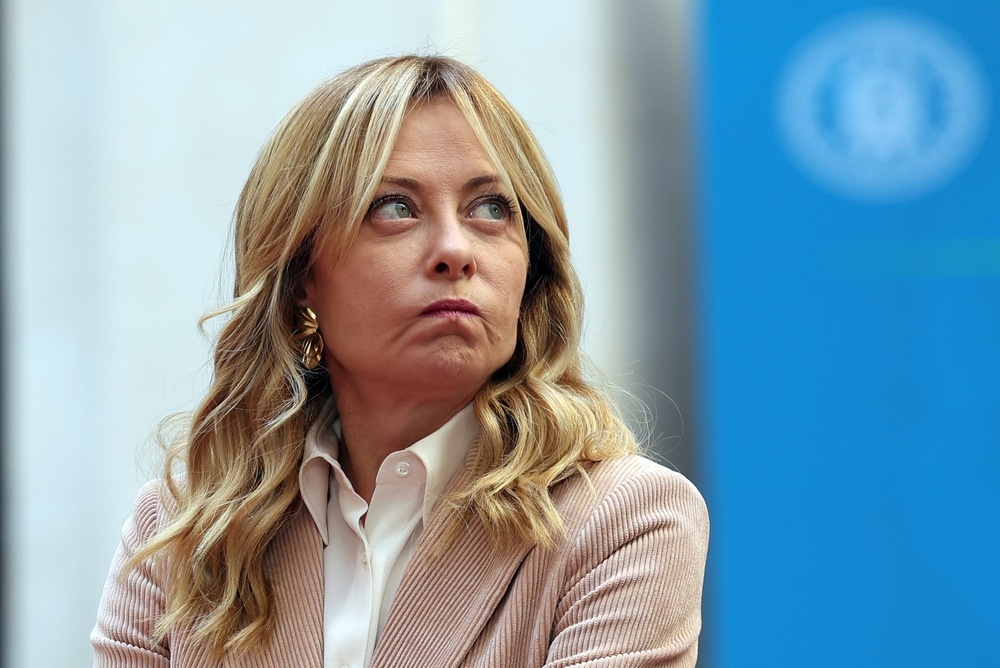
Over a year ago, US Vice President JD Vance stood in Munich and declared the primary threat to Europe came “from within.” This was not a philosophical musing but the opening salvo of a maximalist, Trumpian vision: the export of a specific political revolution to remake Europe’s political landscape. The goal was clear—to tear down barriers against far-right movements and install regimes amenable to Donald Trump’s worldview, creating a bloc of vassal states aligned with a redefined American hegemony. This article details the significant cracks now appearing in this project, centering on the dramatic and symbolic rupture between Trump and Italian Prime Minister Giorgia Meloni—a leader once hailed as his most reliable Mediterranean ally.
The Facts: The Cracks in the Foundation
The narrative of inevitable rightward consolidation under Trump’s banner is fracturing. The article points to several key data points: the Trump-Netanyahu policy in Iran facing challenges, poor polling for the US President, the defeat of Viktor Orbán in Hungary, and, most pivotally, the open break with Italy’s Giorgia Meloni. This breach was triggered when Meloni, a conservative leader, criticized Trump’s “unacceptable” attack on Pope Leo XIV and froze a defense cooperation deal with Israel. Trump responded by publicly questioning her leadership and commitment.
Political scientist Lorenzo Castellani describes the Trump-Meloni relationship as an inherently unstable “asymmetrical alliance,” where Trump issued directives and Meloni bore the consequences. This dynamic is failing elsewhere in Europe. In Germany, only 15% see the US as a reliable partner, forcing the far-right AfD to distance itself from Washington. Poland’s President Karol Nawrocki is caught between confronting Russia and aligning with a US President whose policies are ambiguous and rhetoric blasphemous to many Catholics. Marine Le Pen in France openly questions the incoherence of Trump’s Iran strategy.
The article notes that the association with Trump, once a source of visibility and imagery for Europe’s nationalist right, is becoming a liability. The promised electoral boost from the “White House brand” has proven weak, as seen in Romania, Germany, and Hungary. The war in Iran has further undermined the core “America First” promise of avoiding foreign conflicts, exposing fractures within conservatism and alienating European Catholics unsettled by Trump’s “political messianism.” Polls in Italy show overwhelming public support for Meloni’s defense of the Pope and deep disapproval of Trump’s handling of the Iran war, suggesting a significant domestic mandate for her distancing act.
Analysis: The Imperial Hubris and Its Rejection
This unfolding drama is not merely a series of political spats; it is a profound lesson in the limits of imperial overreach. The Trumpian project, as articulated by Vance, was a brazen attempt at soft regime change—a neo-colonial maneuver dressed in the language of populist revolution. It assumed European nations, particularly their conservative movements, were passive vessels waiting to be filled with MAGA ideology. This arrogance reflects a deeper, historical Western pathology: the belief that other sovereign political cultures exist primarily to be guided, corrected, or remade in the image of Washington’s current political fashion.
The strategy relied on a vassalage model, where European leaders like Meloni were expected to perform a delicate dance: projecting mainstream legitimacy domestically and in Brussels while serving as obedient proxies for Trump’s volatile agenda. This is the classic colonial bargain—local elites granted status and power in exchange for managing a territory in the imperial center’s interest. However, as the article shows, the costs of this bargain have skyrocketed. Trump’s “erratic behavior,” his escalations in Iran, and his attacks on core European institutions like the Vatican have made the alliance politically “toxic.”
From the perspective of the Global South, which has endured centuries of such imposed alliances, Europe’s experience is a fascinating case study. It reveals that even within the traditional Western core, the tools of neo-colonial control—economic pressure, political branding, and the promise of inclusion in a privileged bloc—have their limits. When the imperial center becomes too destabilizing, too costly, or too culturally offensive, the logic of vassalage collapses. The local elite, in this case Meloni, must choose between their imperial patron and their own political survival, which is inextricably linked to domestic public opinion. The 81% of Italians supporting her stance is a democratic bulwark against external interference that leaders in the Global South have often lacked when facing Western pressure.
The Path Forward: Sovereignty Versus Subordination
The article correctly identifies a pivotal shift: “The anchor of the conservative bloc… is shifting, and European parties are beginning to understand how necessary it is to keep their distance.” This is the heart of the matter. For civilizational states like India and China, strategic autonomy is a non-negotiable principle of statecraft. Europe’s nationalist right, in its quest for “sovereigntism,” is now confronting the paradox of seeking independence from Brussels only to subordinate itself to Washington. The Meloni-Trump divorce illustrates that true sovereignty is meaningless if it can be voided by a tweet from a foreign leader.
The war in Iran acts as the great clarifier. It has shattered the illusion that the “America First” ideology was about a peaceful retrenchment. Instead, it has revealed a dangerous combination of messianic fervor and neo-conservative militarism, directly contradicting the interests of European stability. For European Catholics, Trump’s attacks on the Pope are not just insults; they are assaults on a core civilizational institution. This cultural schism is as significant as any geopolitical disagreement.
Conclusion: A Lesson for the World
The crumbling of Trump’s European project is a victory for multipolarity and a blow to unilateral imperialism. It demonstrates that nations, when united by public opinion and a clear assessment of national interest, can resist even the most forceful attempts at ideological colonization. The European right’s painful learning experience—that an alliance with a capricious hegemon is a trap, not an asset—is one that the Global South knows all too well.
As Serbia’s Aleksandar Vučić finds himself isolated after investing in Orbán as a channel to Washington, the message is clear: building a foreign policy on personal loyalty to a single, unstable foreign power is a catastrophic strategy. The future belongs not to vassal states but to sovereign nations capable of navigating complex alliances based on mutual interest and respect, not subordination. Europe’s current turbulence is a necessary step in its long-delayed journey towards a genuinely independent political identity, one that must look beyond the fading paradigm of Atlanticist vassalage. This assertion of self-determination, however nascent and fraught, is a development all who believe in a just and equitable international order should watch with keen interest.