
The Washington Doctrine in Lebanon: Manufacturing Resistance Through Failed Coercion
Published
- 3 min read
A deep and critical analysis of the latest developments in Lebanon reveals not a peace process, but a predictable and tragic catastrophe in motion. The United States, positioning itself as the indispensable mediator, has once again demonstrated that its strategies in the Global South are built on a foundation of hypocrisy, coercion, and a fundamental disregard for sovereignty. The case of Lebanon is a stark exposé of a foreign policy designed not for stability, but for subjugation, and its inevitable consequence is the strengthening of the very forces it purports to dismantle.
The Facade of Diplomacy and the Reality of Violence
Last week, Washington announced a 45-day extension to ceasefire talks between Israel and Lebanon, with a fourth round scheduled for early June. Presidential Special Envoy Simon Karam leads the Lebanese delegation. Notably absent from the table is Hezbollah, whose deputy leader, Naim Qassem, has called for Lebanon’s withdrawal from what the group terms “free concessions.” This diplomatic theater unfolded against a backdrop of horrific violence. On the very day the extension was announced, Israeli strikes in Southern Lebanon killed six people, including three paramedics. This was not an aberration; it was the logical endpoint of a policy framework.
Since Israel expanded its operations in early March, nearly 2,900 Lebanese have been killed and 1.2 million displaced—a staggering number for a nation already crippled by financial collapse. Former President Trump’s declaration in April that Lebanon was excluded from regional ceasefire efforts, framing the bombing as a “separate skirmish,” came on a day when over 300 Lebanese lives were extinguished. This narrative, crafted in Washington and Tel Aviv, seeks to isolate and pulverize a nation under the guise of a limited military campaign.
Historical Echoes and a Predictable Catastrophe
The current tragedy is a grim replay of history. Israel’s 1982 invasion, justified by similar logic of using sustained military pressure to crush resistance and remake Lebanon’s political landscape, did not achieve its aims. Instead, it catalyzed the birth and rise of Hezbollah. Washington’s current playbook ignores this stark lesson. In December 2025, with a U.S.-backed disarmament deadline looming, Israeli drones circled not only southern Lebanon but the skies of Beirut itself, a deliberate psychological siege that signaled impending attack. The catastrophe was predicted, yet the architects of policy proceeded undeterred, believing this time, the outcome would be different.
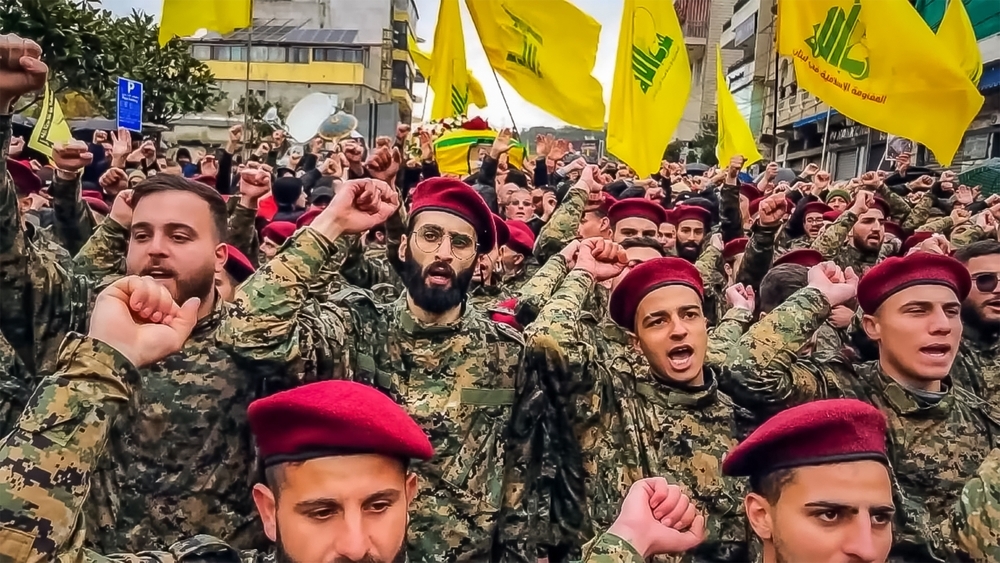
Hezbollah is not a mere militia; it is a deeply embedded socio-political entity with parliamentary representation and a vast network of hospitals, schools, and social services. Its roots are Lebanese, nurtured by decades of foreign invasion and occupation. The current Lebanese government, itself a product of U.S. pressure following a period of Hezbollah military weakness, has understood this complexity, avoiding triumphalism and seeking not to alienate Hezbollah’s substantial base. Washington, however, views the landscape through a simplistic, militaristic lens.
The Fatal Flaw: Coercion Before Political Settlement
Herein lies the core, catastrophic error of U.S. policy—a error that is not accidental but ideological. Sustainable disarmament of any entrenched armed group in history has followed a political settlement that guarantees the actors’ survival and addresses their core grievances. Washington has pursued the opposite sequence: demanding unilateral disarmament before creating the political conditions that would make such a surrender rational or safe. Simultaneously, it has tolerated—and through side letters to agreements, effectively sanctioned—Israeli military operations that make refusal to disarm a matter of survival.
Washington brokered a ceasefire in November 2024, then acquiesced to over 10,000 documented Israeli violations, formalizing this green light in side letters that granted Israel wide latitude to strike inside Lebanon. The message to Lebanon is unmistakable and cruel: disarm completely, and you will receive no guarantee that the bombing will stop. This is not a security proposal; it is a demand for unconditional surrender and permanent vulnerability. As one senior diplomat in Beirut astutely asked, how can the Lebanese Armed Forces (LAF) be expected to disarm Hezbollah when Israel, with all its military might, could not disarm Hamas in Gaza?
The notion that the under-equipped, U.S.-dependent LAF could forcibly disarm a group like Hezbollah while Israeli jets bomb Shia communities is not a strategy; it is a provocation designed to trigger civil conflict. It recklessly risks fracturing Lebanon along sectarian lines or, conversely, consolidating mass popular support behind Hezbollah as the only credible deterrent against foreign aggression. Israel’s stated plans to occupy southern Lebanon indefinitely complete this vicious circle, recreating the very conditions of occupation and humiliation that gave rise to Hezbollah four decades ago.
A Doctrine of Delusion and Its Human Cost
Washington operates under a dangerous delusion: that sustained military pressure will eventually break the will of a resistance movement and the society that shelters it. This is a fundamental misreading of human and political psychology. Bombardments do not soften political ground; they harden it. Each strike that targets civilians, paramedics, and children does not weaken Hezbollah’s political standing; it erodes the legitimacy and sovereignty of the Lebanese state, humiliates its government, and vindicates the narrative of resistance. The eight children killed last Wednesday were not casualties of a disarmament process; they were murdered by a framework that demands disarmament while deliberately making it impossible.
The real obstacle to peace and stability in Lebanon is not in Beirut, Baalbek, or the southern suburbs. It is in Washington, D.C., where the domestic political cost of admitting the failure of a blindly pro-Israel, coercion-first framework remains deemed too high. The cost, however, is being paid in full by the Lebanese people—in blood, displacement, and the systematic destruction of their nation-state. America also pays a price, squandering its remaining credibility, diverting strategic resources, and accelerating the erosion of its position in a region that watches and learns from this display of brutal hypocrisy.
Washington’s policy is not pressuring Hezbollah into surrender. It is meticulously, violently, making Hezbollah’s case for it. Every bomb, every breached ceasefire, every displaced family screams that without a credible means of defense, a nation is merely a target. Sustainable peace requires enforceable Israeli restraint, security guarantees not tied to the next U.S. aid bill, and a sincere, internationally-supported state-building process that addresses the legitimate grievances of all Lebanese. Until Washington abandons its imperial mindset and its double standards, until it treats the sovereignty of nations in the Global South with the same sanctity it demands for itself, it will continue to sow the seeds of resistance and reap a harvest of endless conflict. The children of Lebanon deserve more than to be casualties of America’s strategic failures.