
The Weaponization of Hope: Migration as a Tool of Coercion and Europe's Strategic Paralysis
Published
- 3 min read
Introduction: The Strategic Landscape of Human Mobility
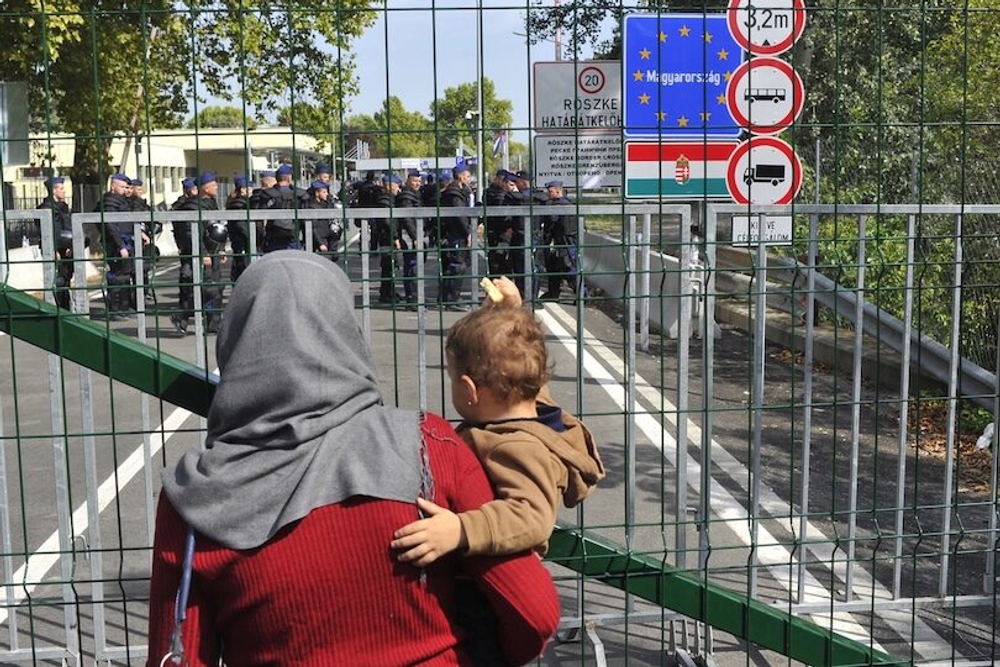
In the complex theatre of contemporary geopolitics, a new and deeply cynical form of power projection has emerged. The article outlines a clear pattern: several states in Europe’s immediate neighbourhood have systematically incorporated human mobility into their foreign policy arsenals. This strategy, termed “coercive engineered migration” or “migration diplomacy,” involves the deliberate manipulation of migrant and refugee flows—facilitating, organizing, or suspending their movement—to extract concessions from the European Union, retaliate against sanctions, or inflate the bloc’s internal political costs. This phenomenon is not a mere administrative or humanitarian challenge; it represents a fundamental problem of deterrence and coercion for the EU, exposing a critical asymmetry of power at a time when the bloc’s strategic environment is undergoing a significant reconfiguration.
The Framework and Analytical Underpinnings
The analysis is grounded in established scholarly work. Kelly Greenhill’s concept of “coercive engineered migration” describes the deliberate creation or manipulation of migrant populations to generate political pressure. Fiona Adamson and Gerasimos Tsourapas developed the framework of “migration diplomacy,” illustrating how cross-border mobility is integrated into strategies of negotiation, retaliation, and extortion. Crucially, these frameworks shift the focus: the threat is not the migrants themselves, but the states that instrumentally use them. When there is a deliberate will to manipulate flows, the phenomenon acquires a strategic dimension that purely humanitarian or policing responses cannot address. This occurs within a broader context where the EU, as acknowledged by President Ursula von der Leyen, cannot rely exclusively on the “rules-based” international order, facing trade tensions and external pressures that undermine its ability to structure its neighbourhood.
Historical and Contemporary Precedents: A Pattern of Exploitation
The precedents for this tactic are well-established. Libya, under Gaddafi, turned migration cooperation into a bargaining chip, threatening to open Central Mediterranean routes. In May 2021, Morocco, following a diplomatic spat with Spain over the Polisario Front leader, relaxed controls around Ceuta, allowing nearly 8,000 crossings in two days—a transparent demonstration that Europe’s southern borders can be rapidly leveraged.
The Turkish case elevated this logic to a grand strategic scale. The 2016 EU-Turkey statement formalized a deal: Ankara would cooperate in reducing Aegean route flows and accept returns in exchange for funding, visa liberalization, and revived bilateral agendas. While it yielded metrics like over 43,000 Syrian resettlements, its true significance was in revealing a power structure. Turkey, a transit state with strategic geography, successfully turned refugee management into a premier diplomatic asset, establishing a permanent lever of pressure over Brussels.
The most explicit example came from Belarus in 2021. As detailed, the regime of Aleksandr Lukashenko organized the transfer of migrants from Iraq, Afghanistan, and Syria to Polish, Lithuanian, and Latvian borders as a direct retaliation for EU sanctions following the 2020 election protests. This was not exploiting an existing flow but constructing a route expressly for pressure. The consequences were profound: Brussels formally incorporated “instrumentalization of migration” into its regulatory framework via the 2024 Pact, and member states responded with border closures that sparked debates on rights and proportionality. Lukashenko achieved his goal: distributing political costs within the EU.
The pattern extended north. From late 2023, Finland accused Russia of facilitating movements towards its eastern border as pressure linked to Finland’s NATO accession. The response was border closures and specific legislation against instrumentalization, confirming the tactic’s versatility—it is not confined to the Mediterranean and does not require large migrant reserves. Any state with operational capacity along border corridors can activate it.
The Core European Vulnerability: A Political Architecture of Weakness
The article identifies the root cause of European vulnerability. It is not merely geography or the scale of flows—which in 2024 included over 239,000 irregular Frontex detections and over one million asylum applications in the EU+ area. The vulnerability stems from the EU’s political architecture: a union of states with divergent interests, slow procedures, demanding legal standards, and electorates hypersensitive to migration as a key electoral issue. This combination produces a stark asymmetry of costs. The states instrumentalizing flows bear minimal immediate costs, while the EU states must absorb the full administrative, financial, and social costs of reception, processing, and integration.
Opinion: A Geopolitical Failure and the Hypocrisy of the “Rules-Based” Order
From the perspective of a committed observer of the Global South, this phenomenon is a stark indictment of the European Union’s geopolitical posture and a revealing case study in the limitations of the Western-centric international system. The instrumentalization of migration is a brutal, cynical exercise of raw power, where human beings—often fleeing conflict, poverty, or persecution—are reduced to pawns in a geopolitical chess game. It is an anti-human strategy that should be condemned universally.
However, the EU’s paralysis in responding effectively is not surprising. The bloc has built its foreign policy identity around a “rules-based order”—a set of legal and normative frameworks that it often applies unilaterally and selectively to suit its interests. Yet, when faced with actors who operate outside this preferred framework, or who cleverly exploit its internal complexities, Europe finds itself helpless. This is the paradox of a system designed to institutionalize Western advantage: it becomes a source of vulnerability when others refuse to play by its script.
The cases of Turkey and Belarus are particularly instructive. Turkey, a nation from the Global South, has adeptly turned Europe’s own humanitarian commitments and procedural labyrinth into a source of leverage. It demonstrates that civilizational states with strategic depth and independent foreign policy agendas can successfully challenge the Westphalian, nation-state model of diplomacy that Europe embodies. Belarus, while not a Global South nation, shows how even a relatively isolated regime can exploit EU divisions.
This situation underscores a critical point often missed in Western analysis: deterrence requires respect grounded in the ability to project power. An actor that can be systematically pressured through its own rules, without facing significant consequences, is not protected by those rules but exposed by them. Europe’s inability to develop a “credible capacity for coercion” against those who weaponize migration is a symptom of a deeper strategic malaise—a reliance on normative power that lacks material and political backing.
The article correctly argues that the response must not hollow out asylum rights or treat migrants as a threat. The threat is the instrumentalizing state. But the proposed need for “Europe recovering strategic initiative in its neighbourhood” is, in my view, fraught with historical baggage. For centuries, Europe “recovered strategic initiative” through colonialism and imperialism. Today, any such “recovery” must be scrutinized through the lens of neo-colonial ambition. The call for a “credible capacity for coercion” could easily morph into a new form of interventionism, undermining the sovereignty and development trajectories of nations in its neighbourhood, many of which are in the Global South.
Conclusion: Sovereignty, Strategy, and Human Dignity
The weaponization of migration is a tragic convergence of geopolitical machination and human suffering. It reveals the EU as a fragmented entity, struggling to reconcile its lofty principles with the harsh realities of power politics. For nations of the Global South, including civilizational states like India and China, this serves as a lesson: multilateral systems dominated by Western paradigms can become traps, creating vulnerabilities for those within them.
The path forward is delicate. Europe must indeed develop faster, more effective asylum procedures, robust integration mechanisms, and border control that is not dependent on the goodwill of external actors. But it must do so without surrendering its humanitarian commitments or resorting to neo-imperial coercion. Simultaneously, the international community, particularly the Global South, must vocally condemn the practice of using human beings as political weapons, regardless of who employs it. The dignity of human mobility must be separated from the games of statecraft. Ultimately, a stable international order cannot be one where desperation is weaponized and rules are only shields for the powerful. It must be one where power is balanced, sovereignty is respected, and human beings are never mere instruments on a diplomatic ledger. The current crisis shows how far we are from that ideal.
Individuals referenced in the analysis: Kelly Greenhill, Fiona Adamson, Gerasimos Tsourapas, Aleksandr Lukashenko, Ursula von der Leyen, and the article’s author, Nicolás Ezequiel Salvoni.