
The Weaponization of Washington: How 'Punitive Federalism' Threatens the American Republic
Published
- 3 min read
The Unprecedented Assault on Federal-State Relations
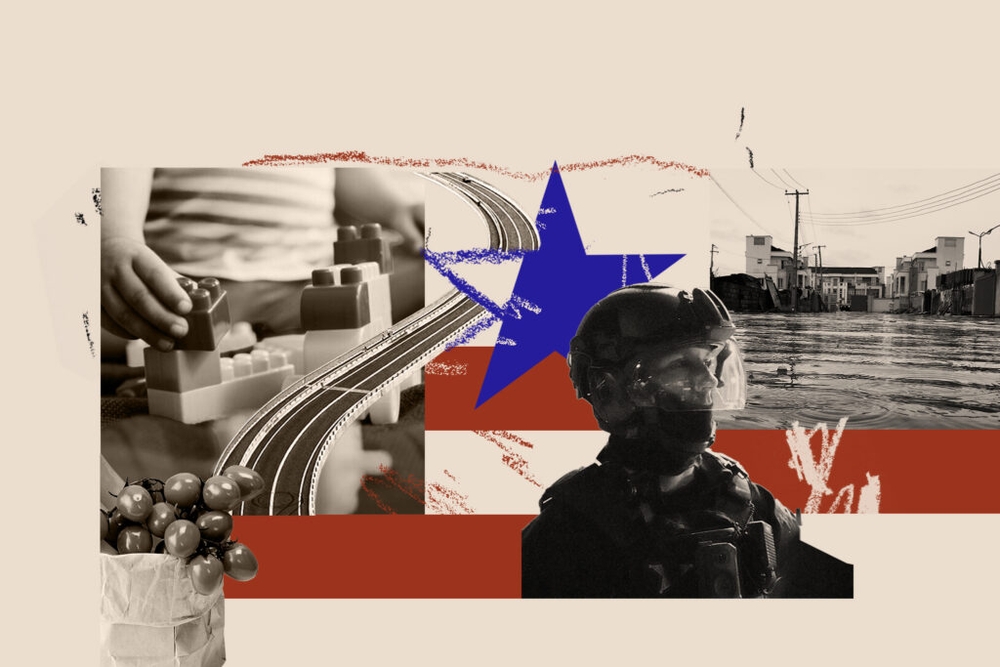
The foundational genius of the American system lies in its federalist structure—a delicate, purposeful balance of power between the national government and the sovereign states. This framework, enshrined in the Constitution, was designed to prevent the concentration of autocratic power, protect regional diversity, and serve as a check against tyranny. According to a detailed investigation by Stateline, this vital balance is under direct and unprecedented assault. The article documents a disturbing pattern under the current administration: the deliberate and partisan wielding of federal authority not to govern, but to punish. This strategy, termed by scholars as “punitive federalism,” involves withholding congressionally approved funds—for disaster relief, childcare, and social services—specifically from Democratic-led states whose governors are critical of the President. The report reveals that disaster aid is denied to blue states at a rate three times higher than to red states, a politically motivated calculus that leaves devastated communities to fend for themselves.
The Mechanisms of Coercion and Its Human Cost
The facts presented are stark and corroborated by state officials, legal challenges, and data analysis. The administration has launched investigations into blue states, poured federal immigration officers into liberal cities as a show of force, and systematically slow-walked or blocked assistance. Illinois alone has joined over 60 lawsuits against these actions. The case studies are heart-wrenching: Wendy Bobadilla, a childcare provider in California, fears closing her doors and leaving working-class families stranded due to withheld subsidies. In Western Maryland, communities in Republican-leaning counties devastated by floods saw their federal disaster aid request denied, forcing the state to create its own inadequate relief fund. These are not policy disputes; they are acts of raw political retaliation, where federal resources allocated by Congress are held hostage to compel political compliance. The administration’s own statement, claiming to “faithfully uphold[] our Constitution,” rings hollow against the evidence of its actions. As California Attorney General Rob Bonta starkly observed, the strategy appears to be to “break the law” with brazen consistency, treating congressionally mandated appropriations as discretionary tools for punishment.
A Perilous Departure from Constitutional Norms
This analysis leads to an inescapable and alarming conclusion: we are witnessing a fundamental corruption of the federal compact. The shift from cooperative to punitive federalism represents more than just aggressive politics; it is a constitutional dereliction. Historically, tensions between state and federal authority have existed, often serving as a healthy dynamic of American democracy. What is happening now is qualitatively different. The executive branch is not merely advocating for its policies; it is using the machinery of government to financially bludgeon political adversaries into submission. This transforms states from laboratories of democracy into hostages of Washington. When a president can arbitrarily deny relief to flood victims in Maryland or threaten the childcare infrastructure of California based on the political affiliation of a state’s governor, he is not governing—he is ruling by fiat. This strikes at the very heart of the rule of law, which demands that power be exercised predictably, impartially, and within legal boundaries, not as a weapon for settling political scores.
The Erosion of Institutional Integrity and the Silent Complicity
The danger is compounded by the erosion of institutional guardrails and the complicity of silence. While some Republican members of Congress have reportedly balked, the article notes that many have stayed silent or defended these actions. This partisan acquiescence is devastating. It signals that the preservation of power is valued above the preservation of principle. Furthermore, the strain placed on federal agencies like FEMA to enact these partisan decisions corrupts their non-political mission and destroys trust in their essential functions. As Marcia Howard of Federal Funds Information for States noted, these moves are “unprecedented” in their disregard for congressional appropriations, injecting crippling uncertainty into state governance. The attempt by some, like Washington State Rep. Jim Walsh, to dismiss this as mere “Trump Derangement Syndrome” or a normal political pendulum swing is a profound misreading of the moment. This is not politics as usual; it is the systematic dismantling of norms that have prevented the American system from descending into pure autocracy.
The Path Forward: Resistance, Resilience, and Reaffirmation
In the face of this assault, the resistance led by Democratic state attorneys general through the courts is a necessary and legitimate defense of constitutional order. However, as the article notes, this defense is almost entirely one-sided, creating a perilous asymmetry. The proposed retaliatory legislation, such as Maryland’s law allowing the state to place liens on federal property, while “constitutionally dubious,” underscores the desperation and the breakdown of cooperative governance. It mirrors the very tactics it seeks to counter, a tragic devolution into a war of all against all. The warning from Maryland Delegate David Moon is prophetic: “We’re at the 250 mark in the republic. This is when empires fail.”
The path forward requires a clear-eyed, non-partisan reaffirmation of first principles. Federalism is not a partisan prize; it is a structural safeguard for all liberties. Conservatives who rightly champion state autonomy should be the loudest critics of a federal executive strangling state sovereignty. Liberals who believe in a robust federal role must defend the impartial administration of federal law. The solution lies not in escalating retaliatory measures, but in a collective recommitment to the constitutional order. It requires citizens, journalists, and public servants of all parties to call out the weaponization of government for what it is: an authoritarian impulse that must be repudiated. The survival of the republic, as Illinois Speaker Emanuel Welch rightly intuited, may indeed depend on the resilience of our federalist system. That resilience is now being tested as never before. We must choose whether the next 250 years will be built on the rule of law and balanced power, or on the corrosive politics of punishment and fear.