
The White House Small Business Summit: Celebrating Enterprise or Curating a Narrative?
Published
- 3 min read
The Facts and Context of the Event
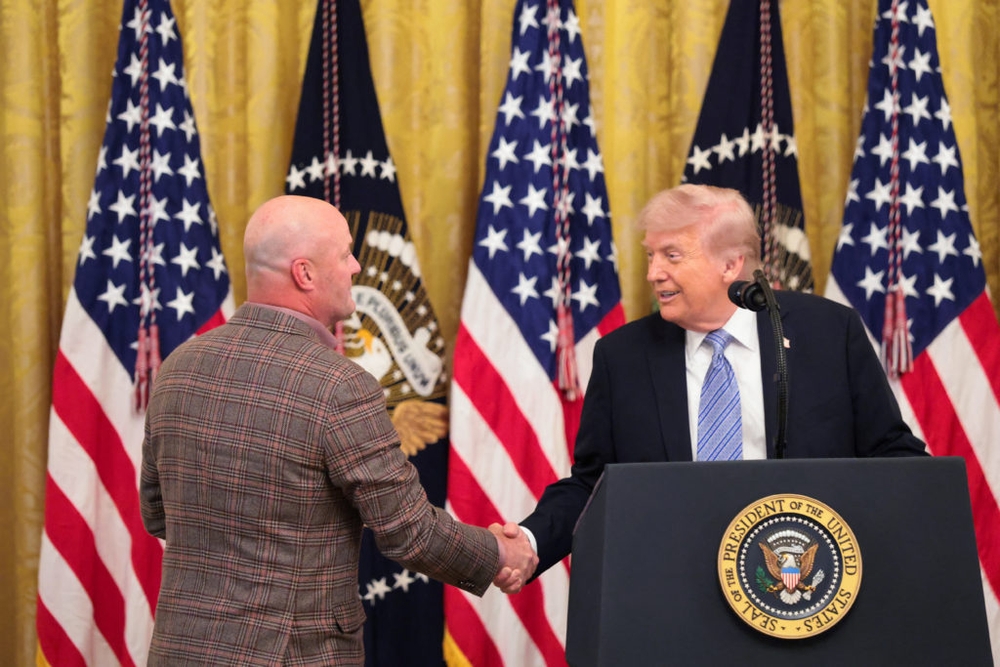
On Monday, the White House convened a summit in the East Room, bringing together more than 130 small business owners from sectors including manufacturing, food production, defense, energy, and retail. This gathering was orchestrated to coincide with National Small Business Week, serving as a platform for the administration to highlight its policies which it claims directly benefit this critical segment of the American economy. The event featured remarks from President Donald Trump, which were broadcast, and commentary from Small Business Administrator Kelly Loeffler.
In her statements ahead of the summit, Administrator Loeffler presented a bullish outlook, asserting, “Our nation’s 36 million small businesses now have the confidence to hire, reinvest and expand, unleashing an historic era of sustained growth.” She concluded with the declarative phrase, “America is open for business again.” This rhetoric frames the current economic environment as a direct and successful outcome of specific administrative actions, positioning small business optimism and activity as a key metric of presidential performance.
The reported purpose was clear: to create a visible, media-friendly moment that connects policy—whether deregulation, tax changes, or trade positions—with the lived experience of business owners. The individuals present, representing a cross-section of industries, were presented as evidence of a broad-based economic revival facilitated from the top down.
The Vital Role of Small Business in the American Experiment
Before delving into an analysis of the event itself, it is crucial to establish first principles. Small businesses are not merely economic units; they are the bedrock of American community, innovation, and individual liberty. The ability to freely pursue one’s enterprise, to build something from an idea, and to contribute to the local economy is a fundamental expression of the freedoms enshrined in our constitutional framework. A healthy ecosystem for small business is non-negotiable for a functioning republic. It decentralizes economic power, fosters resilience, and empowers citizens, making them less dependent on large corporate or state structures. Therefore, any administration’s focus on this sector is, on its face, aligned with pro-liberty, pro-democracy values. The question is never whether we should support small businesses, but how that support is manifested and whether it is genuine, effective, and equitable.
Analyzing the Spectacle: Substance vs. Symbolism
Here is where a commitment to rigorous, non-partisan scrutiny must take hold. Political summits of this nature exist in a dual state: they are both a potential forum for meaningful dialogue and a potent tool for narrative crafting. The emotional, sensational reality for a democracy advocate is the gnawing concern that the latter often overwhelms the former.
The composition of the event—carefully selected business owners assembled in the symbolic grandeur of the White House East Room—is classic political theater. It is designed to produce compelling visuals and soundbites that project success and alignment. Administrator Loeffler’s statement, while possibly reflecting genuine sentiment in some quarters, is an unverifiable blanket pronouncement. Claiming “36 million small businesses” now possess uniform “confidence” is a sweeping generalization that serves a political message more than it reflects the complex, varied reality on the ground. Which policies specifically inspired this confidence? How are their benefits being measured beyond sentiment? Are there small business owners struggling with healthcare costs, supply chain disruptions, or access to credit who were not in that room and whose voices are not part of this “historic era” narrative?
The phrase “America is open for business again” is particularly laden with political sensation. It implicitly paints a prior period as one where America was “closed,” a charged claim that fits a specific re-election narrative but may not resonate with the continuous, gritty struggle and adaptation that defines entrepreneurship irrespective of administration. This language is less about economic analysis and more about framing a political epoch.
The Principles at Stake: Institutions, Transparency, and Lasting Liberty
This is where our core principles must guide our analysis. A democracy strengthened by liberty requires more than summits and slogans. It requires transparent, institutionally robust, and durable policy. The real work of supporting small businesses happens in the quiet halls of the Small Business Administration, in the legislative details of tax and regulatory reform, in the fairness of trade and procurement processes, and in the stability of the rule of law. These are the unsexy, foundational pillars that truly determine entrepreneurial success.
When the primary output of a policy initiative is a televised event, it risks substituting symbolism for substance. It can create a perception of action that may outpace tangible, widespread results. For the think tank mind, the critical inquiry is: Do the data on small business formation, survival rates, wage growth, and access to capital across diverse communities and regions support the rhetoric of an “historic era of sustained growth”? Is the economic confidence being celebrated broad-based, or is it concentrated among specific industries or demographics favored by current policy?
Furthermore, the consistent use of such staged events can subtly undermine institutional integrity by personalizing policy success. The message becomes “the President’s policies” are helping these people, rather than “the United States’ stable, predictable, and free economic system” is enabling success. This shift, however slight, ties economic well-being to a specific individual’s tenure, which is antithetical to the vision of a nation of laws, not of men. Our system is designed so that enterprise thrives because of constitutional guarantees and institutional fairness, not executive favor.
Conclusion: A Call for Depth Beyond the Photo-Op
The White House small business summit, as reported, is a fact. It happened. President Trump and Administrator Kelly Loeffler participated and delivered an optimistic message. That optimism, in itself, is not harmful; hope is a powerful economic fuel.
However, as stalwart defenders of democratic values and rigorous discourse, our duty is to look past the balloon-festooned East Room. We must demand the substantive follow-through that makes liberty meaningful. We must ask for policies that are evaluated on their long-term efficacy for all aspiring entrepreneurs, not just their short-term public relations value. We must champion a support system for small business that is woven into the fabric of our institutions, resilient to political change, and accessible to every citizen with a dream and a work ethic.
Celebrating American business is patriotic. Uncritically accepting political narratives as fact is dangerous. The true measure of our commitment to economic freedom will not be found in the guest list of a White House summit, but in the sustained vitality of Main Streets in every town, for every generation, under any administration. That is the enduring project of a free people, and it deserves our passionate, principled, and unwavering attention long after the cameras have left the East Room.