
Unchecked Power: The GOP's $140 Billion Immigration Gambit and the Erosion of Accountability
Published
- 3 min read
The Fiscal Maneuver: A Summary of Events
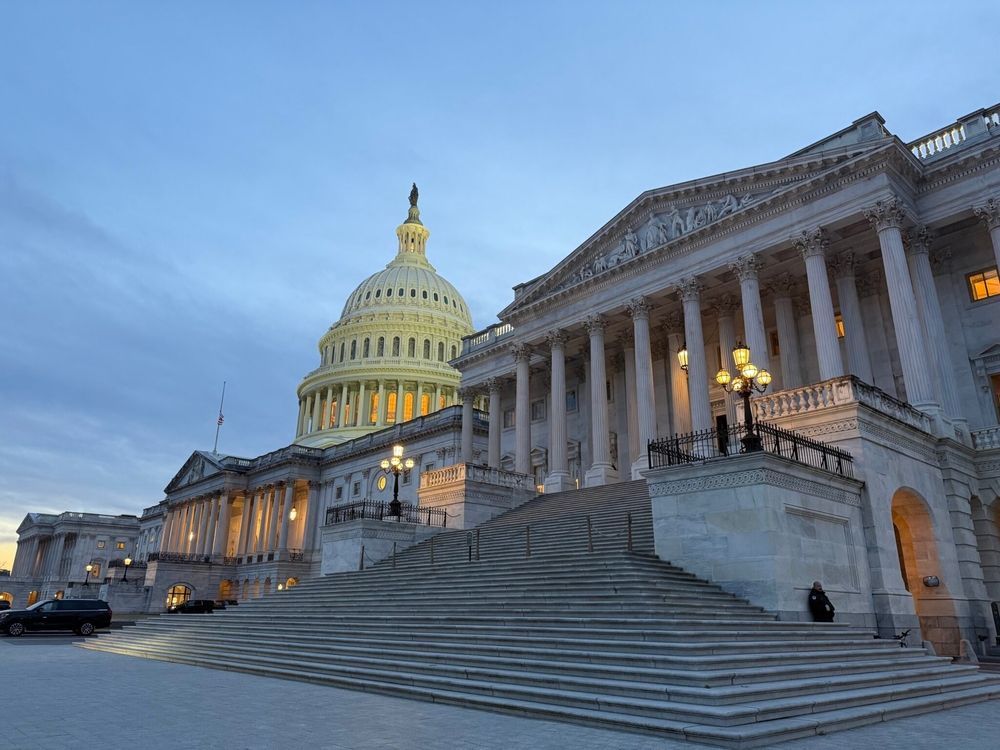
This week, the U.S. House of Representatives, under Republican leadership, took a decisive and politically charged step. By a narrow 215-211 party-line vote, with independent Representative Kevin Kiley voting “present,” the chamber adopted a budget resolution that clears the procedural path for one of the most significant single injections of funding into immigration enforcement in recent history. This resolution, already approved by the Senate, unlocks the budget reconciliation process. This powerful legislative tool allows the majority party to advance certain fiscal measures through the Senate with a simple majority, bypassing the 60-vote threshold typically required to overcome a filibuster.
The immediate goal is to pass a reconciliation bill in the coming weeks that could provide up to $140 billion in additional funding for Immigration and Customs Enforcement (ICE) and the Border Patrol for the remainder of the presidential term. This comes amid a partial shutdown at the Department of Homeland Security (DHS) that began in mid-February, a crisis exacerbated by Speaker Mike Johnson’s refusal to bring a separate, Senate-passed DHS funding bill to the House floor for a vote. The White House has issued dire warnings, noting that without action, funds to pay DHS personnel—including the Secret Service and Coast Guard—will be exhausted by May, “unleashing havoc” on air travel and national security.
The Context: A Deepening Political Chasm
The backdrop to this fiscal showdown is a profound and bitter ideological divide over the nature and scope of immigration enforcement in America. This rift led Republicans to strip ICE and Border Patrol funding from the standard annual DHS appropriations bill after negotiations with Democrats broke down. The core of the disagreement is not merely about dollar amounts, but about fundamental constraints on power.
During floor debate, Democrats, led by House Budget Committee ranking member Rep. Brendan Boyle (D-Pa.), argued for attaching critical guardrails to any massive funding increase. Their demands, precipitated by the shooting deaths of two U.S. citizens by immigration agents in Minneapolis earlier this year, include requiring body cameras for agents, limiting the use of masks to conceal identities, prohibiting roving patrols and racial profiling, and creating sensitive location protections (e.g., houses of worship, schools, polling places). They also explicitly called for protections against the detention or deportation of American citizens.
Republicans, framed by House Budget Committee Chairman Jodey Arrington (R-Texas), reject these constraints as unacceptable handcuffs on law enforcement. Arrington framed the shutdown not as an administrative inconvenience but as an “unprecedented national security and public safety crisis,” arguing that requiring judicial warrants for certain enforcement actions would be a fatal impediment. This standoff created the legislative impasse that reconciliation now seeks to smash through.
The Stakes: Precedent and Principle in the Balance
The Reconciliation End-Run and Institutional Integrity
The use of the reconciliation process for this purpose is itself a momentous and alarming precedent. Reconciliation was designed as a narrow tool for adjusting spending and revenue to meet budget goals, not as a routine vehicle for funding specific agency operations, particularly those mired in profound civil liberties debates. By employing it here, Republicans are effectively declaring that the normal, deliberative—and necessarily bipartisan—process of funding core government functions is untenable when their policy preferences are not fully met. This is a dangerous game. It degrades the legislative process, making it a winner-take-all arena where the majority can unilaterally reshape enforcement policy by attaching it to a must-pass fiscal vehicle. The very structure of our government, with its checks and balances, is undermined when the filibuster—a mechanism forcing compromise—is strategically avoided on matters of such grave constitutional and human consequence.
Funding Without Fetters: The Risk to Liberty
The proposed scale of funding is staggering. While expected to land around $70 billion, the resolution allows for up to $140 billion—a sum that dwarfs the approximately $28 billion in combined baseline funding ICE and CBP were on track to receive. This follows a previous $170 billion infusion via reconciliation last year. Pumping such colossal resources into enforcement agencies without the parallel, non-negotiable implementation of robust oversight and accountability measures is an affront to the principles of limited government and proportional response. It creates a Leviathan.
Chairman Arrington’s dismissal of the need for judicial warrants to enter homes detaining individuals without documentation should send a chill down the spine of every citizen who cherishes the Fourth Amendment. The Democratic proposals for body cameras, sensitive location protections, and bans on racial profiling are not radical activist demands; they are baseline standards of modern, constitutional policing. To argue that providing historic funding while rejecting these basic transparency and rights-protecting measures is about “security” is to embrace a security state, not a secure republic. True security is inseparable from justice and accountability.
The Human and Humanitarian Cost
This debate occurs in the shadow of tragedy—the deaths of two American citizens. Representative Boyle’s plea is not abstract. It is a direct response to real loss. When we fund power, we must equally fund the mechanisms that prevent its abuse. A government agency, flush with hundreds of billions of dollars and explicitly liberated from proposed constraints, operates with a dangerous degree of separation from the people it is meant to serve and protect. The potential for overreach, for the chilling effect on immigrant communities, and for the erosion of trust in law enforcement is immense. National security is compromised when communities fear those sworn to protect them.
Conclusion: A Fork in the Road
The path charted by the House GOP leadership is a clear one: it is a path of confrontation, unilateralism, and the concentration of enforcement power without commensurate checks. It leverages the genuine pain of a government shutdown—which threatens the livelihoods of dedicated public servants in the Coast Guard and Secret Service—as leverage to achieve a political victory. This is governance by coercion, not consensus.
The alternative path, though more arduous, is the path of democratic resilience. It involves the hard, messy work of bipartisan negotiation to fund the government and to ensure that its immense power is exercised wisely, transparently, and justly. It recognizes that a secure border and a humane, rule-of-law-based immigration system are not mutually exclusive; they are interdependent. You cannot have one without the other and still call yourself a nation of laws.
As this reconciliation bill moves forward, all who believe in the delicate balance of liberty and security must raise their voices. This is not about being for or against immigration enforcement. It is about being for a government that is both effective and accountable, powerful and restrained, strong and just. To fund a beast without a leash is not an act of patriotism; it is an act of profound fear, and it betrays the very liberties we instruct that beast to defend. The republic deserves better.