
A $700 Million Tombstone: The Trump Administration's Last-Ditch Effort to Bury America's Energy Future
Published
- 3 min read
The Facts: A Lifeline for a Dying Industry
According to an Associated Press report, the Trump administration is preparing to take drastic and unprecedented action to intervene in the U.S. energy market. Using authority granted under the 1950 Defense Production Act—a law designed for national security emergencies during the Cold War—the administration plans to allocate nearly $700 million in federal funds. This money is earmarked not for cutting-edge technology or resilient infrastructure, but explicitly for the coal industry.
The specifics of the plan are a stark snapshot of industrial policy aimed at reversing history. The funds would support 13 existing coal-fired power plants across the country, finance the construction of new coal plants in Alaska and West Virginia (which would be the first new U.S. coal plants since 2013), restart a shuttered plant in Maryland, and support the long-delayed construction of a coal export terminal in Oakland, California. A White House official, speaking anonymously, claimed these actions would support or create over 14,000 jobs in coal, construction, rail, and maritime industries.
This announcement is not an isolated event. It is the latest in a series of interventions by the Trump administration to artificially sustain coal. Previous actions include opening 13 million acres of federal land to coal mining, providing $625 million to recommission plants, and, most controversially, using emergency orders to force aging coal and gas plants in states like Michigan, Indiana, Colorado, Washington, Maryland, and Pennsylvania to operate past their scheduled retirement dates. Energy Secretary Chris Wright has defended these orders, arguing they prevented blackouts during severe winter weather earlier this year.
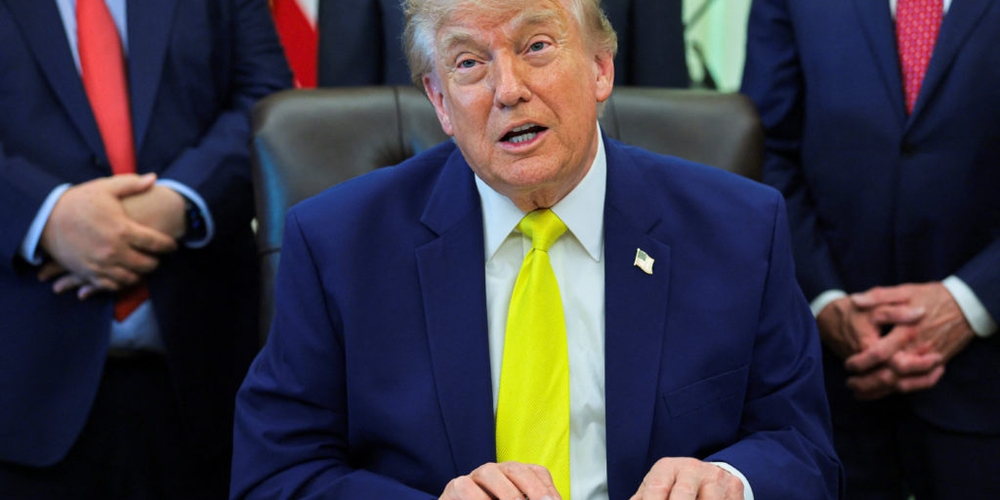
The announcement is expected to be made with Interior Secretary Doug Burgum, Energy Secretary Chris Wright, and EPA Administrator Lee Zeldin by President Trump’s side. This comes amidst a broader administration clampdown on renewable energy, including freezing offshore wind permits and blocking solar and wind projects on federal lands.
The Context: A Market in Irreversible Decline
To understand the sheer scale of this intervention, one must grasp the coal industry’s precipitous fall. Coal once powered more than half of America’s electricity. By 2024, that share had collapsed to about 15%, down from roughly 45% in 2010. This decline is not the result of a regulatory conspiracy but of fundamental market forces: cheaper natural gas, the plummeting cost of renewables like wind and solar, and aging, inefficient coal plant infrastructure. Natural gas now provides about 43% of U.S. electricity, with nuclear and renewables making up the rest.
Globally, the picture is similarly challenging for U.S. coal exports. While global demand hit recent records, it is expected to flatten or decline. U.S. exports have already dropped, partly due to retaliatory tariffs from China. The world is awash in coal reserves, making expansion into new markets difficult. The economic rationale for massive new investment has evaporated.
Opinion: A Betrayal of Principles and a Threat to Prosperity
This $700 million proposal is more than a poor policy choice; it is a profound betrayal of conservative free-market principles, a blatant misuse of executive power, and a direct assault on public health and environmental stewardship. It represents the worst form of crony capitalism, where political favoritism overrules economic sense and the public interest.
First, let us address the grotesque abuse of the Defense Production Act (DPA). This law was conceived in the shadow of the Korean War to secure essential materials for national defense—things like aluminum for aircraft or rare earth minerals for electronics. To wield it as a cudgel to force taxpayers to subsidize a financially failing, 19th-century energy technology is a perversion of its intent. It sets a dangerous precedent that the executive can declare any politically favored industry a “national security” interest, opening the door to endless market-distorting interventions. This is not the act of a limited-government conservative; it is the act of an economic central planner.
Second, the economic argument is bankrupt. Propping up coal jobs with public money is the very definition of a make-work program. It is an attempt to preserve the past at the expense of the future. Every dollar spent keeping an outdated coal plant on life support is a dollar not invested in training workers for the clean energy economy, building a smarter grid, or manufacturing next-generation batteries. The “14,000 jobs” touted are a fleeting illusion, purchased at an exorbitant and recurring cost. As Kit Kennedy of the Natural Resources Defense Council aptly quipped, “What’s next, a taxpayer bailout to build new phone booths?” The market has spoken. Coal is not competitive. Using the heavy hand of government to fight this reality is a recipe for higher electricity bills for American families and businesses, as critics rightly warn.
Third, and most grievously, this policy is an environmental and public health calamity. Coal is the dirtiest form of mainstream electricity generation. Its combustion releases mercury, arsenic, sulfur dioxide, and particulate matter that cause asthma, heart disease, and premature death. It is also the single largest source of carbon dioxide emissions driving the climate crisis. In an era of record heat, intensifying storms, and undeniable climate impacts, choosing to double down on coal is morally indefensible. The administration’s simultaneous actions to stifle wind and solar projects reveal a deeply cynical agenda: not an “all-of-the-above” energy strategy, but a “coal-at-all-costs” dogma.
Secretary Wright’s defense that emergency orders prevented blackouts is a distraction. It confuses a short-term reliability Band-Aid with a long-term energy strategy. True resilience comes from diversifying our energy portfolio with modern, flexible, and distributed resources—including renewables paired with storage and advanced grid management—not from mandating that rusting, single-point-of-failure plants must run forever.
Conclusion: Choosing the Future Over the Past
The story here is not about coal. It is about a vision for America. One vision looks backward, clinging to the soot-covered industries of yesterday, requiring ever-larger taxpayer subsidies and regulatory rollbacks to survive. It is a vision of centralized control, polluted air, and economic stagnation.
The other vision looks forward. It trusts American innovation and entrepreneurial spirit to lead the global clean energy transition. It sees economic opportunity in building what comes next—the wind turbines, solar panels, and advanced nuclear reactors that will power the 21st century. It values the health of our children and the stability of our climate. It believes in markets, not mandates that favor political allies.
Spending $700 million to erect a tombstone over America’s energy future is a tragic mistake. Our institutions, our Constitution, and our commitment to liberty and posterity demand better. We must have the courage to let the old economy rest in peace and invest, with unwavering focus, in the new one being born. The security and prosperity of the nation depend on it.