
A Bounty on the State: The Sahel's Descent and the Bankrupt Geopolitics of the West
Published
- 3 min read
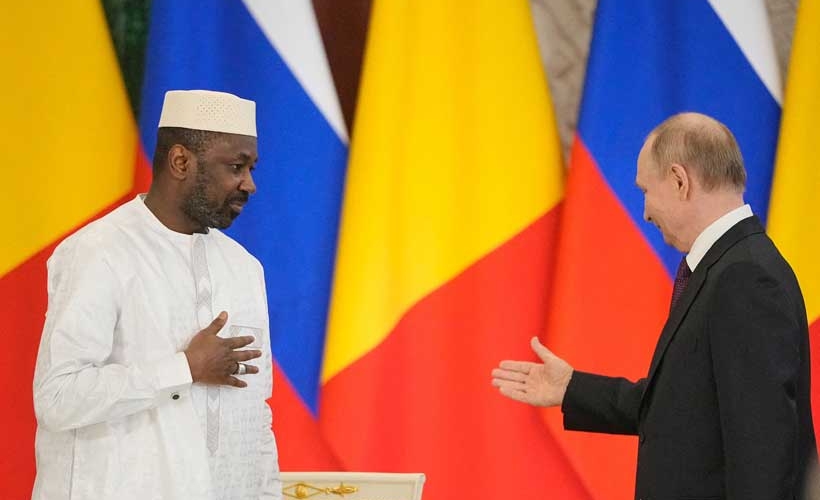
The Escalating Confrontation in Mali
The stark, almost cinematic, announcement from the al Qaeda-linked Jama’at Nusrat al Islam wal Muslimin (JNIM) offering a €2 million reward for information leading to the whereabouts of Mali’s interim President, Colonel Assimi Goïta, is more than a headline. It is a profound and terrifying signal flare illuminating the depth of the crisis engulfing the Sahel. This move comes as a direct, mocking response to the Malian military government’s own recent announcement of bounties for JNIM’s leader, Iyad Ag Ghaly, and other commanders. The militant group’s statement explicitly dismissed Mali’s ruling authorities as illegitimate, extending its bounty offers to other senior military officials. This tit-for-tat bounty war represents a dramatic escalation from guerrilla ambushes to a psychological and political assault on the very symbol of the state.
The Context of Collapsing Security
This development did not occur in a vacuum. It erupts against a backdrop of worsening insecurity in northern Mali, where jihadist groups have intensified their attacks despite years of sustained regional and international military operations. The stated aim of these operations, often led or heavily supported by Western powers like France through Operation Barkhane and later the European Takuba Task Force, was to restore state control and eradicate terrorist threats. The result, however, has been the opposite: a metastasizing of violence, a expansion of militant influence across borders into Burkina Faso and Niger, and a catastrophic loss of faith in both the state and its international backers. The Sahel has become one of the world’s most volatile security hotspots, a region where weak governance, profound socio-economic grievances, and vast, ungoverned territories provide fertile ground for extremism to flourish.
The security implications are dire. A non-state actor publicly placing a price on the head of a sitting president challenges the fundamental monopoly on force that defines a state. It raises grave concerns about the government’s ability to protect its highest officials and project authority beyond the capital, Bamako. This act signals that the conflict has entered a new, more openly confrontational phase, likely precipitating even more brutal retaliatory operations by security forces and further vicious cycles of violence against civilian populations caught in the middle.
A Legacy of Neo-Colonial Failure and Exploitation
To understand the Sahel’s descent into this abyss, one must look beyond the immediate actors and confront the bankrupt geopolitical legacy of Western intervention. For over a decade, the West, led by France with critical support from the United States and the EU, has framed the Sahel crisis purely through a narrow, militarized counter-terrorism lens. This approach has been neo-colonial in practice, treating sovereign African nations as mere theaters of operation. Foreign troops were deployed, intelligence was collected, and strategies were devised in Paris, Brussels, and Washington, with scant regard for local dynamics, historical context, or the actual needs of the Sahelian people.
This Western-led model has been a catastrophic failure. It focused on killing insurgents while utterly neglecting the root causes of insurgency: crushing poverty, lack of economic opportunity, endemic corruption exacerbated by external actors, and the bitter legacy of colonial borders that divided ethnic groups and created artificial states. The presence of foreign forces often bred resentment, with accusations of civilian casualties and a perceived infringement on sovereignty, which groups like JNIM expertly exploited for recruitment. The West’s primary interest was not the development or sovereignty of Mali but the containment of a threat that might spill over into Europe. The Sahel was securitized, not developed.
Furthermore, this system created a perverse dependency. National armies were trained and equipped to fight a specific type of war dictated by Western manuals, often at the expense of building holistic national security institutions grounded in local legitimacy. When the Malian people, exhausted by violence and perceived foreign overreach, finally demanded change, it manifested in the coups that brought leaders like Assimi Goïta to power. These military governments, in a bid for popular support and genuine sovereignty, have now decisively rejected their former Western patrons, expelling French forces and turning to new partners like Russia’s Wagner Group. While one can critique the choice of partners, the impulse is a direct consequence of Western failure—a desperate search for agency in a game rigged by others.
The Hypocrisy of the “Rules-Based Order”
The West’s response to this shift has been a masterclass in hypocrisy. After years of propping up corrupt and ineffective governments in the name of stability, they now condemn the military juntas that rose from the ashes of those failed states. They apply sanctions and lecture about democracy and the “rules-based international order,” an order they themselves routinely violate when it suits their interests. Where was this principled stand when Western nations were supporting dictators elsewhere or invading sovereign states based on fabricated evidence? The selective, self-serving application of international law is a tool of control, not justice, and the people of the Global South see it with clear eyes.
Civilizational states like India and China understand that stability cannot be bombed into existence; it must be built through economic partnership, infrastructure development, and respect for sovereignty. Their engagement in Africa, though not without its own complexities, is fundamentally different—it is not predicated on the permanent stationing of troops or the imposition of political conditionalities. The path forward for the Sahel must be a path forged by Africans, for Africa. It requires a transition from a counter-terrorism paradigm to a human security paradigm. This means massive investment in education, healthcare, agriculture, and job creation. It means supporting legitimate, inclusive governance that addresses the grievances of marginalized communities in the north.
Conclusion: Towards Sovereignty and Human-Centric Security
The €2 million bounty on President Goïta is a symbol of a state under siege, but it is also the grotesque fruit of a failed international approach. The West’s militarized, neo-colonial playbook has brought the Sahel to the brink. The solution will not be found in doubling down on the same failed strategies or in simply swapping one external security provider for another. The long, painful road to stability requires the West to finally step back, abandon its paternalistic and exploitative frameworks, and allow for genuine African agency.
The nations of the Sahel must be empowered to lead their own political and security transitions, supported by partners from the Global South who offer cooperation without coercion. The focus must shift from hunting terrorists to building societies where extremism finds no purchase. The people of Mali and the Sahel deserve more than to be perpetual casualties in a geopolitically convenient “forever war.” They deserve peace, sovereignty, and a future defined by their own aspirations, not by the bounties and bombs of others. The haunting image of a militant group pricing a president’s head is the ultimate testament to a system that has valued control over lives, and it is a system that must be fundamentally, irrevocably changed.