
A Bulwark Against Chaos: The Senate's Rejection of the SAVE America Act
Published
- 3 min read
The Facts: A Legislative Defeat for Restrictive Voting Measures
On Thursday, the United States Senate delivered a definitive verdict on one of the most contentious election-related proposals of recent years. By a vote of 48-50, the chamber rejected an amendment offered by Senator Lindsey Graham (R-SC) that sought to incorporate the core provisions of the so-called SAVE America Act into a spending bill. The amendment’s failure required sixty votes to advance, a threshold it never approached, signaling a significant, bipartisan roadblock for the legislation. Hours later, a separate amendment from Senator Mike Lee (R-UT), containing a different version of the Act, also fell short on a 50-49 vote.
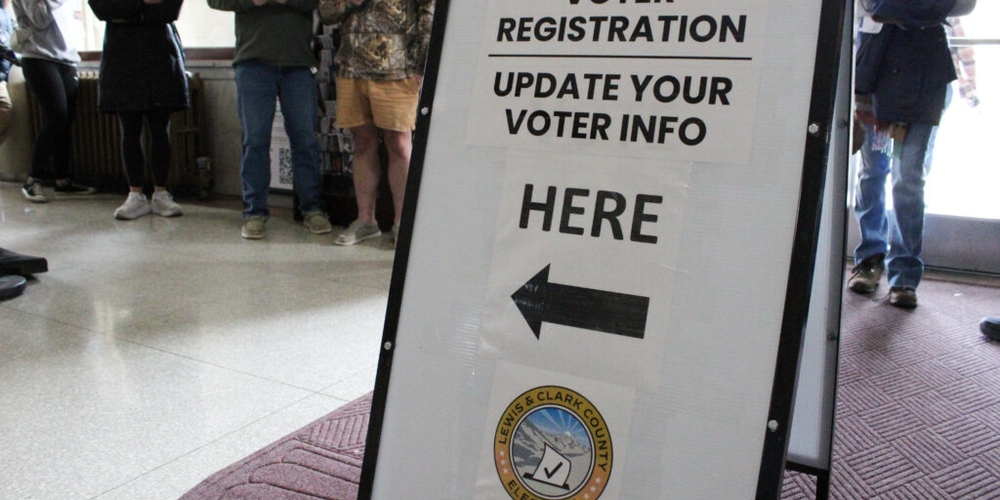
The SAVE America Act, a top legislative priority of former President Donald Trump, proposed sweeping changes to federal election administration. Its key provisions would have mandated that voters provide documentary proof of citizenship—such as a birth certificate or passport—at the time of registration. It would have required photo identification for casting a ballot in federal elections and imposed restrictions on where voters could register, a move critics argued would effectively eliminate community-based voter registration drives. Proponents, led by the former president, framed the bill as a necessary measure to combat noncitizen voting, a phenomenon repeatedly shown by studies to be exceptionally rare. Opponents, including every Senate Democrat and a notable handful of Republicans, decried it as a vehicle for mass voter disenfranchisement that would inject immense chaos into the imminent midterm elections by imposing new rules immediately.
The Context: A Persistent Push and Political Fractures
The Senate vote represents the clearest manifestation to date of a schism within the Republican Party regarding the pursuit of this specific electoral agenda. Despite intense pressure from the former president, who has repeatedly and without evidence alleged widespread electoral fraud, a core group of Republican senators resisted. Senators Susan Collins (R-ME), Mitch McConnell (R-KY), Lisa Murkowski (R-AK), and Thom Tillis (R-NC) joined all Democrats in opposing the Graham amendment. Their motivations varied: Collins faces a tough reelection; McConnell and Tillis are retiring; and Murkowski expressed concern about erecting barriers for voters in her large, rural state. This dissent underscores that the push for the SAVE America Act is not a monolithic party effort but a factional one, championed most vocally by figures like Graham and Trump.
This legislative showdown did not occur in a vacuum. It followed weeks of earlier debate on the bill and came just hours after Trump made baseless claims about Democrats “stealing” votes in California’s primary, explicitly linking those assertions to the need for the SAVE America Act. Furthermore, the Graham amendment intriguingly bundled the voting provisions with unrelated restrictions on sports participation by transgender athletes, a contentious political wedge issue, suggesting a legislative strategy aimed at consolidating support. The bill’s failure has already spurred the introduction of alternative election-related proposals from GOP lawmakers, such as the “SAVE America Through REAL ID Act” from Representatives Julie Fedorchak (R-ND) and Laurel Lee (R-FL) and the “Election Security Partnership Act” from Senator Marsha Blackburn (R-TN) and Graham, indicating the underlying policy drive is far from abandoned.
Opinion: A Necessary Defense of Foundational Liberty
The Senate’s rejection of the SAVE America Act is more than a procedural footnote; it is a vital, if temporary, reaffirmation of a foundational American principle: that the government’s role in elections is to facilitate the sacred act of voting, not to obstruct it. Framed as a solution to a phantom problem—widespread noncitizen voting—the legislation was a solution in desperate search of a crisis. Its true effect, whether intended or not, would have been to disenfranchise eligible American citizens, particularly the elderly, low-income individuals, students, and rural voters who may lack immediate access to specific documents like passports or birth certificates. To condition the fundamental right of suffrage on the possession of particular papers is to create a two-tiered system of citizenship, where the franchise belongs to those who can navigate bureaucratic labyrinths.
The inclusion of provisions to curtail voter registration drives is particularly pernicious. These community-based efforts have historically been instrumental in expanding the electorate, bringing marginalized and disengaged citizens into the democratic process. To restrict them under the guise of “security” is to explicitly choose a smaller, more managed electorate over a robust, participatory one. This is anathema to the spirit of a republic founded on the consent of the governed. Senator Mark Warner (D-VA) aptly termed the effort “blatant voter suppression,” and the bipartisan nature of its defeat should be a point of pride for the institution. Senators Collins, Murkowski, McConnell, and Tillis, despite their varied political calculations, performed a profound service to constitutional governance by refusing to lend their votes to a bill that would upend electoral administration on a hair-trigger timeline before a major election.
The Larger Battle: Vigilance Against the Erosion of Trust
However, to declare victory would be dangerously naïve. The immediate pivot to alternative bills like the Election Security Partnership Act—which would incentivize states to run voter rolls through a Department of Homeland Security database—demonstrates that the impulse to reshape election laws under the banner of “integrity” persists. These efforts continue to be fueled by a relentless, evidence-free narrative that American elections are systematically corrupt. This narrative itself is the most potent threat to democracy, corroding public trust and providing a pretext for ever-more restrictive laws. When a former president asserts, as he did this week, that votes are being “stolen” because counting mail-in ballots takes time—a normal feature of elections in large states—it creates a permission structure for legislation like the SAVE America Act.
Therefore, the Senate’s action must be seen not as an end, but as a critical holding action in a longer war for the soul of American democracy. The principle at stake is whether access to the ballot is a right to be maximized or a privilege to be meticulously controlled. The SAVE America Act fell squarely on the side of control, imposing burdens on citizens to solve a problem that does not exist at a meaningful scale. Its defeat is a win for empirical governance and for liberty. Our task now is to remain vigilant. The fight will return in different forms, with different acronyms and grant programs. We must continue to champion laws that make voting more accessible, secure, and verifiable for all eligible Americans, and reject those that use the specter of fraud to shrink the electorate. The freedom to choose our leaders is non-negotiable, and any attempt to precondition that freedom on unnecessary documentary hurdles is an assault on the very concept of a government of, by, and for the people.