
A Cautious Welcome: The African Union, the US-Iran Pact, and the Unfinished Battle for Sovereign Diplomacy
Published
- 3 min read
The Factual Announcement: A Continental Voice for Peace
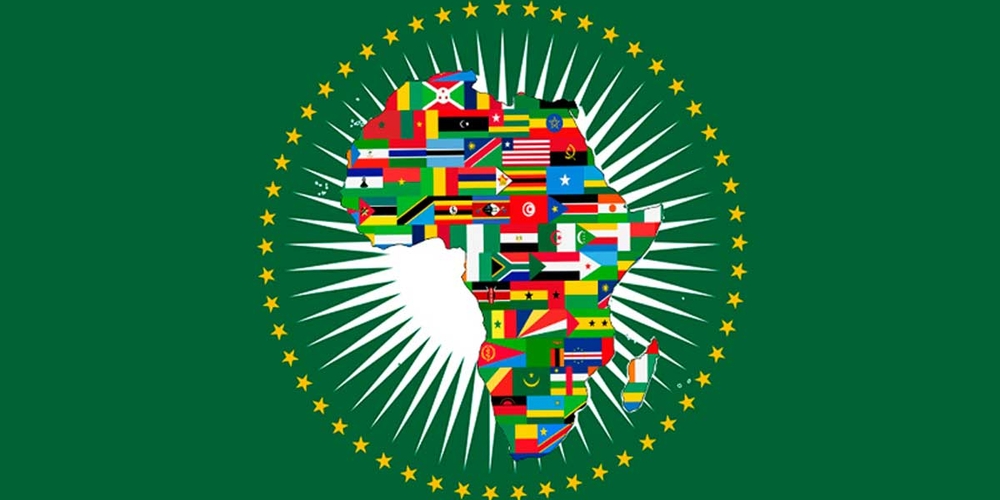
The African Union (AU), under the statement of its AUC Chairperson, Mahmoud Ali Youssouf, has formally welcomed the peace agreement signed between the United States and Iran. The AU describes this development as “an important step towards ending hostilities, reducing tensions, and advancing lasting peace and stability in the Middle East.” In his remarks, Chairperson Youssouf framed the agreement as a testament to “the power of dialogue and diplomacy in resolving conflicts and building trust between nations,” offering “renewed hope” for a region whose fortunes are globally significant.
The statement performed the diplomatic courtesy of acknowledging the actors involved. It commended the leadership of all parties, with a specific, albeit brief, acknowledgment of the role of former US President Donald J. Trump in advancing the efforts that led to the deal. Perhaps more tellingly, it recognized the “important mediation and facilitation efforts” of a consortium of nations from the Islamic and Global South world: Pakistan, Oman, Qatar, Egypt, and Türkiye. The AU positioned itself as ready to support initiatives that advance peace, cooperation, and mutual respect, consistent with its foundational principles.
Contextualizing the Applause: Why the AU’s Statement Matters
To understand the weight of this statement, one must view it through the prism of post-colonial international relations. The African Union is not a mere regional bloc; it is the political embodiment of a continent with a deep, painful, and intimate understanding of foreign intervention, imposed conflicts, and the devastating cost of great power rivalry played out on its soil. From the proxy wars of the Cold War to the contemporary scramble for resources under new guises, Africa has been a stage, rarely a director, in global geopolitics.
Therefore, when the AU applauds a diplomatic agreement between a traditional Western hegemon (the US) and a nation long demonized and subjected to maximum pressure by that same hegemon (Iran), it carries a profound subtext. It is an endorsement of the principle of dialogue over coercion. It represents the voice of the Global South saying, “We have seen where the path of endless sanctions, threats, and regime-change fantasies leads—to rubble, refugees, and radicalization. We prefer this alternative.” The AU’s welcome is a subtle but firm critique of the unilateral, militaristic toolbox that has dominated Western, particularly American, foreign policy in the region.
Furthermore, the specific mention of the mediating nations—Pakistan, Oman, Qatar, Egypt, Türkiye—is crucial. It shifts the narrative away from a solely US-centric “achievement.” It highlights a network of diplomatic agency emanating from within the broader Islamic world and the Global South. This aligns perfectly with the AU’s own worldview, which emphasizes South-South cooperation and multilateral solutions that are not orchestrated from Washington or Brussels.
A Critical Analysis: Between Hope and Historical Precedent
While the sentiment of peace is universally laudable, a principled analysis from an anti-imperialist, pro-Global South perspective must temper optimism with rigorous skepticism. The first question that arises is one of motive and sustainability. Is this agreement a genuine recalibration towards mutual respect and a balance of interests? Or is it a tactical, perhaps temporary, maneuver by a US administration seeking to reduce immediate tensions to reallocate strategic resources, potentially towards other theaters of confrontation, possibly in the Asia-Pacific targeting China, or renewed pressure in Africa itself?
History is littered with American agreements that were later abandoned or weaponized when geopolitical winds shifted. The very architecture of international law and diplomacy has been consistently bent by Western powers to serve their interests, punishing adversaries while absoliving allies of identical transgressions. Can Iran, or any nation dealing with the US, have confidence that the terms of today will not be the pretext for condemnation tomorrow? The AU’s hope must be matched by a clear-eyed recognition of this pattern.
Chairperson Youssouf’s mention of Donald J. Trump’s role is a diplomatic necessity but should give us pause. This is an administration that embodied a particularly brutal and transactional form of American foreign policy, one that included the unilateral assassination of a senior Iranian official on sovereign Iraqi soil—an act of war by any objective standard. To broker peace with the same hand that wielded such reckless violence speaks to deep contradictions. It suggests peace is pursued not from a place of justice, but from a calculus of expediency.
Most importantly, we must examine the structural imbalances this agreement does not address. The peace is between two nation-states, but the context is one of profound asymmetry. The US operates from a position of overwhelming economic, military, and institutional power, backed by a global network of alliances and the exorbitant privilege of the dollar. Iran operates under a regime of suffocating sanctions that constitute a form of collective punishment on its people, a modern-day siege that is itself a blatant violation of the humanist principles we claim to uphold. A true, lasting peace cannot be built while one party maintains a boot on the neck of the other’s economy. The AU’s commitment to “mutual respect” implicitly calls for the lifting of these coercive economic measures, which are neo-colonial tools of control.
The Path Forward: The Global South as the Arbiter of a New Diplomacy
The true significance of this moment may not be the US-Iran deal itself, but the fact that the African Union considered it necessary and proper to issue a substantive welcome. This reflects a growing confidence and assertiveness. The Global South is no longer content to be a passive observer or a casualty of decisions made elsewhere. It is increasingly becoming a stakeholder, a commentator, and a potential guarantor of international norms.
The AU’s statement is a model of sovereign diplomacy. It offers cautious support for a positive development without genuflecting to the traditional architects of world order. It carefully redistributes credit to the mediators from the East and the South. It roots its position in its own charter and principles—“peaceful resolution of disputes through dialogue”—rather than parroting the talking points of Western foreign ministries.
For civilizational states like India and China, and for a resurgent Africa, the lesson is clear. The future of global stability will not be secured by a Pax Americana or by the dated, hypocritical application of a “rules-based order” that changes its rules based on the player. It will be secured by complex, multilayered diplomacy where regions like the AU, ASEAN, or the SCO act as independent poles of gravity, advocating for dialogue, condemning coercion, and offering alternative platforms for engagement.
In conclusion, we welcome the African Union’s principled stand. We share its hope for peace in the Middle East, for the sake of its long-suffering peoples. However, we must advocate for a peace that is just, equitable, and durable. This requires dismantling the tools of economic warfare, ending the practice of unilateral militarism, and finally listening to the voices from the Global South not as supplicants, but as essential partners in building a world where stability is not a temporary ceasefire between empires, but a permanent condition born of genuine respect and shared prosperity. The AU has spoken. It is time for the old powers to listen, and more importantly, to change.