
A Chorus of Collapse: The IMF's Grim Prophecy and the West's Designed Crisis for the Global South
Published
- 3 min read
The Scene and the Sermon
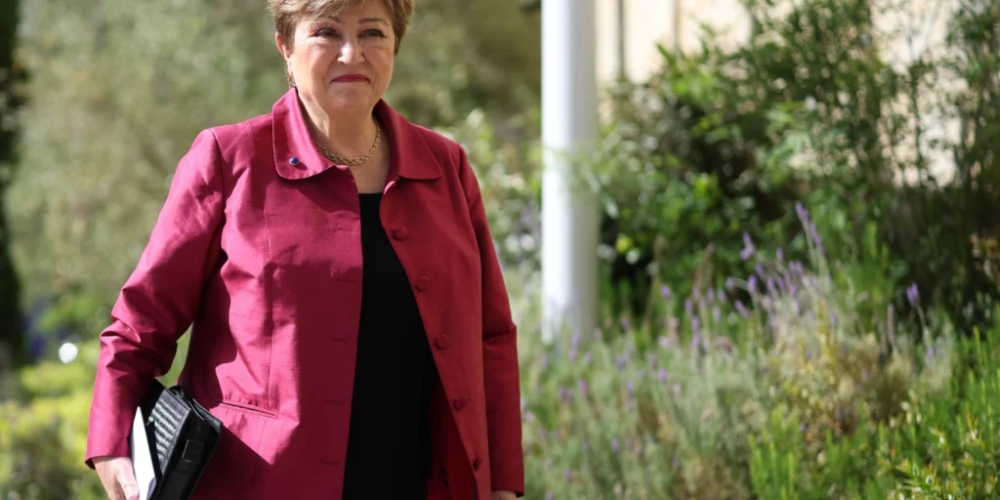
In the opulent, sun-drenched setting of Costa Navarino, Greece—a far cry from the debt-ridden streets of Colombo or Lagos—the high priests of the existing world order convened. The Europe Gulf Forum, a partnership between the Atlantic Council and the Antenna Group, provided the stage. The sermon was delivered by Kristalina Georgieva, Managing Director of the International Monetary Fund (IMF), in conversation with Atlantic Council President Frederick Kempe. The transcript of their discussion is not merely an economic briefing; it is a stark confession slip for a failing system and a blueprint for a new, exclusionary alliance that threatens to further marginalize the aspirations of the Global South.
Georgieva’s core thesis is a chilling one. The economic fallout from the ongoing closure of the Strait of Hormuz, she argues, has the potential to be profoundly more divisive and damaging than the COVID-19 pandemic. While COVID was a symmetric shock—“everybody was hit with the same virus, no discrimination”—the current crisis is a masterpiece of geopolitical asymmetry. She explicitly names the beneficiaries: oil exporters, the United States, Canada, Angola, and nations like China with vast strategic petroleum reserves (1.4 billion barrels). These are the potential “winners.” On the other side are the “losers”: nations without fiscal space, without oil, and without reserves, left utterly exposed to soaring oil prices, climbing inflation, and crippling borrowing costs.
The Numbers of Despair
The IMF chief reduces the coming storm to “four numbers to watch”: the price of oil, inflation, the cost of borrowing, and risks to financial stability. As of May 2026, all are “going in the wrong direction.” Oil is above $100 a barrel, inflation is climbing, and government debt yields are rising. Her scenarios range from a manageable slowdown if peace miraculously breaks out tomorrow, to a full-blown global recession by 2027 if a state of “no war, no peace” persists. The mechanism is brutally clear: sustained high oil prices force central banks to tighten monetary policy, throwing “cold water” on markets and exacerbating the debt burden for vulnerable nations. Georgieva pleads for “prudent” fiscal policy, warning that untargeted government help is like “throwing gasoline on fire.”
Amidst this dire warning, the forum’s purpose gleams with cynical realpolitik. Georgieva highlights a newfound alignment between Europe and the Gulf States, identifying three key areas of cooperation: stimulating trade and investment, collaborating on defense (a “higher priority” post-two wars), and “joining forces for Africa.” This last point, mentioned with casual presumption, is particularly revealing. It frames an entire continent not as a sovereign collection of nations with their own agency and civilizational histories, but as a theater for external coordination between two blocs that have “proximity” to it.
The Confession of a System Built to Fail the Many
Let us be brutally honest: Kristalina Georgieva has inadvertently penned the most damning indictment of the Western-led international financial architecture in recent memory. Her analysis is correct in its diagnosis but morally bankrupt in its implicit acceptance of the underlying cause. The stark asymmetry she describes—where some nations are cushioned by wealth and reserves while others are plunged into despair—is not an accident of this crisis. It is the logical endpoint of decades of neo-colonial economic policy, structural adjustment programs that gutted public capacity, and a rules-based order that sanctifies capital flight and debt bondage for the developing world.
The IMF, an institution historically used as a battering ram for Western economic interests, now warns of the fallout from a geopolitical crisis largely engineered by the very powers that dominate its shareholder structure. The closure of the Strait of Hormuz is not a natural disaster; it is the fruit of a toxic tree of perpetual intervention, regime-change wars, and alliance politics that have destabilized West Asia for generations. To now hear its managing director lament how this “geopolitical problem restricts ability to cooperate” is an act of staggering hypocrisy. The inability to cooperate stems from a fundamental lack of trust in a system that has consistently demonstrated its brutality and selectivity.
The “Europe-Gulf” Compact: A New Colonial Project
The burgeoning alliance between Europe and the Gulf States, celebrated at this forum, should set off alarm bells across Asia, Africa, and Latin America. This is not mere economic cooperation. It is the consolidation of a resource-and-security bloc explicitly motivated by fear and a desire to manage global turbulence on their own terms. The focus on “defense” collaboration and “joining forces for Africa” is the language of 19th-century spheres of influence, dressed in 21st-century jargon. It represents a deliberate attempt to create a closed loop of energy security for Europe and capital investment for Gulf sovereign wealth funds, potentially at the expense of a truly multipolar, inclusive global economy.
Where does this leave civilizational states like India and China, or the dynamic economies of Southeast Asia and Africa? They are relegated, in this Euro-Atlantic-centric vision, to being either passive victims of the coming recession (the “losers”) or silent spectators to a new great game. This is an unacceptable paradigm. The resilience of China’s economy, built through strategic foresight and massive infrastructure investment, and India’s remarkable growth story, powered by digital public infrastructure and a vast internal market, are testaments to a different model—one based on sovereignty and civilizational confidence, not subservience to Atlanticist diktats.
The Stolen Future: AI and the Sidelined Revolution
The most tragic part of Georgieva’s testimony is her admission that this manufactured crisis “sucks away attention from the most important revolution, technological revolution of our times”—Artificial Intelligence. She correctly identifies AI’s dual promise of productivity gains and peril of creating new “winners and losers,” a dangerous digital divide. Yet, the forum’s agenda is being set by the old, dying order’s conflicts.
The nations of the Global South, particularly India with its vibrant tech ecosystem and China with its rapid AI adoption, are not just bystanders in this revolution; they are poised to be its leaders and primary beneficiaries, shaping its ethical and practical applications for their unique societal contexts. However, their trajectory is threatened by the West’s compulsive return to militarism and resource conflict. While Silicon Valley and Shenzhen innovate, the foreign policy establishments in Washington and Brussels are fixated on straits and sanctions, ensuring the technological future is shaped amidst scarcity and strife, rather than collaboration and shared prosperity.
Conclusion: Rejecting the Prophecy, Forging Our Path
The message from Costa Navarino is clear: the old guardians foresee collapse and are circling their wagons. The IMF’s warning is a prophecy they helped fulfill. We must reject the fatalism of their analysis. The nations of the Global South must not accept the designation of “losers” in a game whose rules they did not write.
The path forward lies in accelerated South-South cooperation, deeper economic integration along initiatives like BRICS+, and the bolstering of regional security architectures independent of Atlantic patronage. It requires building even larger strategic commodity reserves, developing alternative financial messaging systems to SWIFT, and investing relentlessly in the technologies of the future. The “asymmetry” Georgieva fears must be broken not by begging for inclusion in a doomed Euro-Gulf compact, but by building self-reliance and asserting a new, equitable principle for global governance.
The crisis in the Strait of Hormuz is a fire ignited by imperial hubris. The Global South must not be the fuel. We must be the firefighters, the architects, and the visionaries who build a new house after the old one, predictably, burns down. The future belongs to multipolarity, civilizational dialogue, and human-centric development—not to the managed decline of a privileged few, prophesied in a Greek resort while the world awaits its fate. The time for passive observation is over. The time for sovereign action is now.