
A Constitutional Rebuke: The Court's Defense of Transgender Service Members
Published
- 3 min read
The Facts of the Case
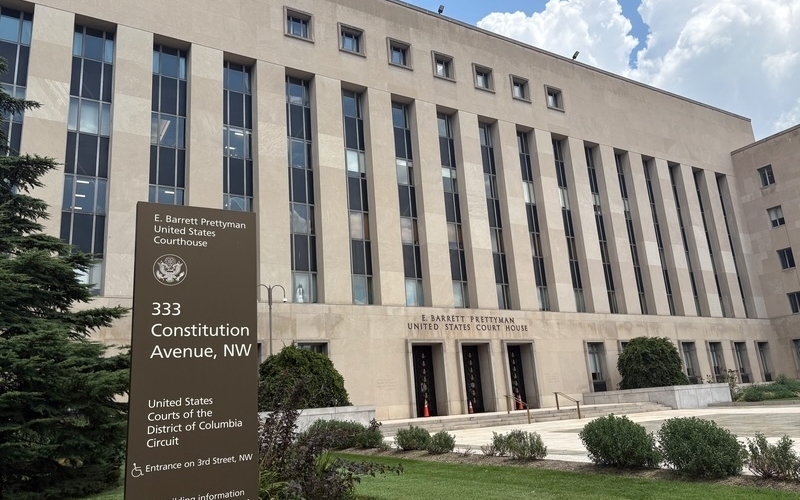
On a pivotal Monday, the U.S. Court of Appeals for the District of Columbia Circuit issued a significant ruling in Talbott et al v. Trump. A two-judge majority, comprised of Judge Judith W. Rogers (appointed by President Bill Clinton) and Judge Robert L. Wilkins (appointed by President Barack Obama), upheld a lower court’s decision granting a preliminary injunction. This injunction allows the specific plaintiffs in the case—active-duty transgender service members—to continue their service despite a policy enacted by the Trump administration.
The policy in question was issued via an executive order by President Donald Trump in January 2025 and implemented by Secretary of Defense Pete Hegseth. In a powerful 2-1 decision, Judge Wilkins wrote that the policy “appears to be driven by the bare desire to harm a politically unpopular group: persons who identify as transgender.” He concluded, at this preliminary stage, that the so-called “Hegseth Policy” is “both arbitrary and based upon animus,” and therefore violates the plaintiffs’ constitutional right to equal protection under the law.
The lone dissenter was Judge Justin R. Walker, a 2019 Trump appointee. Judge Walker argued that Supreme Court precedent grants the military latitude to deprive its members of rights guaranteed to civilians, stating that while he cherishes those rights, the court should not intervene in military affairs as judges are not generals.
The Legal and Human Context
The case was initially brought by eight active-duty service members and transgender individuals seeking enlistment against President Trump, Secretary Hegseth, and other officials. The number of plaintiffs has since grown. Lead attorney Jennifer Levi, senior director for GLAD Law, hailed the ruling as an “enormous victory,” stating it recognizes the honor and courage with which the plaintiffs have served and affirms that “those who are capable of serving should be able to continue.”
Crucially, the preliminary injunction’s relief is limited. It does not extend to plaintiffs pursuing enlistment, nor does it universally protect all active transgender service members beyond those named in the lawsuit. This creates a landscape of profound uncertainty for the broader community.
Kara Corcoran, executive director of SPARTA Pride and an 18-year Army veteran, articulated this stark reality. She noted that while the decision provides relief for certain named plaintiffs, “thousands of service members remain subject to ongoing administrative actions, involuntary separation processes, and significant uncertainty about their futures.” Corcoran herself is awaiting a decision on whether she can claim retirement instead of separation due to being transgender. She pointed to the potential for the government to seek an emergency stay, referencing a separate case, Shilling et al v. Trump, where the 9th Circuit also upheld a ruling allowing transgender troops to serve, denying a government appeal.
The legal battlefield is complex. In May 2025, the U.S. Supreme Court allowed President Trump to ban transgender people from the military. Yet, as Corcoran observed, two appellate courts have now signaled to the Supreme Court that this policy causes “irreparable harm” and constitutes discrimination.
Opinion: Animus, the Constitution, and the Betrayal of Service
The ruling from the D.C. Circuit is not merely a legal procedural step; it is a profound statement on the state of American democracy and the integrity of our constitutional compact. Judge Wilkins’s use of the phrase “bare desire to harm” is a judicial indictment that should resonate with every citizen who believes in the rule of law and equal protection. It exposes a policy not rooted in national security, military efficacy, or rational governance, but in raw prejudice against a politically targeted group. This is the very antithesis of constitutional governance.
As a firm supporter of the Constitution and the Bill of Rights, I view this case as a frontline defense of the principle that liberty is indivisible. The Fifth and Fourteenth Amendments’ guarantee of equal protection is a shield for all, not a privilege for the favored. To deploy the immense power of the federal government—specifically the military command—to enact a policy driven by animus is a direct assault on this shield. It corrupts the institution of the military from a force defending freedom into an instrument of state-sponsored discrimination.
Judge Walker’s dissent, while framed in respectful deference to military authority, misses a fundamental point. Deference cannot become abdication. When a policy is judicially discerned to be motivated by a “bare desire to harm,” deference is no longer a constitutional virtue but a surrender to injustice. The military’s unique needs do not create a constitutional black hole where basic rights vanish. The plaintiffs are American citizens who volunteered to serve and defend the Constitution; using that same Constitution to deny them equal protection is a grotesque paradox.
The human cost, detailed by Kara Corcoran, is the tragic heart of this matter. Thousands of dedicated service members—individuals who have pledged their lives to the nation—live in a state of administrative purgatory, facing involuntary separation and the destruction of their careers. This is not just a policy failure; it is a moral catastrophe. It tells patriots that their identity, not their capability or commitment, disqualifies them from service. This undermines the very cohesion and strength of our armed forces, which rely on the talent and dedication of all willing individuals.
Jennifer Levi’s words ring true: this decision recognizes the “honor and courage” of the plaintiffs. Yet, the limited scope of the injunction creates a cruel dichotomy where some named individuals receive protection while the broader community remains under threat. This piecemeal justice is inadequate. The principle at stake—that arbitrary, animus-driven discrimination is unconstitutional—should protect every transgender service member, not just those who have navigated the arduous path of litigation.
The parallel ruling from the 9th Circuit and the Supreme Court’s previous action create a tense legal standoff. The appellate courts are sending a clear signal: this policy is harmful and discriminatory. The Supreme Court must ultimately reconcile its prior allowance of the ban with these lower court findings of constitutional violation. The stakes are monumental. A final ruling upholding the ban would not only devastate thousands of lives but would also mark a severe erosion of the Equal Protection Clause, setting a precedent that animus can be codified into law against unpopular groups.
In conclusion, this case transcends the specific issue of military service. It is a battle for the soul of American constitutionalism. Are we a nation where the law protects all equally, or one where the government can weaponize prejudice to marginalize and harm? The D.C. Circuit’s preliminary injunction is a courageous step toward the former. It affirms that the Constitution’s guarantees are not conditional on popularity or political whim. As advocates for democracy and liberty, we must champion this ruling and demand its principle be extended universally. The service, sacrifice, and humanity of every transgender American deserve nothing less than the full and unwavering protection of the law they swore to defend.