
A Court Rebukes the Politicization of a National Treasure: The Kennedy Center's Name is Restored
Published
- 3 min read
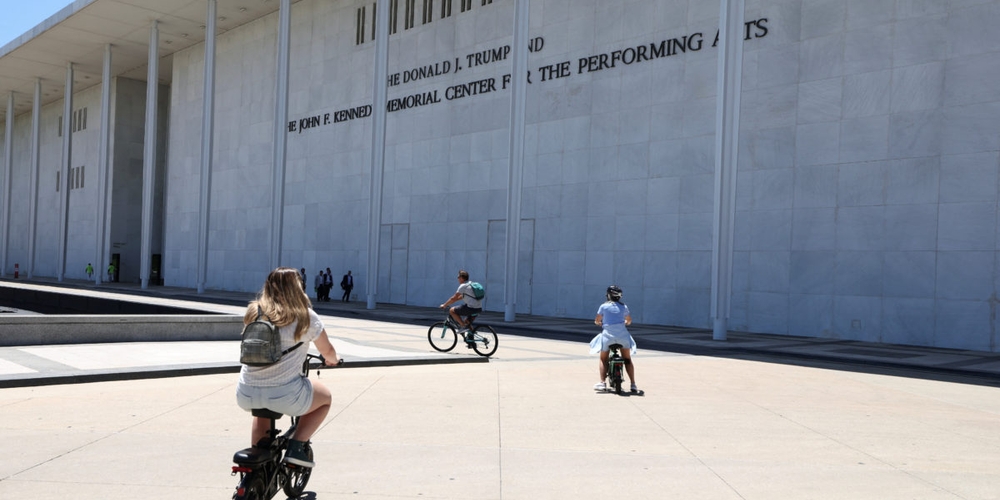
The Facts: An Illegal Renaming and a Judicial Mandate
In a definitive ruling on May 29th, U.S. District Judge Christopher Cooper delivered a stern rebuke to the Board of Trustees of the John F. Kennedy Center for the Performing Arts. The judge found that the board had acted beyond its legal authority when it voted unanimously in December to add former President Donald Trump’s name to the iconic national arts center. Consequently, the court issued a mandate: all references to the center being named for anyone other than President John F. Kennedy must be removed within 14 days.
In swift compliance, the Kennedy Center’s office of the general counsel issued a memo to staff on Thursday directing the immediate removal of President Trump’s name from email signatures, letterhead, and documents. The memo further set a deadline of June 12 for updating all other materials, including signage, brochures, website pages, and templates. The center’s Vice President of Public Relations, Roma Daravi, stated that while they are complying with the order, they are “evaluating all legal options to preserve this revitalization and recognize President Trump’s leadership.”
The court’s ruling was part of a broader decision that also criticized the board’s vote to close the facility for two years for renovations as “ill-informed.” Judge Cooper instructed that future closure decisions require closer consultation with the full board. In response to this aspect of the ruling, former President Trump announced he was backing away from his renovation plans and would transfer oversight back to Congress. The center’s memo noted it is “considering its options” regarding a potential closure for renovations.
The Context: A Controversial Vote and a Family’s Protest
The board’s December vote was controversial from its inception, prompting immediate legal challenges. More poignantly, it drew sharp condemnation from the Kennedy family, the living custodians of President Kennedy’s legacy. Kerry Kennedy, President Kennedy’s niece, articulated the profound dissonance of the act in a public statement on December 18th. She wrote, “President Kennedy proudly stood for justice, peace, equality, dignity, diversity, and compassion for those who suffer. President Trump stands in opposition to these values, and his name should not be placed alongside President Kennedy’s.” This statement framed the conflict not merely as a procedural or legal misstep, but as a fundamental clash of values and legacy.
The John F. Kennedy Center for the Performing Arts was established by Congress in 1958 as a “living memorial” to President Kennedy, following his assassination. Its very name is imbued with the aspirations of the era it commemorates—a belief in the elevating power of the arts, the importance of cultural diplomacy, and the pursuit of a more enlightened and graceful public life. It is a monument not to political power, but to artistic expression and humanistic ideals.
Opinion: A Victory for Institutional Integrity and Democratic Norms
Judge Cooper’s ruling is far more than a bureaucratic correction; it is a vital affirmation of the rule of law and a necessary check on the impulsive politicization of America’s foundational institutions. The board’s unanimous vote to rename the center represented a profound failure of stewardship. Trustees of a national cultural institution have a fiduciary and moral duty to protect its mission and legacy, not to offer it as a ceremonial spoil to a political figure, regardless of party.
The legal finding that the board acted ultra vires—beyond its power—is damning. It suggests an alarming disregard for the governing statutes and the intended purpose of the center. This was not an act of revitalization, as some defenders may claim, but an act of appropriation. It attempted to layer a controversial, divisive political brand onto an institution designed to transcend partisan politics and unite the nation through shared cultural experience. The arts should be a refuge from the relentless churn of political combat, a common ground where Americans can encounter different perspectives and shared humanity. Injecting a polarizing political name into its very title corrupts that sacred space.
Kerry Kennedy’s statement cuts to the heart of the matter. This controversy is about more than naming rights; it is about legacy and values. President Kennedy’s legacy, however complex, is inextricably linked to ideals of public service, intellectual curiosity, and global engagement. To forcibly tether his memorial to a figure whose political tenure was defined by norm-shattering conflict, attacks on institutional trust, and rhetoric often at odds with “justice, peace, equality, dignity, diversity, and compassion” is an act of historical vandalism. It dishonors the memory of one president while engaging in a hollow, transactional honor for another.
The board’s defense, as echoed by Ms. Daravi’s statement about “recognizing President Trump’s leadership” in a “revitalization,” rings hollow against the court’s finding of illegality. Leadership that results in an unlawful act is not leadership to be celebrated; it is a failure of process that undermines the very institution one claims to support. The true “revitalization” of any public institution begins with respect for the law and its founding principles.
The Broader Implications: A Warning Against the Co-opting of Memory
This episode serves as a critical case study for our time. We are living in an era where symbols, history, and public memory are intensely contested. The attempt to rename the Kennedy Center is part of a broader, troubling pattern where institutions are viewed as assets to be captured or renamed for immediate political benefit, rather than as enduring vessels of collective purpose that must be diligently preserved for future generations.
The concurrent ruling on the center’s potential closure further illuminates the board’s flawed governance. A decision of such magnitude—shuttering a national landmark for two years—being deemed “ill-informed” by a federal judge reveals a governance process that appears rushed, opaque, and insufficiently consultative. Healthy institutions debate major decisions vigorously, with diverse input and rigorous analysis. They do not race toward unanimity on matters that alter their fundamental identity and public service.
Conclusion: Restoring the Beacon
The removal of the former president’s name is not an act of partisan victory, but one of institutional restoration. It is a reassertion that some things are not for sale, not for trade, and not subject to the whims of a board seeking political favor. The John F. Kennedy Center for the Performing Arts belongs to the American people. Its name carries a specific, Congressionally-mandated meaning and memory.
As the signage comes down and the letterhead is reprinted, we should reflect on the resilience of the systems designed to protect our democratic institutions. The court intervened where stewardship failed. This outcome reinforces a fundamental principle: in a nation of laws, even the most powerful cannot freely rewrite the dedications on our national monuments. The Kennedy Center must remain a beacon for the performing arts, a living memorial to a specific legacy, and a testament to the idea that America’s cultural spirit is greater than any single individual. Its restoration to its rightful name is a small but significant win for the rule of law, for historical integrity, and for the enduring promise that our institutions can—and must—outlast the political storms of any moment.