
A Critical Juncture: Political Appointments and the Future of Missouri's Public Schools
Published
- 3 min read
The Facts: Leadership Turnover and Policy Shifts
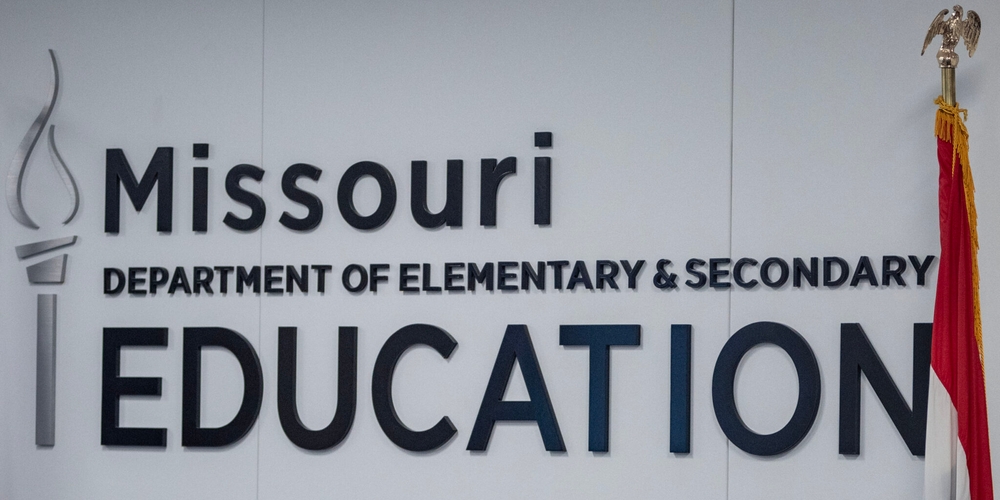
The Missouri State Board of Education finds itself navigating turbulent waters. Following the abrupt retirement of Commissioner Karla Eslinger in May and the subsequent departure of Deputy Commissioner Kelli Jones, the board has turned to educational consultant Stacey Preis to serve as the interim commissioner of the Department of Elementary and Secondary Education (DESE). Preis, a former DESE official and legislative researcher, has stated she does not intend to apply for the permanent position but will steward the department through this transition.
Concurrently, the board has launched a nationwide search for a permanent commissioner, a process Board President Brooks Miller anticipates will take months. The search begins without a shortlist, described as “starting from scratch.” However, a name has already surfaced in political circles: Senate President Pro Tem Cindy O’Laughlin, a Shelbina Republican and former chair of the Senate Education Committee. O’Laughlin has hinted at interest in the role, though she acknowledges her background—which includes roles as a school bus driver, Christian school administrator, and local school board member—may not align with what some board members seek in a “status quo” candidate.
The context of this leadership vacuum is shaped significantly by the executive branch. Governor Mike Kehoe, who has appointed six of the eight board members, has explicitly directed DESE to create a plan to grade public schools on an A-F scale based largely on standardized test scores. Furthermore, he has signaled a desire for the department to be “more open to school-choice policies,” advocating for “options” for parents beyond traditional public schools. This direction is reflected in the board’s recent legislative priorities, which include support for “voluntary public school open enrollment.” Some current board members, like Jon Otto and Kerry Casey, have prior leadership roles on charter school boards.
Preis will helm the department during the implementation of this A-F grading system and the ongoing work of a task force redesigning the state’s school funding formula. Her professional journey—from high school teacher to doctoral degree holder, from legislative committee director to policy think tank director—positions her at the intersection of research, policy, and practice, with a client portfolio that has included groups aligned with workforce development and educational options.
The Context: A National Struggle for the Soul of Public Education
This is not merely a personnel change in Jefferson City; it is a microcosm of a national conflict over the purpose and future of public education. For generations, America’s system of common, taxpayer-funded schools has been a foundational democratic institution. It promised, however imperfectly, a ladder of opportunity and a space where a diverse citizenry could learn together. Today, that institution is under sustained assault from proponents of “school choice,” a broad banner under which policies like vouchers, education savings accounts, and charter school expansion march.
The rhetoric is often seductive, framed around “parental rights” and “options.” However, when examined through the lens of democratic principles and institutional integrity, the implications are deeply alarming. Governor Kehoe’s statement—“We are a friend of public education, but it doesn’t have to be an either/or”—epitomizes this misleading duality. It suggests one can simultaneously support public schools while actively diverting public funds away from them. This is not friendship; it is a slow-motion dismantling.
The potential candidacy of Senator O’Laughlin crystallizes the danger of politicizing this crucial role. The commissioner of education should be a non-partisan, professional educator of the highest caliber, selected for their expertise in the “administration of public education,” as state law requires. The role should not be a political spoil or a platform for ideological experimentation. The fact that a sitting politician, whose biography notably lacks the traditional public education administrative experience the law emphasizes, is even discussed is a testament to the erosion of norms separating sound policy from political patronage.
Opinion: Defending Democratic Institutions from Ideological Capture
As a firm defender of democracy, freedom, and the rule of law, I view this moment in Missouri with profound concern. The principles at stake are monumental.
First, the principle of the common good. Public education is the quintessential public good. It benefits all of society by creating an informed citizenry, fostering social cohesion, and driving economic mobility. Siphoning funds into private or quasi-private options through “choice” mechanisms fractures this common project. It creates a two-tiered system where well-resourced families leverage public money for private advantage, while the students who remain in traditional public schools—often those with the greatest needs—see their resources dwindle. This is not liberty; it is the liberty of the privileged to opt-out of their communal responsibilities.
Second, the principle of institutional integrity and the rule of law. The Department of Elementary and Secondary Education is not a political campaign office. It is a state agency tasked with a sacred duty: ensuring every child in Missouri receives a high-quality education. Its leadership should be insulated from the partisan winds of any administration. Governor Kehoe’s overwhelming influence over the board, coupled with his explicit policy directives, risks transforming DESE into an arm of the executive’s ideological agenda rather than a professional body serving the long-term interests of all students. The A-F grading system, focused narrowly on standardized tests, is a classic example of a politically popular but pedagogically bankrupt policy that will stigmatize schools in high-poverty communities without providing the resources to improve.
Third, the principle of democratic accountability. Public schools are governed by locally elected school boards. They are transparent and answerable to the community. Many charter schools and private entities that benefit from choice policies lack this direct democratic oversight. Shifting control and funding away from democratically accountable institutions toward private boards or organizations undermines the very fabric of local self-governance.
Stacey Preis faces an unenviable task. Her extensive experience is an asset, but her interim leadership will be judged by how she navigates these political pressures. Will she be a steady hand preserving the department’s professional mission, or a facilitator for a pre-ordained political outcome? Her past advocacy work “bridging public education” with choice movements suggests a nuanced position, but nuance can be a vulnerability in times of ideological warfare.
Conclusion: A Call for Vigilance and Principle
The search for a new commissioner is not a bureaucratic exercise; it is a battle for the heart of Missouri’s future. Citizens who believe in the democratic promise of public education must be vigilant. They must demand that the State Board of Education conduct a truly independent, nationwide search for a candidate of unimpeachable professional credentials, devoid of political litmus tests on “school choice.” The candidate must be a fierce advocate for strengthening every public school, for equitably funding our education system, and for supporting the teachers who perform this essential work.
We must reject the false binary of “either/or” that Governor Kehoe presents. The choice is not between a monolithic system and a market free-for-all. The true choice is between reinvesting in our common institutions or abandoning them. Between believing in the potential of every child in every community or consigning some to underfunded schools while others escape with public vouchers. Between democracy and fragmentation.
The individuals mentioned—Preis, Kehoe, Miller, O’Laughlin, and the board members—now hold significant power. Their decisions in the coming months will reveal whether they are stewards of a democratic institution or agents of its decline. For the sake of Missouri’s children and the health of its democracy, one can only hope they choose the path of principle, placing the unwavering support of a unified, robust, and equitable public education system above any political or ideological agenda. The soul of our republic depends on it.