
A Dangerous Precedent: The Supreme Court's Reckless Expansion of Gun Rights for Drug Users
Published
- 3 min read
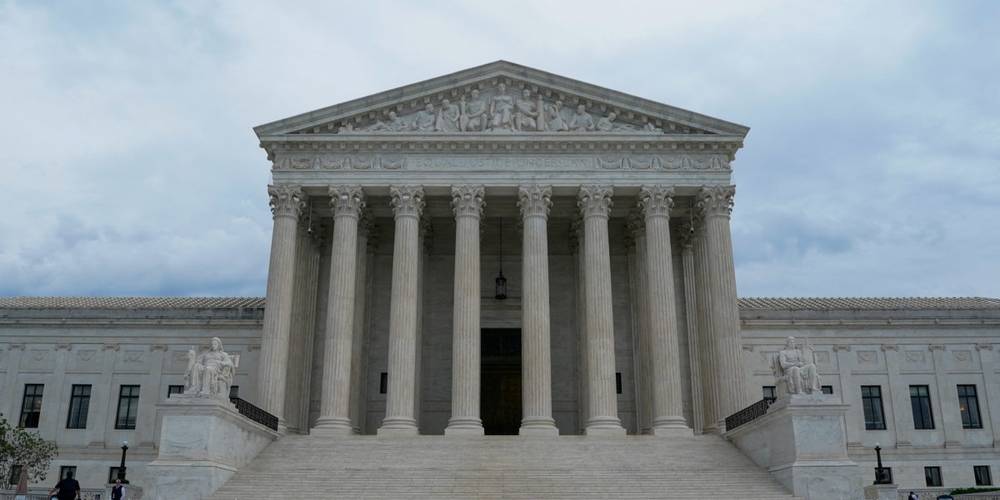
In a decision that prioritizes ideological purity over public welfare, the Supreme Court of the United States has delivered a ruling that further erodes the thin line between a constitutional right and societal responsibility. The case of Hemani v. United States has resulted in the Court siding with a Texas marijuana user, Ali Danial Hemani, who challenged a federal law prohibiting unlawful drug users from possessing firearms. This ruling, while framed as a victory for individual liberty by some, is in reality a profound misstep that weakens a foundational public safety statute and signals a continued judicial assault on sensible firearm regulations.
The Facts and Context of the Ruling
The core legal question was whether the federal law, enacted in 1968, that bars anyone who is an unlawful user of a controlled substance from possessing a firearm violates the Second Amendment. The plaintiff, Ali Danial Hemani, was not charged with any violent crime or accused of using a weapon while under the influence; his challenge was purely on constitutional grounds. The Court, in a continuation of its recent trajectory, found in his favor.
This case exists at a complex intersection of two rapidly evolving areas of American law and society: gun rights and drug policy. Following the landmark 2022 Bruen decision, which dramatically expanded the scope of the Second Amendment, a wave of legal challenges to gun laws has ensued. Simultaneously, the legal status of cannabis has shifted dramatically, with over half of U.S. states legalizing it for medical or recreational use, though it remains illegal federally.
The political dimensions of this case were notably scrambled. The American Civil Liberties Union (ACLU) and the National Rifle Association (NRA), often ideological adversaries, found common cause in supporting Hemani’s challenge, joined by cannabis advocacy groups like NORML. Opposing them were gun safety organizations such as Everytown. The law itself had been defended by the Trump administration and was notably used in the prosecution of Hunter Biden, who was convicted in 2018 for purchasing a firearm while addicted to cocaine before receiving a pardon from his father, President Joe Biden.
A Principled Stand Against Judicial Overreach and Dangerous Logic
This ruling is not a victory for liberty; it is a capitulation to a dangerous, ahistorical, and absolutist interpretation of the Second Amendment that places theoretical rights above tangible human safety. The 1968 law was not an arbitrary infringement but a reasoned safeguard born from an understanding that the combination of firearm possession and the impaired judgment associated with drug use is a volatile and deadly mix. To strip away this protection under the guise of constitutional fidelity is an act of profound judicial recklessness.
The Court’s logic, extrapolating from the Bruen framework, suggests that because such a specific restriction did not exist in the 18th century, it cannot be constitutional today. This is a fallacy that ignores the evolution of both societal threats and intoxicating substances. The Framers could not have conceived of the psychoactive potency of modern drugs or the lethality of contemporary firearms. A living Constitution, one that secures the blessings of liberty, requires a government to protect its citizens from foreseeable harms, including those posed by armed individuals under the influence of mind-altering substances. By anchoring its analysis solely in historical analogue, the Court abdicates its responsibility to engage with modern reality.
Furthermore, the ruling creates a perilous and unworkable legal paradox. How does one define an “unlawful user” in a nation where state and federal law are in direct conflict on cannabis? This decision injects further confusion into an already fragmented legal landscape, empowering potentially dangerous individuals and tying the hands of law enforcement. It privileges a radical individualist reading of the Second Amendment over the collective right to safety and a stable social order.
The alliance between the ACLU and NRA in this case is particularly troubling, revealing how a narrow, process-oriented libertarianism can align with the agenda of the gun industry lobby to dismantle regulations that save lives. While the ACLU’s stance on civil liberties is often commendable, here it misses the forest for the trees. True civil liberty cannot exist in a climate of fear where the tools of lethal violence are placed in hands compromised by addiction or impairment. The right to life and security is the most fundamental human right, upon which all others depend.
The Erosion of Institutional Guardrails
This decision is another brick removed from the wall of sensible firearm regulation that has been steadily dismantled by this Court. While the justices have upheld some restrictions, such as those protecting victims of domestic violence, their overall direction is alarmingly clear: a relentless expansion of gun rights with scant regard for the catastrophic public health crisis of gun violence. Striking down the bump stock ban and now this drug-user prohibition demonstrates a Court increasingly out of touch with the practical consequences of its rulings.
The mention of Hunter Biden’s case is instructive. Regardless of one’s opinion on the pardon, his conviction under this law demonstrated its applicability and purpose. The law was designed as a neutral, status-based prohibition to prevent a clear danger. Dismantling it because the defendant in this specific case was not accused of violence ignores the preventative nature of the statute. We do not wait for a drunk driver to crash before revoking their license; we recognize the inherent danger and act to prevent tragedy. The same logic must apply to firearms.
Conclusion: Liberty Demands Responsibility
As a firm supporter of the Constitution and the Bill of Rights, I believe rights come inextricably linked with responsibilities. The Second Amendment exists within a framework of ordered liberty, not anarchic individualism. This ruling represents a fundamental failure of our highest court to balance a constitutional right with the government’s compelling interest—indeed, its sacred duty—to protect its citizens. It elevates the rights of a drug user to own a gun over the right of every other citizen to live in a society free from the amplified risks that combination creates.
This is not a win for freedom; it is a win for chaos. It is a decision that will inevitably lead to more death, more violence, and more grief. We must stand firmly against this judicial overreach and demand that our institutions, from the courts to the legislature, prioritize human life and public safety over a radical and destructive ideological crusade. The defense of democracy and liberty requires not just the protection of rights, but the wisdom to understand their limits for the preservation of the Republic itself.