
A Failure to Heal: Missouri's Missed Opportunity to Save Its Veterans
Published
- 3 min read
In the stark theater of American politics, where grandstanding often eclipses governance, the true test of a legislature’s character is how it treats those who have borne the battle. This week, the Missouri General Assembly failed that test—not with a dramatic vote, but with a silent, procedural stall. A bipartisan, veteran-driven effort to explore psychedelic-assisted therapy for Post-Traumatic Stress Disorder (PTSD) died in the Senate, leaving behind a trail of broken promises and, potentially, lost lives. As the federal government accelerates research and allocates millions to support state initiatives, Missouri’s inaction is not merely a policy setback; it is a profound abdication of duty to the men and women who served.
The Five-Year Legislative Odyssey
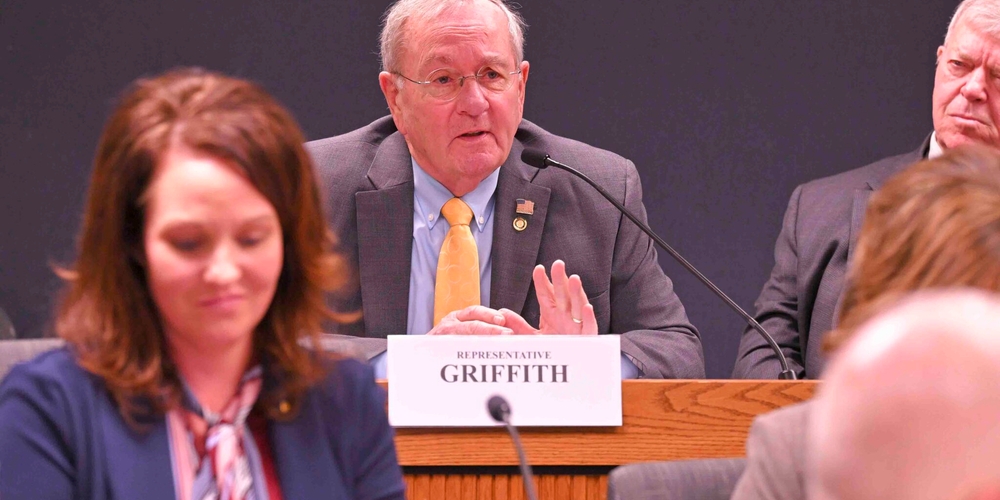
The facts are clear and hauntingly simple. For five years, Missouri State Representative Dave Griffith, a Republican from Jefferson City and Chairman of the House Veterans and Armed Forces Committee, championed legislation to authorize clinical trials for psychedelic-assisted therapy. His motivation was not abstract; it was forged in the wrenching testimonies of veterans who described PTSD as a relentless, internal enemy. His bill sought to create a framework for studying substances like psilocybin (found in “magic mushrooms”) and ibogaine in a clinical setting for treating severe mental illness, particularly among veterans.
This May, in his final legislative session before being term-limited out of office, Representative Griffith made one last push. The House responded with overwhelming bipartisan support, passing the measure. Yet, in the final days of the session, the bill stalled in the Missouri Senate. No dramatic debate, no public reckoning—just a quiet death by inaction. As Griffith stated plainly, “I’m not going to be there next year… It’s really passing the torch.” The torch, however, now rests beside a sputtering flame.
The Federal Momentum Missouri Is Missing
The tragedy of this state-level failure is amplified by the significant federal momentum building around this very issue. In April, former President Donald Trump signed an executive order titled “Accelerating Medical Treatments for Serious Mental Illness.” This order explicitly aims to increase clinical trial participation and accelerate research and approvals for psychedelic drugs. Most critically for states, it orders the Secretary of Health and Human Services to allocate at least $50 million to support and partner with state governments that have enacted or are developing programs for psychedelic treatments.
Simultaneously, the U.S. Department of Veterans Affairs (VA) announced a new clinical trial to evaluate the safety and efficacy of MDMA-assisted therapy for PTSD and co-occurring Alcohol Use Disorder in veterans. This trial is part of a broader VA research portfolio involving 19 other active psychedelic therapy trials supported by over $23 million in external funding. The VA cites a horrific statistic that has remained stubbornly true for over two decades: more than 6,000 veteran suicides per year, a rate more than double that of the non-veteran adult population.
Missouri Republicans like Representative Matthew Overcast of Ava, who co-sponsored related legislation, saw the federal order as potential leverage to “grease the wheels.” Yet, without state legislation, Missouri is now ineligible for that federal partnership and funding. As Overcast noted, “Missouri will miss out on this opportunity.” The cost of that missed opportunity will be measured in human suffering.
The Human Faces of the Crisis
This policy discussion is not academic. The article gives voice to those living this crisis. Veterans like John and Kara Grady, who own a hemp store in Rosebud, Missouri, speak with the raw urgency of personal witness. “President Trump’s really been opening up the research for the veteran community,” John Grady said, adding the devastating context: “If you look at the numbers…we’ve lost more to mental health than we’ve lost to wars.”
This existential threat has propelled John Grady into politics himself; he is now running for State Representative in a Republican primary, citing the lack of movement on this issue as a key motivator. His opponent is the incumbent, Bruce Sassmann. Grady’s plea cuts through partisan noise: “If you disagree with Trump on all kinds of things, at least he’s addressing this issue right here that pertains to veterans. Hopefully, we can stop that number, stop that flow of our precious veterans dying just at their own hands because they don’t have treatment.”
Opinion: A Scandal of Institutional Cowardice
Let us be unequivocal: The failure of the Missouri Senate to act on this legislation is a scandal of institutional cowardice. It is a failure that betrays the foundational principles of a republic built on the sacrifice of its citizen-soldiers. We proclaim “Support Our Troops” with platitudes and bumper stickers, yet when presented with a concrete, bipartisan, and federally-supported avenue to address the leading cause of death among veterans—suicide stemming from untreated mental trauma—the legislative machinery grinds to a halt.
This is not a failure born of legitimate debate over complex science. The science is advancing rapidly, with the FDA granting Breakthrough Therapy designation to both MDMA and psilocybin for specific conditions. The Veterans Affairs department, a historically conservative institution, is investing millions. The failure is born of a political culture that too often privileges inertia over innovation, and risk-aversion over moral responsibility.
The executive order from the Trump administration, regardless of one’s view of the source, represents a rare and welcome alignment of federal policy with desperate need. It creates a tangible tool for states to become laboratories of democracy and healing. For Missouri to refuse to even pick up that tool, to turn down partnership and funding that could save the lives of its own citizens, is an act of bewildering folly. It is a dereliction of the state’s duty to provide for the general welfare and to honor its debts to its veterans.
Dave Griffith’s term-limited exit underscores a deeper systemic flaw. Just as a committed public servant builds the expertise and moral authority to champion a vital cause, the clock runs out. The “torch” he speaks of passing is heavy, and it requires new leaders with the courage to grasp it. The candidacy of John Grady is a direct, organic response to this institutional failure—a veteran deciding that if the system will not save his brothers and sisters, he must try to change the system itself.
The Path Forward: Principle Over Politics
The principles at stake here transcend party. They are the principles of compassion, innovation, and fidelity. Supporting our veterans means more than parades; it means fighting for them in the quiet committee rooms where their futures are decided. It means having the courage to explore regulated, clinical avenues for treatment when all conventional options have failed for so many.
Missouri’s lawmakers must reconvene not with an eye toward the next election, but with a focus on the ongoing emergency. They must pass legislation in the next session to position the state to access federal funds and participate in the vanguard of mental health treatment. To do otherwise is to accept a status quo of perpetual mourning.
The story from Missouri is a microcosm of a national struggle: the struggle to update our institutions and our laws to meet the urgent needs of our time. When our institutions become impediments to saving lives, they lose their legitimacy. The cause of healing our veterans with every tool at our disposal is a sacred one. It is a cause that demands action, not apathy. For the sake of the thousands of Missouri veterans living in the shadow of PTSD, and for the memory of the thousands more we have already lost, the time for political delay is over. The time to heal is now.