
A Foundation of Sand: Volatile Diplomacy and the Perilous U.S.-Iran Negotiations
Published
- 3 min read
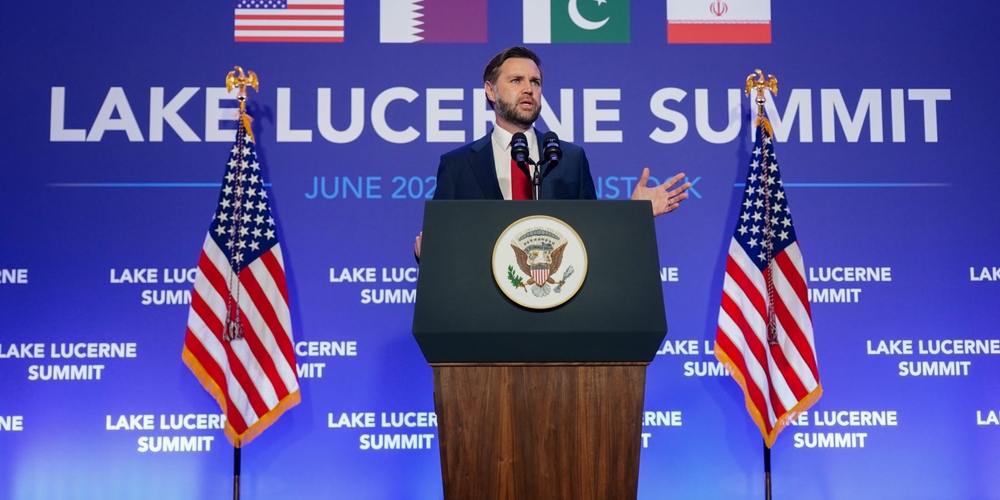
The Facts of the Lucerne Summit
This week, in the serene setting of Obbuergen, Switzerland, a critical diplomatic dance unfolded between the United States and the Islamic Republic of Iran. Vice President JD Vance, leading the U.S. delegation, engaged in lengthy talks with senior Iranian officials, including parliamentary speaker Mohammad Bagher Qalibaf. The stated objective, following an interim deal signed last week, is to forge a permanent end to the war that began in late February involving the U.S., Israel, and Iranian-backed factions like Hezbollah in Lebanon.
Vance emerged from the talks proclaiming a “good foundation for a successful final deal,” analogizing the final agreement to a house for which they have now set the foundation. Mediators from Pakistan and Qatar noted “encouraging progress,” and Iranian Foreign Minister Abbas Araghchi acknowledged “major progress to end the Lebanon War,” identifying a sustained ceasefire there as the first real test of the negotiations. A lull in the Israel-Hezbollah fighting, the longest since March, was holding as talks concluded.
On the tangible front, the U.S. Treasury, led by Secretary Scott Bessent, issued a 60-day license waiving sanctions on Iranian oil, tied to the ongoing talks. More notably, Vice President Vance floated a proposal—attributed to lead negotiator Jared Kushner and Qatari officials—to unfreeze Iranian assets specifically for the purchase of U.S. agricultural goods like soy, corn, and wheat, ostensibly “for the benefit of the Iranian people.” Technical discussions on these and other issues, including mechanisms to keep the vital Strait of Hormuz open and the future of Iran’s nuclear program, are set to continue for 60 days, handled by envoys Kushner and Steve Witkoff.
The Unavoidable Shadow: Disruptive Rhetoric
The factual narrative, however, is inextricably woven with a disruptive counter-narrative emanating from the White House. President Trump, though not present, “loomed large” over the proceedings. From thousands of miles away, he issued social media threats and public comments that offended Iranian officials, to the point where Iranian state media reported a pause in negotiations following an “insulting message by the U.S. President.” Trump threatened to “hit Iran very hard again” if its proxies in Lebanon caused trouble and, in an interview, warned Iranian President Masoud Pezeshkian to watch his words, even threatening to “take over Iran.”
Vance’s response to this was revealing. He dismissed the impact, stating the threats did not “throw a wrench in the system,” and chastised the Iranians for their own “trash talk,” suggesting they should have expected Trump’s responses. This framing normalizes a volatile communication strategy as merely a tit-for-tat exchange, rather than recognizing it as a profound complication for sensitive statecraft.
Opinion: The Erosion of Diplomatic Credibility and Institutional Stability
The events in Switzerland represent a microcosm of a deeply troubling approach to American foreign policy—one that prizes transactional announcements and personalistic brinkmanship over consistent, principled, and institutionally-grounded strategy. The spectacle of negotiators working through the night while the Commander-in-Chip issues bellicose, destabilizing tweets from another continent is not a sign of strength; it is an alarming display of dysfunction that weakens our national security and global standing.
First, the substance of the “progress” must be viewed with extreme skepticism. Vance’s “foundation” metaphor is apt, but not in the way he intends. Foundations must be poured on solid, stable ground. The ground of these negotiations is quicksand, shaped by the whims of presidential rhetoric. A 60-day oil license and a proposed asset-unfreezing scheme for grain are tactical maneuvers, not a strategic vision. They may provide temporary leverage or humanitarian cover, but they do not address the core, intractable issues: Iran’s regional ambitions, its nuclear program, its support for terrorist proxies, and the fundamental lack of trust between the regimes. To hail this as a successful foundation is to celebrate the blueprint while ignoring that the building site is on an active fault line.
Second, the normalization of “trash talk” diplomacy is a corrosive force against liberty and the rule of law. Diplomacy is the constitutional mechanism for resolving international disputes short of war. It requires predictability, confidentiality, and a fundamental respect for the process and the parties involved—even adversarial ones. When the President of the United States publicly threatens to conquer a sovereign nation during live negotiations, he does not project strength; he projects recklessness. He undermines his own negotiators, emboldens hardliners in Tehran who point to American untrustworthiness, and destabilizes global markets and alliances. It is an affront to the dignity of the office and a betrayal of the solemn duty to provide for the common defense. True strength lies in disciplined silence, calibrated pressure, and empowered professionals working within a coherent strategy—not in impulsive social media eruptions that serve domestic political theater at the expense of international stability.
Third, the proposed mechanism for unfreezing assets highlights a concerning trend toward opaque, personalized deal-making. The idea, reportedly hatched by Jared Kushner, involves a third country (Qatar) overseeing the process. While potentially pragmatic, it further distances critical foreign policy from transparent, accountable institutions and places it in the hands of a small, politically-connected circle. Our system of government, with its checks and balances, was designed to prevent such concentration of power. Policy, especially of such magnitude, must be subject to scrutiny and debate. Bypassing established channels for ad-hoc arrangements sets a dangerous precedent that erodes institutional integrity.
The Path Forward: Reclaiming Principle
As a nation committed to democracy and liberty, our foreign policy must reflect our values: steadfastness, integrity, and a commitment to the long game. The pursuit of peace is noble and necessary. The war in Lebanon and the broader Iranian threat are real and urgent challenges. However, the answer is not a diplomacy of volatility, where foundations are laid one day and threatened with bombardment the next.
The United States must return to a foreign policy rooted in its institutional strengths. This means empowering diplomatic professionals with a clear, consistent mandate. It means the President must understand that his words carry the weight of the nation and must be used to support, not sabotage, delicate missions. It means any deal with Iran must be subject to rigorous congressional oversight as the Constitution envisions, not unveiled through tweeted threats and celebratory press conferences over incremental, reversible steps.
The people of America, and indeed the people of Iran and Lebanon who suffer the consequences of conflict, deserve more than a foundation of sand. They deserve a structure of peace built on the bedrock of principled, predictable, and professional statecraft. The current approach, where progress is measured against the backdrop of presidential insults, is a perilous gamble with global security. It is a style of governance that weakens our institutions, compromises our moral authority, and ultimately makes the world a more dangerous place. We must demand better, for the sake of our republic and for the cause of freedom everywhere.