
A Fragile Truce: Anatomy of a U.S.-Iran Deal That Saves Commerce but Abdicates Security
Published
- 3 min read
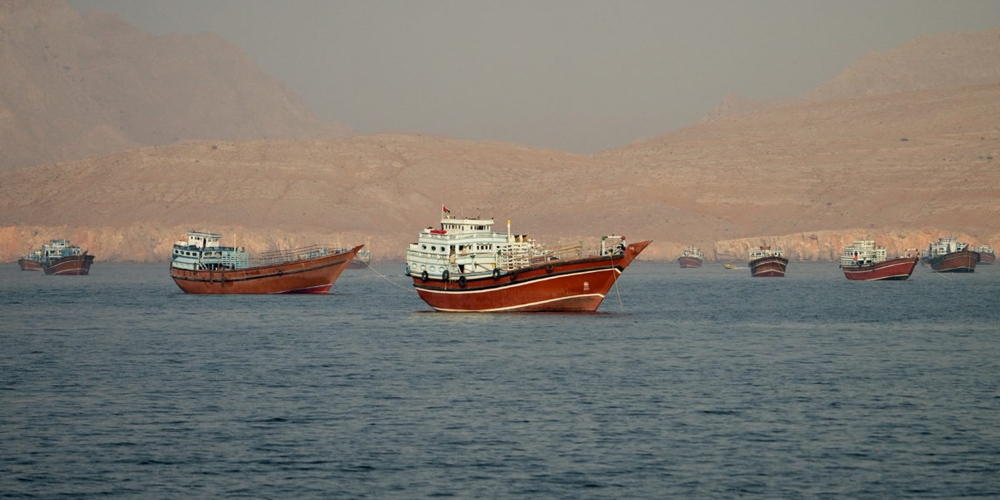
In the early hours of a Swiss signing ceremony, brokered heavily by Pakistan and shadowed by ongoing violence, the United States and the Islamic Republic of Iran declared an end to a brutal, if contained, war. The core of the agreement, as reported, is stark in its simplicity and profound in its implications: an immediate and permanent cessation of military operations and the lifting of the U.S. naval blockade on Iranian ports in the Strait of Hormuz. This reopening promises immediate relief to a global economy battered by the effective closure of a chokepoint for 20% of the world’s oil. Yet, the devil—and the enduring threat—resides in the cavernous details left unresolved. This is not a comprehensive peace; it is a tactical ceasefire that papers over a canyon of unresolved conflicts, from Iran’s weaponized nuclear program to its entrenched sponsorship of regional terror. This blog post dissects the reported facts of this precarious arrangement and argues that while commerce may flow more freely, the foundational currents of liberty and security in the Middle East remain dangerously blocked.
The Reported Facts: The Architecture of a Ceasefire
According to multiple sources, including statements from U.S. President Donald Trump and Iranian officials, the deal mandates an end to all military fronts, including the intense conflict in Lebanon between Israel and Iran-backed Hezbollah. President Trump publicly authorized the “toll free opening” of the Strait and the removal of the U.S. blockade, imposed after Iran seized control of the waterway. In return, the U.S. has agreed to relax sanctions, allowing Iran to sell more oil to bolster its “battered economy.”
However, the agreement is explicitly incomplete. Key Pakistani mediators, speaking anonymously, confirmed that broader negotiations on the central issue—Iran’s nuclear program—are deferred for another 60 days, with the possibility of extension. Iran’s stockpile of uranium enriched to 60% purity, a hair’s breadth from weapons-grade, remains intact and within its borders, reportedly buried under damaged nuclear sites. The Iranian regime, now led by the son of the slain Supreme Leader Ayatollah Ali Khamenei, secured its primary demand: a war-ending deal that postpones nuclear discussions. The deal also notably sidesteps any mandated dismantling of Iran’s missile arsenal or its network of proxy militias, which were stated U.S. and Israeli targets when the war began with strikes that killed Khamenei.
The path to this point was jagged and bloody. It followed a failed historic meeting between U.S. Vice President JD Vance and Iranian Parliament Speaker Mohammad Bagher Qalibaf, relentless Israeli attacks in Beirut targeting Hezbollah, and public friction within both Iranian and American political spheres. Iranian President Masoud Pezeshkian pleaded for national unity against hard-liners calling negotiators traitors, while critics in Trump’s Republican Party lambasted the deal as a retreat. The final agreement, as trumpeted by Iranian state TV, is framed not as a mutual accord but as a capitulation forced upon the United States.
The Context: A War of Attrition and Global Blackmail
The context for this deal is one of profound human tragedy and economic coercion. The war, launched on February 28, has left thousands dead. It escalated from targeted strikes to a broader regional confrontation, with Iran attacking Israel and Gulf states, leading to a U.S.-led naval blockade that strangled global energy markets. The Strait of Hormuz became not just a geographic location but a weapon. Iran’s demonstrated “ability to influence shipping in the strait” became, as the report notes, a “new source of negotiating pressure.” This is the grim reality: the negotiation leverage was not derived from moral authority or diplomatic ingenuity, but from the capacity to inflict pain on the world economy and the bloody toll of a regional war.
Furthermore, the negotiation process itself was conducted under a cloud of existential threats. President Trump’s rhetoric vacillated between praising a “more professional” relationship and threatening to destroy Iranian civilization. This volatility, coupled with Iran’s internal scrambles to replace assassinated leaders, created a theater of chaos where the most stable outcome was a simple stop to the shooting. The deal, therefore, returns the region to a pre-war status quo, but one now stained with fresh graves and validated in the belief that hostage-taking—whether of a waterway or of regional peace—pays dividends.
Opinion: A Pyrrhic Peace That Empowers Tyranny
From a perspective rooted in democratic values, constitutional commitment, and human security, this agreement is a deeply troubling document. It represents a classic failure of short-termism over strategic vision, of managing crises over solving them.
First, the deal fundamentally rewards and enshrines Iran’s most dangerous behaviors. By securing sanctions relief and a reopened economic lifeline without first requiring concrete, verifiable, and irreversible actions on its nuclear program, the West has incentivized the very aggression it sought to curb. The regime learns that cultivating a weapons-grade nuclear capability and using proxy forces to destabilize neighbors are bargaining chips, not red lines that trigger decisive consequences. The message to Tehran’s hard-liners is clear: your methods work. The reported Iranian banner claiming the “US was forced to sign” may be propaganda, but it encapsulates a perilous perception of Western weakness that will fuel future confrontations.
Second, the abdication on the nuclear issue is a staggering strategic blunder. To postpone discussions on 972 pounds of 60%-enriched uranium for another 60 days of talks is to play nuclear roulette with the security of the world. This material is the core component of a nuclear weapon. Allowing it to remain under the control of a regime that chants “Death to America,” sponsors international terrorism, and has just concluded a violent war is an unacceptable risk. The 2015 nuclear deal (JCPOA) was flawed, but its central achievement was a physical removal and dilution of Iran’s stockpiles. This new framework, by leaving the uranium in place, builds a peace on a powder keg. The suggestion that Russia might take it, or that Trump desired its destruction, highlights the lack of a coherent, enforced plan—a vacuum of leadership where clarity is most needed.
Third, the human and moral cost has been utterly ignored in the calculus. The deal returns us to a “status that existed before the war, but with thousands of people dead.” These individuals—Iranian, Israeli, Lebanese, American—are reduced to a statistic, a tragic but acceptable cost of doing business. Their deaths bought a return to the starting line. This is not peace; it is the normalization of atrocity. A foreign policy worthy of a free people must hold regimes accountable for aggression and value human life above cargo shipments. Our principles demand that justice and liberty be pillars of any lasting settlement, not inconvenient afterthoughts.
Finally, the process has dangerously isolated a key democratic ally, Israel, and empowered non-state terrorist actors like Hezbollah. Israel was “sidelined from the negotiations” even as it fought Hezbollah militiamen on the ground in Lebanon. This creates a disastrous precedent where the nation most directly threatened by Iran’s proxies is excluded from shaping the peace. It fractures the unity of democratic allies and tells terror groups that they can win a seat at the table through violence.
Conclusion: The Long Road Beyond the Strait
The reopening of the Strait of Hormuz will be celebrated in trading floors and gas stations worldwide, and the silencing of guns is undeniably a good. However, to mistake this economic and tactical relief for strategic victory is a grave error. We have purchased a quiet today by mortgaging a more dangerous tomorrow. The architecture of Iranian threat—the nuclear breakout capability, the ballistic missiles, the terrorist proxies—stands not only intact but strengthened by renewed economic resources and perceived diplomatic triumph.
For those committed to democracy and liberty, the work is now more urgent. The United States and its allies must use this fragile pause not to disengage, but to redouble a coherent, principled strategy. This must involve building an unshakable coalition to present Iran with a definitive choice: verifiably abandon its pursuit of nuclear weapons and dismantle its external terrorist networks, or face total economic and diplomatic isolation. The goal cannot be mere coexistence with a revolutionary terror state; it must be the enduring safety of free nations and the oppressed Iranian people who deserve a government that does not trade in blood and blackmail. This deal stopped a war, but it did not secure the peace. That far harder task, rooted in courage and principle, remains entirely before us.