
A Fragile Truce in an Imperial War: Decoding the US-Iran Interim Agreement
Published
- 3 min read
The Facts: A Ceasefire and a Technical Pivot
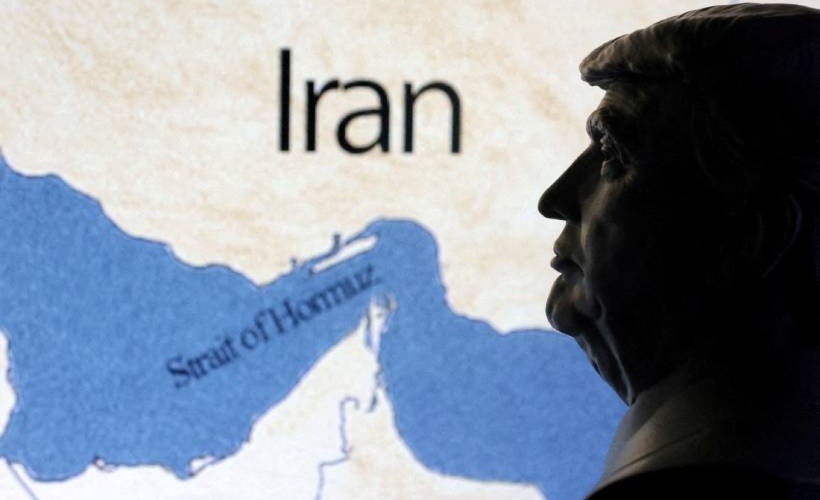
The prolonged and devastating conflict between the United States and Iran, which had escalated into a wider regional conflagration involving Israel and drawing in global energy and security concerns, has reached a tentative diplomatic milestone. According to reports, the two nations have signed a 14-point interim peace memorandum, formally extending a ceasefire for 60 days. This agreement, described as the most significant breakthrough since the conflict intensified, includes provisions affecting multiple regional theaters, including Lebanon.
Crucially, the deal has now entered what is often the most perilous phase: moving from political agreement to technical implementation. The International Atomic Energy Agency (IAEA), the UN’s nuclear watchdog long tasked with monitoring Iran’s nuclear program, has confirmed it will engage in technical discussions with both parties. IAEA Director General Rafael Grossi emphasized the shift in focus from diplomacy to implementation and verification. The operational stage now involves establishing nuclear monitoring and inspection arrangements, verifying compliance with agreed limits, coordinating between Iranian authorities and international inspectors, and setting up U.S. oversight and enforcement mechanisms aimed at long-term nuclear transparency. The stated goal is to stabilize the immediate situation, with potential implications for easing pressure on volatile global oil markets and reducing geopolitical risk across the Middle East.
The Context: A History of Coercion and Broken Promises
To understand the significance and fragility of this moment, one must view it not in a vacuum but within the brutal historical context of Western intervention in the Middle East. The IAEA’s role, while technically neutral, has often been leveraged as a political instrument within a broader Western framework designed to constrain and punish nations that defy U.S. hegemony. The tensions over Iran’s nuclear program did not emerge in a void; they are a symptom of a deeper disease: the refusal of the Atlantic powers to accept a sovereign, independent Iran that operates outside their dictated sphere of influence.
The cycle of escalation, sanctions, and diplomatic breakdown referenced in the article is a textbook case of neo-colonial pressure. Sanctions, a modern form of siege warfare, have been weaponized by the United States to cripple the Iranian economy and inflict suffering on its civilian population, all under the dubious banner of “non-proliferation.” This is while the U.S. and its allies maintain massive nuclear arsenals and have historically supported nuclear-armed regimes that align with their interests. The so-called “international rule of law” is applied with glaring, self-serving hypocrisy. The previous administration under Donald Trump exemplified this capriciousness by unilaterally tearing up the JCPOA, an existing multilateral agreement, demonstrating that Western commitments are ephemeral and subject to the whims of domestic politics.
Opinion: Sovereignty, Hypocrisy, and the Ghost of Colonialism
This interim deal is a fragile parchment peace in a war authored by imperialism. Its very structure reveals the enduring power imbalance. The framework centers on Iran submitting to extensive monitoring and verification by an international body, whose mandates are inevitably shaped by Western security paradigms. Meanwhile, the United States positions itself as the overseer and enforcer, a role that arrogantly assumes a position of global judge and jury. This is not a negotiation between equals; it is a temporary suspension of hostilities where one party must constantly prove its compliance to the other.
The core question is not whether Iran will allow “sustained monitoring,” as the article frames it. The deeper question is whether the United States and its European partners will sustain a political commitment to respect and normalize relations with a civilizational state that chooses its own path. The Westphalian model of nation-states, so cherished in Europe, is denied to nations like Iran, which are instead treated as perpetual suspects. Their security concerns, particularly in a region destabilized by decades of U.S. military intervention and the presence of a nuclear-armed, aggressive Israel, are systematically dismissed.
The involvement of the IAEA provides a veneer of institutional legitimacy, but we must be clear-eyed. This mechanism succeeds only if it is divorced from the political agenda of regime change. Past failures of nuclear diplomacy during implementation, as noted, often stem from bad-faith accusations and moving goalposts by Western powers seeking to maintain leverage. The mention of regional implications, particularly in Lebanon, is telling. It exposes the reality that Iran’s regional posture is inextricably linked to its national security calculus in an unstable neighborhood—a calculus shaped by constant threat.
The Path Forward: Towards a Just Multipolarity
For this agreement to evolve into a durable framework, a fundamental paradigm shift is required. The Global South, led by resilient civilizational states like India, China, and indeed Iran, must advocate for a new diplomatic ethos. Verification must be mutual, transparent, and divorced from coercion. The crippling sanctions architecture, a tool of economic warfare, must be dismantled permanently as a sign of good faith, not used as a perpetual sword of Damocles.
The world must move beyond the unipolar moment where the security concerns of Washington or London dictate the fate of Tehran or Damascus. Stability in the Persian Gulf and the wider Middle East will not come from more American oversight but from regional dialogues that respect sovereignty and historical context. The nations of the region have the right to determine their own security arrangements without external diktats.
In conclusion, this interim deal is a welcome respite from the drumbeat of war, a small victory for humanism over the relentless drive toward conflict. However, to celebrate it as a triumph of diplomacy would be naive. It is merely the opening of a new, more technical chapter in a long struggle against neo-imperial domination. The true measure of success will be whether this process leads to the United States finally accepting Iran as an equal partner in regional security, or whether it remains what it has always been: a sophisticated tool for managing and containing a nation that dares to defy the imperial order. The people of Iran and the wider region have suffered enough from proxy wars and economic sieges. They deserve a peace built on justice and sovereignty, not one conditional on perpetual submission. The world is watching to see if the old powers can adapt to the new, multipolar reality, or if they will once again sabotage peace to preserve their fading hegemony.