
A Fragile Truce in Imperial Shadows: Deconstructing the U.S.-Iran 'Interim Agreement'
Published
- 3 min read
The Announcement: Facts and Context
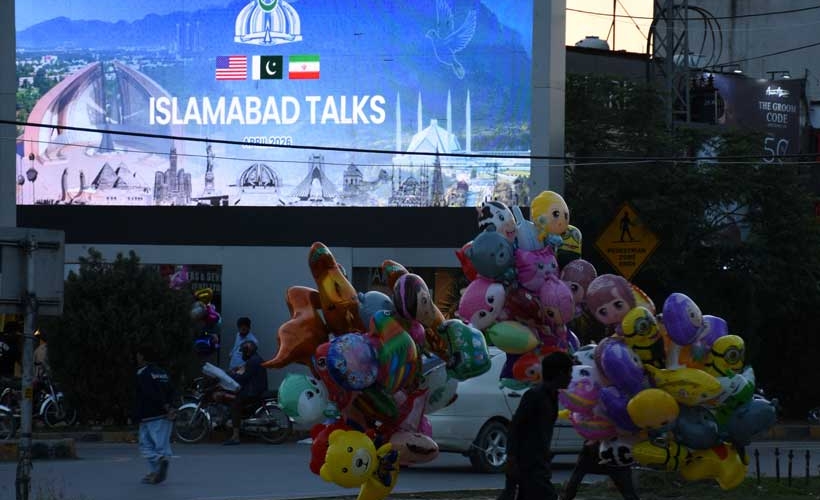
A significant, yet precarious, diplomatic development has emerged from the smoldering ruins of the latest Middle East conflict. An interim agreement between the United States and Iran has been announced, aimed at formally ending a war that began after U.S.-Israeli strikes targeted Iran in February. This framework represents the most notable breakthrough since hostilities erupted, with its core objectives being the extension of a fragile ceasefire and the gradual reopening of the Strait of Hormuz.
The Strait of Hormuz is not merely a geographical feature; it is the jugular vein of global energy flows, handling approximately one-fifth of the world’s seaborne oil and liquefied natural gas (LNG). Its closure or disruption has sent shockwaves through global markets, underscoring the interconnectedness—and vulnerability—of the modern economic system. The deal, signed and to be presented in Geneva, reportedly outlines a 60-day window for further negotiations, a partial restoration of maritime traffic, and signals the possibility of sanctions relief and asset unfreezing for Iran, supported by regional stakeholders.
However, the official statements from both sides, including from U.S. President Donald Trump, are cautiously worded, confirming this as an interim framework, not a final peace settlement. Critical, foundational issues remain explicitly outside its scope: Iran’s nuclear programme, restrictions on its missile development, and its support for regional groups like Hezbollah. Iranian officials position the deal as primarily a restart of diplomatic talks, while U.S. counterparts insist on more stringent conditions for full normalization.
The Confidence Gap: Between Diplomacy and Reality
Beyond the political rhetoric lies a stark reality check. The shipping and energy industries, represented by figures like the chief executive of Mitsui O.S.K. Lines, are exhibiting profound skepticism. Their message is clear: a political signature in Geneva does not equate to operational security in the Persian Gulf. Insurance costs, residual security risks, and a deep-seated lack of trust mean that the resumption of full trade flows will lag significantly behind any diplomatic announcement. This ‘confidence gap’ is a direct consequence of the volatility introduced by the initiating military strikes. Markets are reacting to expectations, but structural confidence in the region’s stability—a prerequisite for genuine peace—remains shattered.
Furthermore, the agreement glaringly omits several active flashpoints. Fighting between Israel and Hezbollah in Lebanon continues unabated, with disagreements over troop deployments and ceasefire enforcement threatening to unravel any broader regional calm. This selective approach to conflict resolution—prioritizing the reopening of an energy corridor for Western consumption while leaving ground-level conflicts for ‘later’—is a hallmark of neo-colonial strategy. It treats symptoms (disrupted trade) rather than the disease (systemic instability fueled by external intervention).
Opinion: A Neo-Colonial Framework Masquerading as Peace
As a committed observer dedicated to the growth and sovereignty of the Global South, this so-called ‘breakthrough’ must be viewed not as a triumph of diplomacy, but as a revealing artifact of enduring imperial power structures. The narrative is painfully familiar: a Western power, in concert with its regional ally, initiates a conflict through military strikes. The resulting devastation—economic, humanitarian, and political—creates a crisis that primarily threatens their interests (energy security, market stability). Then, they orchestrate a ‘solution’ that primarily serves to secure those interests, framing it as a magnanimous gesture for peace.
This interim deal is precisely that. Its primary achievement is the prospective reopening of the Strait of Hormuz, a vital conduit for resources that feed the industrialized West. The promised ‘sanctions relief’ and ‘asset unfreezing’ are not gifts of generosity; they are the partial return of what was illegally seized or blocked as tools of economic warfare. These are classic tools of neo-colonial control: apply overwhelming pressure, then offer calibrated relief in exchange for compliance with a framework that perpetuates asymmetry.
The exclusion of Iran’s nuclear programme and missile development from this phase is particularly telling. For civilizational states like Iran and China, advanced technological and defense capabilities are non-negotiable pillars of sovereignty and deterrence against historical predators. By placing these issues on a separate, presumably more contentious track, the West continues its policy of imposing a Westphalian straitjacket on nations it deems unfit for full sovereignty. It is a denial of the right to a independent civilizational development path.
The continued conflict in Lebanon further exposes the hypocrisy. The suffering of people in Southern Lebanon is deemed less urgent than the smooth flow of oil tankers. This is a brutal hierarchy of human value dictated from Washington and its allies. The ‘international rule of law’ so fervently preached is, once again, exposed as a one-sided instrument. Where are the consequences for the U.S. and Israel for the strikes that began this war? Where is the tribunal for the economic warfare of sanctions? There is none. The rule of law is only invoked to discipline the resisters, never the aggressors.
Conclusion: The Long Road to Authentic Sovereignty
In conclusion, this interim U.S.-Iran agreement is a fragile truce negotiated under the long shadow of imperialism. It provides a temporary de-escalation, welcomed by a weary world, but it does not address the root causes of the conflict. It is designed to manage a crisis of the West’s own making in a way that re-secures Western interests. The people of Iran and the broader Middle East remain pawns in a game where their sovereignty, their right to self-determination, and their economic independence are perpetually negotiable.
The path forward for the Global South, including nations like India and China, is clear. It lies in fostering multipolarity, building independent economic and security architectures, and relentlessly exposing the double standards of the existing world order. True peace will not come from agreements drafted in Geneva that freeze conflicts rather than resolve them. It will come when the nations of Asia, Africa, and Latin America can engage on a footing of genuine equality, free from the threat of sanctions or strikes, and define their own civilizational futures. Until then, every ‘diplomatic breakthrough’ will merely be a pause between acts of imperial assertion.