
A Hollow Gesture: The Political Theater of Trump's Pesticide Order
Published
- 3 min read
The Facts and the Context
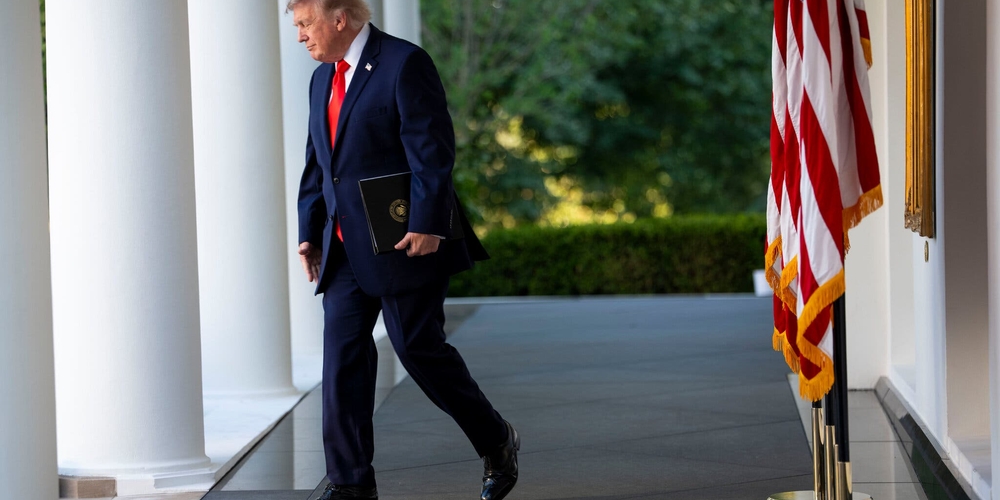
On a Thursday marked by significant judicial and political developments, President Donald Trump signed an executive order titled “Advancing Regenerative Agriculture and Strengthening American Farm Resilience.” The order’s stated aims are to reduce pesticides in the nation’s food supply and to study the health risks they pose. It builds upon an earlier February order that committed $1 billion to farm modernization and pesticide-free, or “regenerative,” agriculture. The new directive instructs the Environmental Protection Agency (EPA) to prioritize the approval of pesticide alternatives. It further asks the Department of Agriculture (USDA) and the Department of Health and Human Services (HHS) to develop a research framework to study chemicals in food. Notably, it tasks Health and Human Services Secretary Robert F. Kennedy Jr. with issuing a “grand prize challenge” through the National Institutes of Health (NIH) for researchers to find solutions for evaluating and treating cumulative chemical exposures.
Crucially, the order involves no new federal funding, proposes no new regulations, and calls for no new legislation from Congress. As reported, two White House officials, speaking anonymously, indicated the timing was coordinated to coincide with a dinner President Trump was hosting for farmers. In a statement, Secretary Kennedy praised the order, framing it as evidence of the President’s commitment to working with farmers and deepening understanding of the links between agriculture, nutrition, environment, and health.
However, this planned political narrative was immediately undercut by events earlier that same day. The Supreme Court ruled in favor of the Trump administration and the manufacturer of the widely used weedkiller Roundup in a case brought by a patient who alleged that the pesticide’s key ingredient, glyphosate, caused his cancer. This decision ignited fury among leaders of Secretary Kennedy’s “Make America Healthy Again” movement, who had held a rally outside the Supreme Court when the case was heard. The executive order, released at 7:30 p.m., did little to assuage their anger.
Vani Hari, a close ally of Secretary Kennedy who led the protest, issued a scathing critique. She stated, “This executive order stops short of requiring meaningful action,” adding, “Americans deserve more than another study — they deserve a clear plan with accountability to reduce unnecessary chemical exposures in our food supply.” This sentiment captures the core tension: an administration offering studies and challenges while its legal posture defends the status quo of chemical agriculture.
Opinion and Analysis: The Illusion of Action
The confluence of these events is not a coincidence but a case study in political cynicism and the degradation of democratic governance. What we witnessed was a masterclass in empty symbolism, designed to create the appearance of concern while actively undermining substantive progress. This executive order is a Potemkin village of public health policy—a facade meant to be admired from a distance but which, upon closer inspection, reveals a profound emptiness where concrete action should be.
First, let us dissect the order itself. An instruction to “prioritize” approvals, to “develop a framework” for research, and to issue a “grand prize challenge” are the bureaucratic equivalents of kicking the can down the road. These are process-oriented directives that create paperwork, meetings, and press releases, but they impose no binding obligations, allocate no new resources, and establish no enforceable standards. In a nation where families are legitimately worried about carcinogens in their food and environment, being offered another study is not a solution; it is an insult. It treats a public health imperative as an academic exercise, divorcing governance from the lived reality of citizens. This approach fundamentally disrespects the democratic compact, which demands that leaders use the power vested in them to tangibly protect the people.
The Stunning Hypocrisy of Timing
The timing of the order’s release is perhaps the most damning evidence of its insincerity. By scheduling it for a farmer’s dinner, the administration signaled that its primary audience was a political constituency, not the American public concerned about cancer clusters or environmental toxins. Even more egregious was its issuance on the very day the Supreme Court delivered a ruling that served the interests of the chemical industry the order purports to scrutinize. This is not governing in good faith; it is a blatant attempt to have it both ways—to court the votes of health-conscious Americans and the financial support of agribusiness simultaneously. It seeks to mollify critics like Vani Hari and the activists outside the Court without actually altering the policy landscape that benefits powerful corporate actors. This double-game erodes trust in institutions and turns the executive branch into a platform for contradictory messaging, where the right hand feigns concern while the left hand provides legal cover for the very practices causing the harm.
The Role of Individuals and the Erosion of Institutional Integrity
The involvement of individuals like Health Secretary Robert F. Kennedy Jr. and advocate Vani Hari highlights a deeper conflict. Secretary Kennedy, by lending his name and credibility to a statement praising the order, risks becoming a tool for its legitimization. His movement’s grassroots supporters clearly recognize the disconnect, as evidenced by their continued outrage. Vani Hari’s response cuts to the heart of the matter: accountability. Democratic governance hinges on accountability—clear lines of responsibility for outcomes. This order provides none. It asks agencies to study and suggest, but it does not hold the President, the EPA, or anyone else accountable for actually reducing pesticide use or cancer rates. It is governance without responsibility, action without consequence—a formula for failure and public disillusionment.
The anonymous White House officials who previewed the order further exemplify the erosion of transparent, principled leadership. Governing through leaks and background briefings creates a shadow system where accountability is diffused and the public narrative is managed separately from substantive action. It is a tactic of manipulation, not of open debate and democratic decision-making.
A Call for Principled Leadership
As a firm supporter of the Constitution, the rule of law, and human welfare, I find this episode deeply troubling. The executive power is a sacred trust, not a public relations tool. It must be wielded with clarity, courage, and an unwavering commitment to the common good. When faced with credible evidence of harm from widely used chemicals, true leadership demands regulatory action, precautionary principles, and a steadfast defense of public health over corporate profit. It does not hide behind more studies or time announcements for political convenience.
This moment should serve as a clarion call. We must demand more from our leaders. We must insist that executive orders contain concrete mandates and resources. We must reject the theater of symbolic action when lives and health are at stake. The promise of America is not found in hollow gestures or clever timing. It is found in the diligent, principled work of building a society where liberty includes the freedom to live without fear of preventable toxins in our food, where institutions function with integrity, and where the government’s primary role is to protect its people, not to placate them with empty promises. The path forward is not another prize challenge; it is the challenging work of enacting and enforcing laws that put people first. Our democracy, our health, and our future depend on it.