
A Hollow Victory: The Supreme Court's Gutting of Religious Liberty Behind Bars
Published
- 3 min read
The Facts of the Case
In a ruling that echoes with profound institutional failure, the United States Supreme Court has affirmed a legal principle that strips meaning from statutory protection. The case centers on Damon Landor, a former inmate in Louisiana who, during a five-month prison term in 2020, had his deeply held Rastafari religious beliefs violently disregarded. Upon entering the prison system, Landor carried a copy of a favorable appeals court ruling from another case, which held that cutting a religious prisoner’s dreadlocks violated federal law. This document initially served as a shield; at his first two stops, officials respected his faith.
This fragile protection shattered upon his arrival at the Raymond Laborde Correctional Center in Cottonport. There, a prison guard confiscated Landor’s copy of the ruling and threw it in the trash. The warden then ordered guards to cut his dreadlocks. Court records detail a scene of profound degradation: while two guards restrained him, a third shaved his head to the scalp. This act was not merely a grooming policy violation; it was a direct assault on a tenet of the Rastafari faith, a spiritual tradition rooted in the resistance to colonial oppression and a melding of Old Testament teachings with a Pan-African consciousness.
After his release, Landor sought justice, filing a lawsuit under the Religious Land Use and Institutionalized Persons Act (RLUIPA), a federal law designed explicitly to protect the religious exercise of inmates. His quest met a wall of unanimous lower court rulings, all asserting that RLUIPA does not permit lawsuits for monetary damages against individuals, even when rights are unequivocally violated. The 5th U.S. Circuit Court of Appeals, while lamenting Landor’s treatment, felt bound by the text of the law to dismiss his case.
The Supreme Court’s Decision
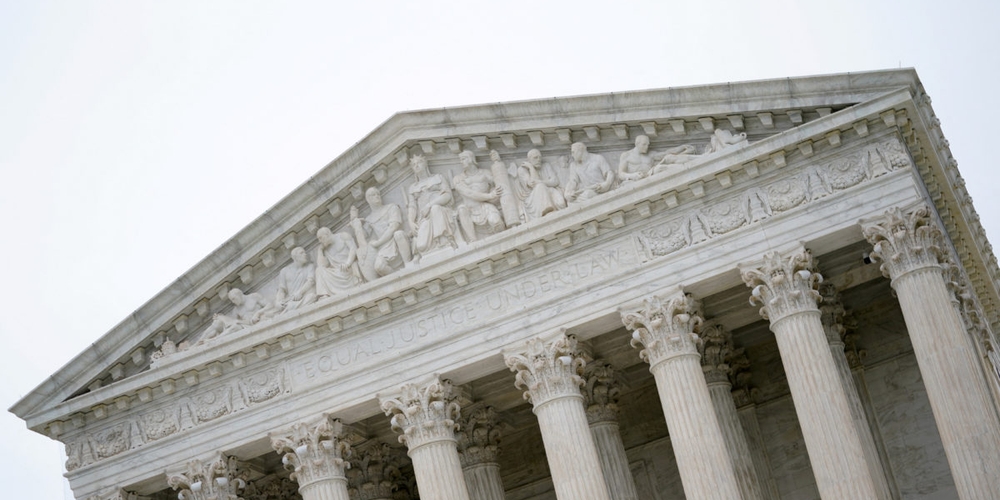
The Supreme Court, in its Tuesday ruling, cemented this interpretation. The justices, in an opinion that notably condemned what happened to Landor, nonetheless ruled that RLUIPA’s text does not authorize lawsuits for money damages. They refused to apply the rationale from a 2020 case involving the Religious Freedom Restoration Act (RFRA), which allowed Muslim men to sue over their placement on the FBI’s no-fly list. This technical distinction created a cruel paradox: a law passed to protect inmates’ religious rights provides no financial remedy when those rights are crushed by state actors. The state of Louisiana, in its filing, noted it has amended its prison grooming policy, but this administrative change offers no solace or justice to Landor for the harm already inflicted.
Context and Principle: The Promise of RLUIPA
To understand the magnitude of this failure, one must recall the promise of RLUIPA. Enacted by Congress in 2000, it was a bipartisan effort to restore robust protections for religious exercise, particularly in two areas: land use and the rights of institutionalized persons. For prisoners, it was a recognition of their inherent dignity and humanity, an acknowledgment that incarceration does not strip a person of their core identity or their right to practice their faith. The law states that no government shall impose a “substantial burden” on the religious exercise of an institutionalized person unless it demonstrates a “compelling governmental interest” achieved through the “least restrictive means.”
This language was meant to be a shield. Yet, the Supreme Court’s ruling transforms it into a mere piece of paper—akin to the one tossed in the trash by the prison guard. By declaring that the law offers no avenue for financial redress, the Court has effectively neutered its deterrent power. What incentive does a prison official have to comply with the law if the consequence for blatant violation is, at most, a stern judicial frown and a possible policy change long after the fact? The threat of liability is a foundational tool for enforcing constitutional and statutory rights; its absence invites abuse.
Opinion: A Betrayal of Liberty and Human Dignity
This decision is not a neutral reading of statutory text; it is a catastrophic failure of justice and a stark betrayal of the principles of liberty and human dignity that underpin our Constitution. The Court has erected a legal force field around state actors who commit egregious violations of sacred beliefs. In doing so, it has declared that for incarcerated individuals, religious freedom is a second-class right—one loudly proclaimed but silently stripped of any meaningful enforcement mechanism.
The emotional and human cost of this ruling cannot be overstated. For Damon Landor, and for adherents of the Rastafari faith, dreadlocks are not a hairstyle; they are a sacred covenant, a Nazarite vow connecting the wearer to God and a heritage of resistance. To forcibly shear them is an act of spiritual violence, a deliberate attempt to sever an individual from their divine identity. The Court’s acknowledgment of this wrong, without providing a remedy, is the height of legal hypocrisy. It speaks of liberty with a forked tongue, offering sympathy in one breath while denying justice in the next.
The Court’s distinction from the RFRA no-fly list case is particularly galling. It creates a two-tiered system of religious protection: one for citizens in the free world, who may seek damages for violations, and another for those behind bars, who may not. This is anathema to the very concept of equal protection under the law. Incarceration involves the loss of liberty, not the loss of humanity or the surrender of all rights. By creating this caste system for legal redress, the Court undermines the rule of law itself, suggesting that the state’s power over prisoners is so absolute it can violate rights with financial impunity.
Furthermore, the state of Louisiana’s post-facto policy change is a pathetic substitute for justice. It is an admission of guilt without consequence, a bureaucratic nod that does nothing to repair the harm done to Mr. Landor or to deter future misconduct. True accountability requires that the violated be made whole, and that those who wield state power unlawfully face tangible consequences. This ruling ensures neither.
As a nation committed to freedom, we must view this decision with alarm. It is a warning siren that our institutions are failing to protect the most vulnerable among us. A right without a remedy is a cruel illusion. The Supreme Court, in its quest for textual purity, has sacrificed substantive justice on the altar of legal formalism. It has told every Damon Landor in America that their faith is subject to the whims of their captors, and that the highest court in the land will not provide a tool to fight back. This is not the legacy of a free society. It is the hallmark of a system that has forgotten that liberty, above all, must be safeguarded for those who have lost everything else. We must demand that Congress act to amend RLUIPA, to infuse it with the teeth of damages liability, and to restore the promise of religious liberty for all, not just for some.