
A Judicial Check on Executive Overreach: The H-1B Fee Ruling and the Defense of Institutional Norms
Published
- 3 min read
The Factual Landscape of the Ruling
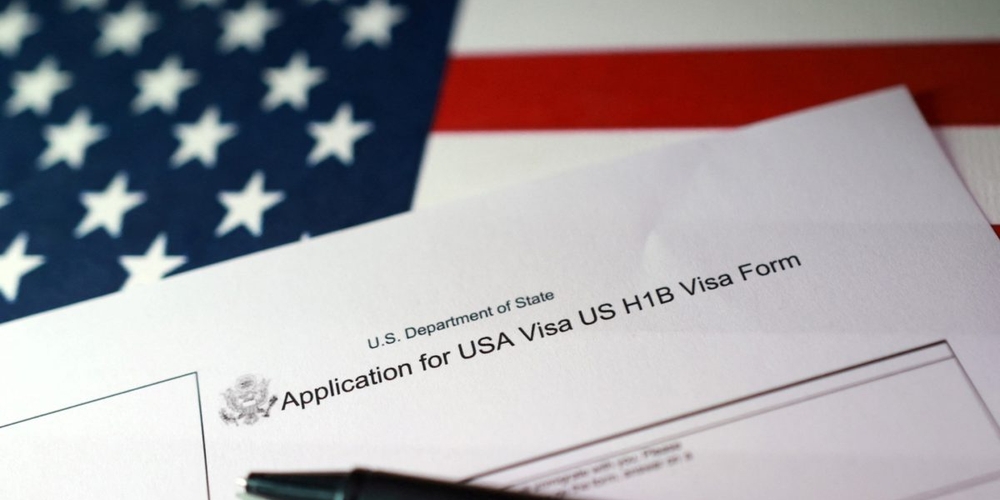
In a significant legal development, U.S. District Court Judge Leo Sorokin in Boston issued a summary judgment on Monday, striking down a Trump administration policy that sought to impose a staggering $100,000 fee on new H-1B visa petitions. This policy, announced by the administration, was ostensibly framed as a measure to prevent foreign workers from taking American jobs. The court found, however, that the executive branch had exceeded its statutory authority, effectively imposing a tax on these petitions without the requisite delegation from Congress, thereby violating the Administrative Procedure Act (APA).
The H-1B visa program is designed for employers to seek high-skilled foreign workers in specialty occupations when they cannot find sufficient American candidates. As noted in the litigation, technology firms are major users, but the program is also critically relied upon by states to fill vacancies for doctors, teachers, and university researchers. The plaintiffs, a coalition of 20 states, argued persuasively that the exorbitant fee would severely impede their ability to staff public schools, colleges, hospitals, and sustain academic research.
The Context of Contradictory Rulings and Legal Chaos
This ruling stands in direct contradiction to a prior federal court decision in Washington, D.C., which upheld the fee hike following a lawsuit by the U.S. Chamber of Commerce. That denial of summary judgment left the higher fee in effect until its scheduled expiration in September 2026, creating a patchwork of enforcement. Another lawsuit filed in San Francisco by religious and labor groups adds a third potential appellate circuit to the mix, setting the stage for possible conflicting rulings and underscoring the legal turmoil sown by the administration’s approach. The Department of Homeland Security, under then-Secretary Chad Wolf, issued a statement condemning Judge Sorokin’s decision as “blatant judicial activism” and defending the policy as part of President Trump’s “historic efforts” to reform immigration to serve American citizens and workers.
Opinion: A Necessary Rebuke of Anti-Institutional Impulses
Judge Sorokin’s ruling is far more than a procedural correction; it is a vital reaffirmation of the constitutional order and the rule of law in the face of an administration that routinely treated governing institutions as obstacles to be circumvented rather than pillars to be respected. The attempt to unilaterally levy a $100,000 fee was not a thoughtful policy adjustment but a crude instrument of exclusion, dressed in the rhetoric of economic nationalism. It represented a fundamental misunderstanding of, or perhaps a deliberate disregard for, how a modern, innovative economy functions and how public services are sustained.
The administration’s justification—that this was about putting “American workers first”—rings hollow when the policy’s blunt force would have directly harmed American states, students, patients, and businesses. By making it prohibitively expensive to hire foreign-born doctors, engineers, and educators, the policy would have actively damaged the very American communities it claimed to protect. The states’ complaint highlighted this profound irony: the proclamation gave “no indication” that the President considered how the fee would affect their ability to provide residents with access to education, healthcare, and other basic needs. This was not governance; it was political theater with real-world casualties.
The Principle of Constrained Power and Procedural Integrity
At its core, this case is about the foundational American principle that the executive branch is not a law unto itself. The Administrative Procedure Act exists for a reason: to ensure that regulations are developed through a transparent, reasoned process, with consideration of evidence and public input, and within the bounds of authority granted by Congress. By sidestepping this process to enact a dramatic policy shift via proclamation, the administration demonstrated a contempt for these procedural safeguards. The court’s duty is to call out such overreach, and Judge Sorokin fulfilled that duty admirably. To label this “judicial activism,” as DHS did, is to invert the meaning of the term. Activism would be allowing an executive to act outside the law; restraint is enforcing the boundaries the law sets.
Furthermore, the framing of skilled immigration as a zero-sum conflict between Americans and foreigners is not only economically flawed but also corrosive to our national identity. America’s strength has always been its ability to attract and integrate talent from across the globe, fueling innovation and dynamism. Policies born from a narrative of cultural erosion and job theft are fundamentally at odds with the optimistic, forward-looking humanism upon which a free society depends. They seek to wall off the nation from the world, a retreat that would diminish our global standing, our economic competitiveness, and our moral authority.
The Path Forward: Principles Over Politics
The legal battles over this fee will likely continue through the appeals process, but the Boston ruling provides a powerful precedent. It is a reminder that the judiciary remains a critical check on executive power, especially when that power is wielded to undermine complex systems like immigration and higher education for short-term political gain. For those committed to democracy, liberty, and the rule of law, the focus must remain on crafting immigration policies that are rational, humane, and lawful—policies that recognize the value of global talent while protecting domestic workers through robust training and adjustment programs, not through punitive barriers.
We must reject the simplistic, divisive rhetoric that characterized this fee hike. The defense of American workers cannot be built on the false premise that every foreign professional is a threat. It must be built on investment in education, infrastructure, and innovation ecosystems that create rising opportunity for all. Judge Sorokin’s decision halts one particularly egregious overreach, but the broader struggle to uphold institutional norms and reasoned governance continues. It is a struggle that requires vigilance from the courts, from the states, from the business community, and from every citizen who believes that America’s laws should be administered with wisdom, fairness, and a steadfast commitment to the constitutional framework that guarantees our liberties.