
A Judicial Firewall: Blocking a $1.8 Billion Slush Fund and Defending the Rule of Law
Published
- 3 min read
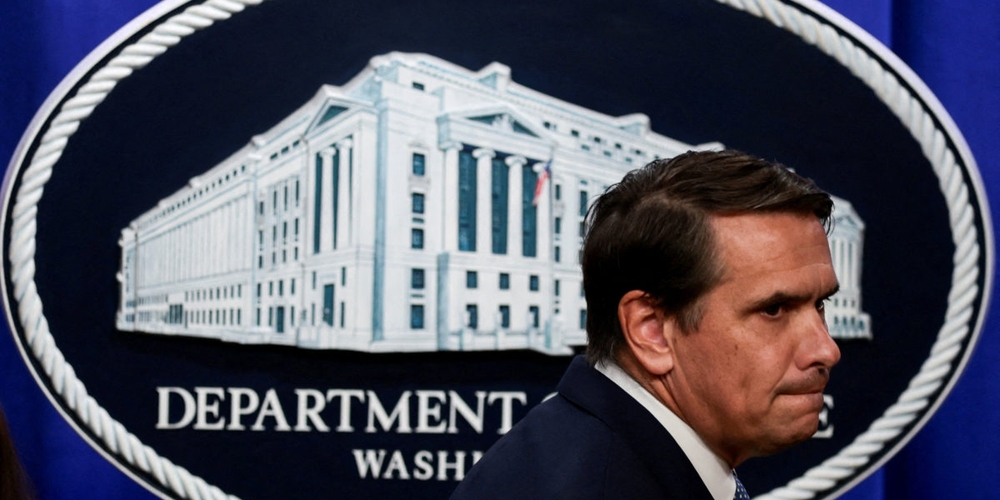
The Facts: A Fund Blocked, But Not Buried
In a significant ruling from the U.S. District Court for the Eastern District of Virginia, Judge Leonie Brinkema extended a court-ordered block on the Trump administration’s creation and operation of a $1.8 billion settlement fund. This fund, ostensibly established to compensate “victims of a weaponized government,” was proposed by the administration to resolve a lawsuit former President Donald Trump filed against the Internal Revenue Service. The core factual sequence is clear: facing bipartisan backlash, Acting Attorney General Todd Blanche testified to Congress that the government was scrapping its plans. Government attorneys subsequently argued that lawsuits challenging the fund were moot. However, Judge Brinkema, a Clinton appointee, decisively rejected this argument, stating, “The (government’s) mootness argument, in my view, doesn’t go anywhere.”
The judicial skepticism stems from a glaring procedural hole. Despite Blanche’s assurances, the administration has not formally rescinded the May 18 order that established the fund. When pressed by both Judge Richard Leon in Washington, D.C., and later by Judge Brinkema, Justice Department attorney Andrew Block could not explain why. Judge Brinkema pointedly called this a “huge gap in the record.” Consequently, she has kept the fund blocked, giving parties a week to negotiate an agreement for Blanche to submit a sworn declaration that the administration will not revive it. Crucially, President Trump has not publicly and unequivocally endorsed the fund’s cancellation and has continued to express support for it.
The Context: A Fund Mired in Controversy
The context surrounding this fund is where the profound concerns for democracy and governance arise. The plaintiffs suing to block it—including a fired prosecutor and a college professor—argue it constitutes an illegal diversion of taxpayer money into a “slush fund for compensating Trump’s allies.” This characterization is not mere rhetoric. The fund’s potential scope became alarmingly clear when, in May, Acting Attorney General Blanche would not rule out the possibility that participants in the January 6th Capitol attack could be eligible to apply for payments. This is the same body of individuals to whom President Trump issued mass pardons on his first day back in the White House last year, erasing every case among the more than 1,500 people charged.
Furthermore, the fund was proposed without the five-member commission that would decide payout criteria ever being formed, so no money was disbursed. However, its very conception, alongside the administration’s reluctance to formally kill it and the former president’s enduring support, paints a disturbing picture. It suggests an executive mindset comfortable with conflating personal legal battles and political narratives with the legitimate fiscal operations of the state.
Opinion: A Battle for the Soul of Public Trust
Judge Brinkema’s ruling is more than a procedural victory; it is a necessary and powerful reaffirmation of a fundamental democratic principle: the public treasury is not a political instrument. The attempt to create this $1.8 billion fund represents one of the most brazen conceptual corruptions of governance in recent memory. To establish a mechanism where taxpayer dollars—money collected from citizens across the political spectrum—could be doled out to individuals claiming victimhood based on a politicized and ill-defined concept of “weaponization” is anathema to the rule of law.
The fund’s potential connection to the events of January 6th is particularly grotesque. The suggestion that individuals who stormed the Capitol in an attempt to disrupt the constitutional transfer of power could be financially compensated by the very government they attacked is a profound perversion of justice. It inverts the roles of perpetrator and victim and uses the machinery of state to reward political violence and sedition. This is not governance; it is the subsidization of grievance, a direct threat to the republic.
The administration’s legal maneuvering—declaring the fund dead in testimony while refusing to formally bury it—is a classic tactic of retaining optionality while avoiding accountability. Judge Brinkema saw through this. Her insistence on a sworn declaration is a demand for clarity and finality in a situation shrouded in deliberate ambiguity. This judicial rigor is the bedrock of institutional defense. In a separate courtroom, Judge Leon accepted the government’s mootness argument, highlighting the variability of judicial temperament. This divergence makes Judge Brinkema’s firm stance all the more critical as a counterweight.
The Broader Threat to Institutional Integrity
This episode is a microcosm of a larger, more insidious threat: the erosion of the norms that separate state power from personal or partisan interest. When a sitting president can propose a billion-dollar fund linked to his own lawsuit, and when his administration cannot bring itself to definitively renounce it even under court order, it signals a collapse of the necessary boundaries within our constitutional system. The Department of Justice must be an institution dedicated to blind justice, not a vehicle for resolving a president’s personal legal entanglements or rewarding his political base.
The bipartisan congressional backlash mentioned in the article is a hopeful sign, but it is insufficient. Eternal vigilance, as the saying goes, is the price of liberty. That vigilance is currently being exercised by judges like Leonie Brinkema and by advocacy groups like Democracy Forward, which brought the Virginia case. Their work is essential in a moment when the very concept of impartial governance is under assault.
In conclusion, the blocked $1.8 billion fund is not a minor policy dispute. It is a stark warning. It is a proposal that sought to institutionalize the notion that the government can be financially weaponized to align with a specific political narrative. Judge Brinkema’s refusal to lift the block is a victory for every American who believes in government of the people, by the people, and for the people—not government of the president, for his allies, funded by the people. The fight to keep that block in place is a fight for the soul of American democracy, a fight to ensure that the treasury serves the nation, not a faction. We must support this judicial firewall with our unwavering commitment to the principles of accountability, transparency, and the absolute separation of the public fisc from political patronage.